
Goal Setting Tips: 5 Steps to Make Real Progress
The fastest path from intention to results is a short, prioritized plan: select a small number of goals, write each as a SMART goal, break them into daily micro-habits, schedule weekly check-ins, and protect your progress with an accountability system. That five-step sequence is what the rest of this guide unpacks, with templates you can copy today.
Quick-start SMART template:
“I will [specific action] for [duration/amount] by [deadline] so that [one-sentence why].”
Personal example: “I will run for 20 minutes three times a week for the next eight weeks so that I build a consistent fitness habit before summer.”
Academic example: “I will complete two practice problem sets every Sunday by April 30 so that I raise my calculus grade by one letter.”
Three things you can do in the next 48 hours:
- Write one SMART goal using the template above and post it somewhere visible.
- Identify one micro-habit (5–10 minutes) that moves that goal forward and attach it to something you already do daily.
- Text one person and ask them to check in with you on your progress next Sunday.
Habit-formation research shows the average time to form a new habit is approximately two months, so the systems you build this week matter far more than a single burst of motivation.
Key Takeaways
Specific goals paired with daily lead measures, weekly feedback, and social accountability give you the highest probability of follow-through, regardless of the goal type.
| Point | Details |
|---|---|
| Limit active goals | Keep 2–3 goals at a time; more than three splits focus and lowers completion rates. |
| Write SMART goals | Use the fill-in-the-blank template: specific action, frequency, deadline, and one-sentence why. |
| Build in micro-habits | Identify a daily action and a 5-minute minimum viable version for high-stress days. |
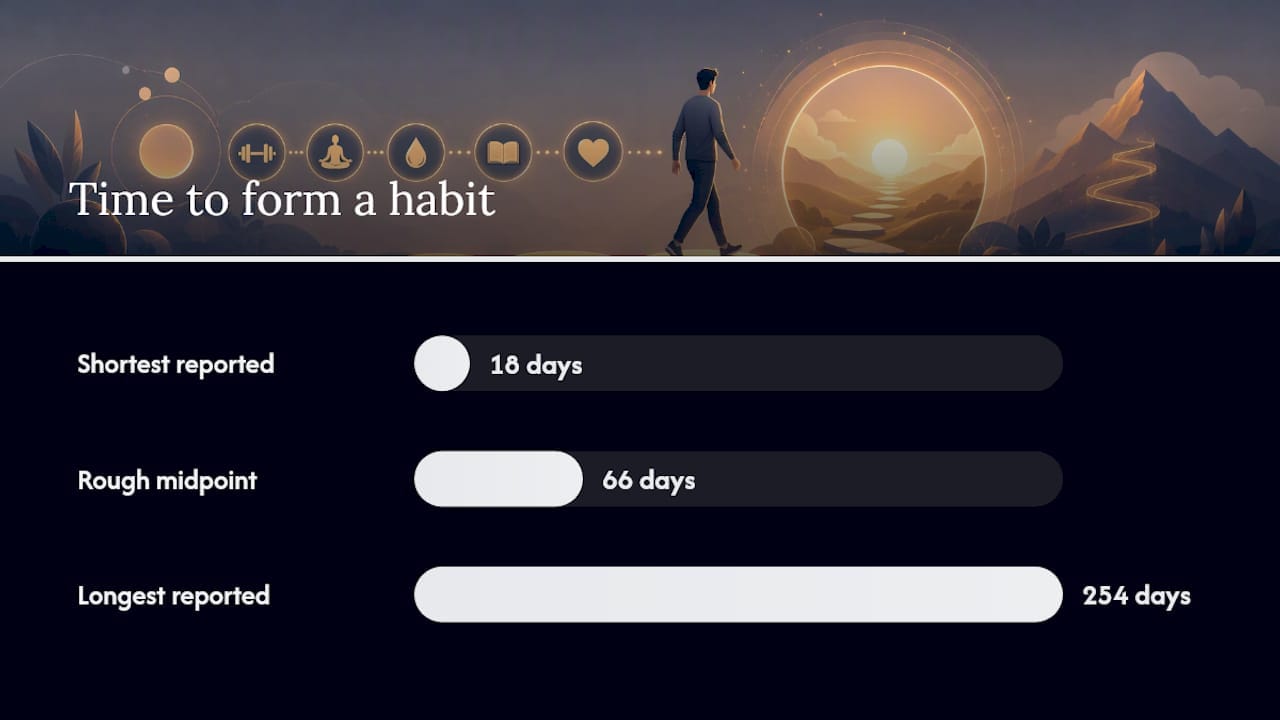
| Habit formation takes time | Research averages about 66 days, with a range of 18–254 days; plan for months, not weeks. |
| Nomadexcel bootcamps | Structured cohort programs combine daily accountability, mentorship, and peer community for faster execution. |
Table of Contents
- What are the best goal setting tips that actually work?
- How do you break a big goal into habits you’ll actually keep?
- How do you build an action plan with real milestones and metrics?
- How can your environment make progress easier by default?
- What accountability systems actually raise your odds of finishing?
- How do you plan for obstacles before they derail your goals?
- What does the research actually say about goal achievement?
- Your copyable goal-setting checklist and templates
- Why small experiments beat big promises
- Structured support for readers who want guided accountability
- Sources
What are the best goal setting tips that actually work?
Most goal-setting advice fails because it stops at inspiration. The research is clear: specific, difficult goals paired with timely feedback consistently outperform vague “do your best” intentions across nearly every task type studied. The SMART framework is commonly used for writing goals that meet that standard.
Breaking down SMART
S — Specific. Name the exact behavior, not the outcome. “Study more” is not specific. “Complete one chapter of reading before dinner” is.
M — Measurable. Attach a number, frequency, or observable result so you know when you’ve hit it.
A — Achievable. The goal should stretch you without breaking you.
R — Relevant. Connect the goal to a value or longer-term vision. A one-sentence “why” preserves motivation when energy drops.
T — Time-bound. Set a deadline. Open-ended goals drift.
Before-and-after examples
| Vague goal | SMART version |
|---|---|
| Get healthier | Run 20 minutes, 3x/week, for 8 weeks, to build a pre-summer fitness base |
| Do better in school | Score 80% or higher on the next two calculus exams by completing 2 practice sets each Sunday |
| Write more | Write 120 words every morning before opening email each day |
Fill-in-the-blank templates
Personal: “I will [action verb + specific behavior] [frequency or amount] by [deadline] because [one-sentence value connection].”
Academic: “I will [study action] for [time block] every [day(s)] until [exam/submission date] so that [measurable outcome].”
If you’re 90% confident you’ll hit a goal, it’s probably too easy. If you’re below 50%, scale back the first milestone, not the final target. The HabitBox goal-setting guide describes this as building a “confidence ramp” toward a harder long-term aim.*
SMART goals help, but additional elements improve effectiveness. Pair every SMART goal with a visible “why” statement and a tracking method, or the structure alone won’t sustain effort past the first two weeks.
How do you break a big goal into habits you’ll actually keep?
Small, repeatable micro-actions beat rare large efforts every time. The reason is simple: a 10-minute daily action compounds over 66 days into a genuine habit, while a three-hour weekend session is easy to skip and hard to recover from. James Clear’s synthesis of goal-setting research frames this as the difference between outcome-based thinking and system-based thinking: the system is what produces the outcome.
From big goal to daily action: a worked example
- Big goal: Publish a personal finance blog with 10 posts in 90 days.
- Milestones: 3 posts by Day 30, 6 by Day 60, 10 by Day 90.
- Weekly target: 1 post per week (roughly 800 words).
- Daily micro-action: Write 120 words every morning before opening email.
- Minimum viable version: On busy days, write one paragraph (50 words). That still counts.
The minimum viable version is the key safeguard. A 5-minute version of any habit keeps your streak alive during high-stress periods and prevents the cascade abandonment that follows a missed day.
Four habit-stacking examples using implementation intentions
Implementation intentions follow the format “When [existing cue], I will [new behavior].” This structure produces medium-to-large improvements in follow-through across diverse behaviors.
- Morning: “After I pour my first coffee, I will write 120 words before checking my phone.”
- Study: “When I sit down at my desk after lunch, I will complete one practice problem before opening any tabs.”
- Exercise: “When I put on my shoes in the morning, I will walk out the door for a 10-minute walk.”
- Writing: “After I close my last meeting of the day, I will open my draft and write for 15 minutes.”
Eight micro-actions you can start this week:
- Read one page of a relevant book before bed.
- Write three sentences toward your goal each morning.
- Do five minutes of a physical habit immediately after waking.
- Review your goal card during your commute.
- Send one outreach message per day toward a professional goal.
- Spend two minutes planning tomorrow’s single most important task.
- Record one metric in a tracking app or notebook each evening.
- Say your goal aloud once in the morning to reinforce commitment.
How do you build an action plan with real milestones and metrics?
Every active goal needs three things: a lead measure (the behavior you control daily), a lag measure (the outcome you’re working toward), and a milestone timeline that connects them. Without all three, you’re navigating without a map.
Lead measure vs. lag measure:
- Lead measure (controllable): “Write 120 words per day.”
- Lag measure (outcome): “Publish 10 blog posts in 90 days.”
Track the lead measure daily. Review the lag measure weekly. Adjust the lead measure when the lag measure stalls.
Milestone timeline framework
| Time horizon | Focus |
|---|---|
| 90-day goal | Define the lag measure and the final target |
| Monthly milestone | Confirm you’re on pace; adjust lead measure if needed |
| Weekly check-in | Review lead measure data; note what worked and what didn’t |
| Daily action | Execute the lead measure; log it in 60 seconds |
Weekly check-in template
Record these four items every Sunday (or your chosen review day):
- Lead measure score: How many times did I complete the daily action this week?
- Lag measure update: Where does the outcome metric stand now?
- One win: What worked well?
- One adjustment: What will I change next week?
Scheduled feedback is one of the most consistently missing pieces in personal behavior-change programs. Weekly is the practical sweet spot: frequent enough to catch drift early, infrequent enough to avoid overreacting to a single bad day.
Pro Tip: For goals with a daily behavior (exercise, writing, study), track the lead measure with a simple paper calendar and an X for each completed day. The visual chain of X’s becomes its own motivation to avoid breaking the streak.
How can your environment make progress easier by default?
Changing your environment is often more effective than relying on willpower. Choice architecture, the design of your surroundings to favor certain behaviors, means the easiest option becomes the progress-favoring one. You don’t have to decide to act; the environment decides for you.
Five routine templates with environmental cues:
- Morning routine: Set your workout clothes out the night before. The visual cue removes the decision barrier at 6 AM.
- Evening routine: Place your journal on your pillow so it’s the last thing you see before bed.
- Study session: Use a dedicated physical space for studying only. Sitting there becomes the cue to focus.
- Commute: Load one relevant podcast or audiobook onto your phone each Sunday for the week ahead.
- Workspace: Keep your goal card visible on your desk or as your phone wallpaper. Out of sight is out of mind.
Opt-in nudges work the same way in reverse: make the distracting option harder to access. Log out of social media apps after each session, keep your phone in another room during deep work, or use a browser extension that adds a 10-second pause before opening time-sink sites.
Scheduling future commitments is another underused lever. Block your weekly check-in on your calendar right now, before you finish reading this article. A recurring Sunday 20-minute slot is harder to skip than a vague intention to “review things sometime this week.”
Pro Tip: Pre-pack your gym bag, study kit, or writing setup the night before. The physical preparation is a commitment device: it signals to your future self that the action is already decided.

What accountability systems actually raise your odds of finishing?
A small but widely cited study found that participants who wrote their goals, declared specific action commitments, and sent weekly progress reports to a friend achieved more than those who only set goals mentally. The mechanism is straightforward: social visibility raises the cost of inaction. Treat the finding as directional evidence rather than a precise benchmark, given the study’s size, but the pattern aligns with broader behavioral research.
Four accountability formats and when each fits
- Solo tracking: Best for self-directed people with strong intrinsic motivation. Use a habit tracker app (Streaks, Habitica) or a paper calendar. Works well for private goals where external sharing feels uncomfortable.
- Accountability partner: One trusted person who checks in weekly. Ideal when you want low friction and personal connection. The check-in message takes two minutes and the social commitment is real.
- Small group (3–5 people): Adds peer pressure and shared energy. Works especially well for cohort-based learning, study groups, or founders working on similar goals. The group dynamic creates relatedness, one of the three drivers of sustained engagement identified by Self-Determination Theory.
- Coach or mentor: Highest accountability, highest investment. Best for complex goals where expertise gaps slow progress. A mentorship process adds both accountability and skill transfer, which solo tracking cannot replicate.
Feedback loop example
Daily: Log your lead measure (yes/no, count, or time).
Weekly: Send your check-in message to your partner or group.
Monthly: Review your lag measure and milestone progress; decide whether to adjust or persist.
Reward ideas tied to milestones
Small, immediate rewards work best when they’re tied to the behavior, not just the outcome. Finish your writing session? Enjoy a favorite coffee. Hit your weekly lead measure score? Take Friday afternoon off. Reach a 30-day milestone? Buy the book you’ve been eyeing. Larger milestone rewards, a weekend trip, a new piece of equipment, a course enrollment, reinforce the identity shift that comes with sustained progress.
How do you plan for obstacles before they derail your goals?
The most common goal failures are internal, not external. Tiredness, stress, low motivation, and competing priorities are predictable. Planning for them in advance with if-then contingency plans is far more effective than relying on willpower in the moment.
Five ready-to-use if-then plans for internal blockers:
- “If I feel too tired to do my full workout, then I will do a 10-minute walk instead.”
- “If I’m stressed and can’t focus on writing, then I will open my draft and write one sentence.”
- “If I miss my study session, then I will complete a 15-minute version before bed the same day.”
- “If I skip my goal action today, then I will do it first thing tomorrow before any other task.”
- “If motivation drops and I want to quit, then I will reread my ‘why’ statement and commit to one more week.”
The never-twice rule is a practical companion to these plans: precommit to never missing your target action two days in a row. One miss is a data point. Two misses in a row is the start of a pattern.
Monthly audit checklist
Run this review at the end of each month:
- Did I hit my lead measure at least 70% of days?
- Is the lag measure moving in the right direction?
- Has anything changed in my life that makes this goal less relevant?
- Am I still connected to the “why” behind this goal?
- Do I need to adjust the timeline, the milestone, or the daily action?
Red-flag indicators that signal a pivot: You’ve missed the lead measure more than half the days for two consecutive weeks. The goal no longer connects to a value you hold. You’re pursuing it out of obligation rather than genuine intent.
When to retire a goal vs. persist: Retire when the goal no longer serves your values or circumstances have fundamentally changed. Persist when the obstacle is temporary and the “why” is still alive. Reframing, adjusting the timeline or the milestone, is almost always better than abandoning entirely.
Pro Tip: Write your contingency plans before you need them. A plan written under stress is a plan written too late. Spend five minutes this week filling in: “If [my most likely obstacle], then I will [specific minimum action].”
What does the research actually say about goal achievement?
The evidence base for goal-setting is unusually strong. Habit-formation research by Lally et al. found the average time to form a new habit is approximately two months, with individual variation ranging from 18 to 254 days. That range matters for planning: some habits click in three weeks, others take eight months. Expecting 66 days as a rough midpoint, rather than a guarantee, keeps you from abandoning a habit at day 30 just because it still feels effortful.
Four research-backed takeaways with practical implications:
- Specific goals outperform vague ones. Meta-analytic findings show that specific, difficult goals consistently beat “do your best” instructions. Write the number, the frequency, and the deadline.
- Feedback is not optional. Without scheduled check-ins, even well-written goals drift. Weekly reviews are the minimum viable feedback loop for most personal and academic goals.
- Autonomy sustains effort. Goals you choose and connect to personal values produce more persistent effort than goals assigned by others, a pattern supported by Self-Determination Theory research. The one-sentence “why” in your SMART template is doing real psychological work.
- Implementation intentions close the intention-action gap. Forming a specific “when-then” plan for your habit, rather than a general intention, produces meaningful improvements in follow-through across a wide range of behaviors.
Gartner HR research found that fewer than half of employees achieve change goals set by their organizations, a figure that underlines why autonomy and individual-level feedback systems matter so much. Goals handed down without personal buy-in and measurement structures rarely stick.
Your copyable goal-setting checklist and templates
Use this checklist as a one-page reference. Print it, save it, or paste it into your notes app.
The six-step checklist:
- Select: Choose 2–3 goals maximum. More than three active goals splits focus and reduces completion rates.
- Write: Draft each goal using the SMART sentence template.
- Break: Identify the daily micro-action and its minimum viable version.
- Schedule: Block your daily action time and weekly check-in on your calendar now.
- Track: Log your lead measure every day (a checkmark, a number, or a yes/no).
- Review: Run the weekly check-in every Sunday using the four-question template.
Template 1: SMART goal sentence
“I will [specific action] [frequency/amount] by [deadline] because [one-sentence why].”
Template 2: Weekly check-in message (to send to your accountability partner)
“Week [number] check-in: Lead measure score this week: [X/7 or X/5]. Lag measure update: [current status]. One win: [what worked]. One adjustment: [what I’m changing next week].”
Template 3: If-then contingency
“If [most likely obstacle], then I will [specific minimum action] instead.”
One-week experiment: Pick one goal, write it using Template 1, identify one daily micro-action, and run it for seven days. At the end of Day 7, use Template 2 to record what happened. That single week of data is worth more than any amount of planning without action. The step-by-step goal-setting guide from Nomadexcel offers a deeper workflow for readers who want to extend this experiment into a full 90-day system.
Why small experiments beat big promises
The most common mistake in goal-setting isn’t poor execution. It’s overcommitting at the start, which makes the first missed day feel like proof of failure rather than a normal data point in a longer process.
A one-week experiment reframes the whole thing. You’re not committing to a new identity or a six-month transformation. You’re running a short test: does this micro-action fit my life? What does the data say after seven days? That framing removes the fear of failure because a failed experiment is still useful information.
The research supports this instinct. Habit formation takes months, not days, and the path is rarely linear. Missing one day is not the problem. The pattern of missing two days in a row, then three, then abandoning entirely, is the problem. The never-twice rule and minimum viable versions exist precisely to interrupt that cascade.
My recommendation: commit to one micro-action for seven days. Record one metric. At the end of Day 7, read your check-in note and decide whether to continue, adjust, or replace. That ritual, small as it sounds, is the foundation of every durable goal system I’ve seen work.
Structured support for readers who want guided accountability
Self-directed goal systems work well for disciplined, self-aware individuals. But for early-stage founders, students rebuilding momentum after a setback, or anyone who has tried solo tracking and found it fades after week three, structured community accountability is a different category of support entirely.
Nomadexcel’s online entrepreneurship bootcamp is built around exactly the combination the research points to: specific execution goals, daily accountability, peer cohorts for social visibility, and mentorship that closes skill gaps. Participants don’t just set goals; they build the systems and relationships that make those goals survivable past the first month.
Three reader profiles who benefit most:
- Early-stage founders who have a clear goal but keep deprioritizing it in favor of daily fires.
- Students or career-changers who need external structure to replace the accountability a classroom or manager used to provide.
- Anyone who has restarted the same goal two or more times and wants a different environment, not just a better plan.
If any of those descriptions fit, the why join a bootcamp guide is a practical next step to assess whether a cohort-based program matches your situation. The bootcamp application takes minutes; the accountability it creates lasts well beyond the program itself.
Sources
- Habit formation study (Lally et al.) — DOI listing
- The Science of Goal Setting: What Academic Research Really Says | Goalite
- PMC review of behavior-change techniques (implementation intentions and related mechanisms)
- Gail Matthews goal-writing study summary (Dominican University)
Comments are closed.