
Creative Problem Solving Explained for Entrepreneurs
TL;DR:
- Creative problem solving combines divergent and convergent thinking through a structured framework to generate actionable solutions. Proper problem framing and deliberate separation of idea generation from evaluation are vital for effective innovation. Implementing clear ownership and deadlines ensures ideas turn into real progress.
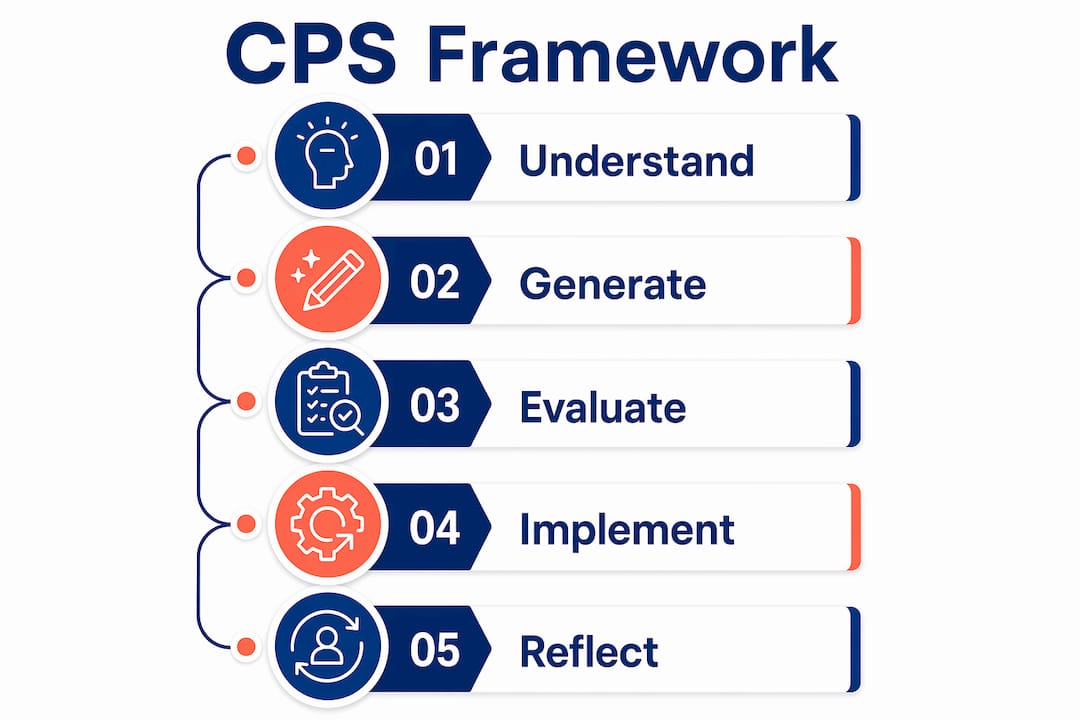
Creative problem solving (CPS) is defined as a structured methodology that combines divergent thinking with convergent thinking to generate and implement solutions to complex problems. Unlike casual brainstorming, CPS follows a repeatable process grounded in the CPS Version 6.1 framework, which organizes eight specific stages across four main components. Students, professionals, and entrepreneurs who apply this framework consistently outperform those who rely on instinct alone. Creativity is not a personality trait. It is a skill you can build with the right process.
What is the structured framework of creative problem solving?
CPS Version 6.1 organizes the entire process into four main components: Understanding the Challenge, Generating Ideas, Preparing for Action, and Planning Your Approach. Each component contains specific stages that alternate between divergent thinking (generating many ideas without judgment) and convergent thinking (evaluating and refining those ideas). This alternation is not optional. The brain cannot generate and evaluate simultaneously, so forcing both at once kills creative output.
The table below maps each component to its core purpose and the thinking mode it activates.
| Component | Core Purpose | Thinking Mode |
|---|---|---|
| Understanding the Challenge | Define the real problem, not just the symptom | Divergent + Convergent |
| Generating Ideas | Produce a wide range of possible solutions | Divergent |
| Preparing for Action | Evaluate and develop the most promising ideas | Convergent |
| Planning Your Approach | Build an execution plan with clear ownership | Convergent |
Most people skip straight to Generating Ideas. That shortcut is the single most common reason creative sessions produce nothing useful. Spending time on Understanding the Challenge forces you to question whether you are solving the right problem in the first place.
CPS is a complete process, not merely an idea-generation tool. Convergent thinking refines the raw material that divergent thinking produces. Without both phases working in sequence, you end up with either a pile of unfiltered ideas or a narrow solution that ignores better options.
Pro Tip: Before any CPS session, write the problem as a question starting with “How might we…” This single habit shifts the group from judgment mode into possibility mode before the first idea is spoken.
Which techniques make creative problem solving work?
Effective CPS depends on choosing the right technique for each phase. Experts recognize over 12 primary techniques that support creative ideation in both group and individual settings. Three of the most widely used are Brainstorming, SCAMPER, and the “How Might We” method.
Here is a breakdown of the top techniques and their core principles:
- Brainstorming. Developed by Alex Osborn, this technique follows four ground rules: defer judgment, build on ideas, encourage wild ideas, and aim for quantity. These rules exist because premature evaluation shuts down idea flow before the best options surface.
- SCAMPER. This acronym prompts you to Substitute, Combine, Adapt, Modify, Put to other uses, Eliminate, and Reverse elements of an existing idea or product. It is particularly useful when you are stuck refining an existing solution rather than starting from scratch.
- “How Might We” (HMW). This framing technique turns a problem statement into an open question. “Our customers are churning” becomes “How might we make customers feel so supported they never want to leave?” The shift is subtle but powerful.
- Reverse Brainstorming. Instead of asking how to solve a problem, you ask how to make it worse. Then you reverse those answers. This approach bypasses mental blocks that form around familiar problem frames.
- Random Input. You introduce an unrelated word or image and force connections between it and your problem. This technique is especially effective when a group has exhausted obvious ideas.
Deferring judgment for 30–60 minutes during idea generation is a recommended practice that measurably improves output quality. The reason is straightforward: when participants know their ideas will not be criticized immediately, they take more risks and produce more original thinking.
Pro Tip: Assign a dedicated “wild idea champion” in every session. This person’s only job is to push for one more unusual idea whenever the group starts converging too early. It prevents premature closure.

For a practical guide to running these sessions, Nomadexcel’s resource on brainstorming for entrepreneurs covers SCAMPER and HMW in depth. You can also pair these techniques with mindfulness practices to sharpen focus before a session begins.
How do constraints and problem framing shape your solutions?
Problem framing is the most important and most overlooked stage in the entire CPS process. Better questions produce better ideas, and a poorly framed problem guarantees a weak solution no matter how good your technique is. The way you define a challenge determines the entire solution space you will explore.
Highly effective problem solvers treat constraints as catalysts for innovation, not as obstacles. A budget limit, a tight deadline, or a restricted resource forces you to think differently. Without constraints, thinking tends to sprawl without direction. With them, creativity sharpens.
Consider these reframing examples:
- Weak frame: “We need more customers.”
Strong frame: “How might we make our existing customers refer one person each within 30 days?” - Weak frame: “Our team is not productive.”
Strong frame: “How might we remove the three biggest friction points from our team’s daily workflow?” - Weak frame: “We need a better product.”
Strong frame: “How might we redesign the onboarding experience so users reach their first success in under five minutes?”
Each reframe narrows the problem to something specific and solvable. Specificity is not a limitation. It is the mechanism that makes creative thinking productive. Nomadexcel’s guide on sparking team innovation explores this reframing approach in practical team settings.
Framing problems as design questions rather than judgment statements also removes blame from the conversation. When a problem is framed as a design challenge, the group focuses on possibilities rather than on what went wrong. That shift alone can change the energy of an entire session.
What common pitfalls undermine creative problem solving?
The most damaging mistake in CPS is failing to separate divergent and convergent thinking phases intentionally. The brain struggles to generate and evaluate simultaneously. When a group tries to do both at once, evaluation wins and idea generation stops. The result is a short list of safe, obvious options.
The second major pitfall is what practitioners call “innovation theater.” Workshops without clear ownership and action plans devolve into sessions that feel productive but produce no results. Everyone leaves energized, and nothing changes. This is the most common complaint about creative sessions in corporate and startup environments alike.
Here are the most frequent challenges and their practical remedies:
- Premature judgment. Someone evaluates an idea before the divergent phase ends. Remedy: Establish a visible “no judgment” rule at the start. Use a physical or digital signal (a raised hand, a specific word) to flag when evaluation is creeping in.
- Solving the wrong problem. The group jumps to solutions before defining the real challenge. Remedy: Spend at least 20% of session time on problem framing before any idea generation begins.
- No implementation plan. Great ideas die without assigned owners and deadlines. Remedy: End every session with a written action plan naming who does what by when.
- First-idea fixation. The group anchors on the first strong idea and stops exploring. Remedy: Apply the “rule of three” solution versions, generating a safe option, an unusual option, and a simple option before evaluating any of them.
- Groupthink. Dominant voices suppress quieter contributors. Remedy: Use silent individual brainstorming before group sharing to capture ideas from every participant.
Pro Tip: Close every CPS session with a “parking lot” list. Any idea that does not make the final action plan goes on this list with a review date. This prevents good ideas from disappearing and shows contributors that their thinking was valued.
Key Takeaways
Creative problem solving works because it separates idea generation from evaluation, frames problems precisely, and ties every session to a concrete implementation plan.
| Point | Details |
|---|---|
| CPS Version 6.1 framework | Four components and eight stages alternate divergent and convergent thinking for structured results. |
| Problem framing first | Rewriting challenges as “How might we” questions expands solution space before ideation begins. |
| Defer judgment deliberately | Suspending evaluation for 30–60 minutes during brainstorming produces more original and higher-quality ideas. |
| Constraints drive creativity | Treating limits as prompts rather than blockers forces more specific and original thinking. |
| Implementation accountability | Every session needs named owners and deadlines, or ideas remain unexecuted innovation theater. |
Why most people misunderstand creativity as a problem-solving tool
Most people I work with arrive believing creativity is something you either have or you do not. That belief is the first thing that needs to go. Creativity in problem solving is a disciplined interplay of two distinct mental modes, and the discipline is what makes it work. The magic is not in the ideas. It is in the sequencing.
What I have seen consistently is that the framing stage gets the least time and produces the most leverage. A team that spends 15 minutes rewriting their problem statement before touching ideas will outperform a team that brainstorms for two hours on a poorly defined challenge. Every time. The quality of your question is the ceiling on the quality of your answer.
The other thing most people miss is the implementation gap. CPS is not a workshop activity. It is a full cycle from problem definition to executed solution. I have watched talented teams generate genuinely original ideas and then watch those ideas expire because no one owned them after the session ended. Assign ownership before you leave the room. That single habit separates teams that grow from teams that just talk about growing.
Creativity is also not a solo sport. The techniques in CPS, from Brainstorming to SCAMPER to the rule of three, are designed to work with the friction of other minds. Surround yourself with people who challenge your framing, not just people who agree with your ideas. That community is where the real breakthroughs happen.
— Amichai
How Nomadexcel builds creative problem solving into entrepreneurship training
Nomadexcel’s Online Entrepreneurship Bootcamp teaches CPS frameworks as a core part of its curriculum for aspiring and early-stage entrepreneurs. Participants work through real business challenges using structured divergent and convergent thinking, guided by experienced mentors who have applied these methods in live ventures. The program is built for students, professionals, and founders who want to move from ideas to execution with a community that holds them accountable. If you are ready to apply creative thinking techniques inside a structured, results-focused program, Nomadexcel’s bootcamp gives you the frameworks, the mentorship, and the peers to make it real.
FAQ
What is creative problem solving in simple terms?
Creative problem solving is a structured process that alternates between generating ideas freely and evaluating them critically to find solutions to complex challenges. It follows frameworks like CPS Version 6.1 to make the process repeatable and effective.
What are the main steps in creative problem solving?
The CPS Version 6.1 framework organizes the process into four components: Understanding the Challenge, Generating Ideas, Preparing for Action, and Planning Your Approach, each containing specific stages.
What is the most effective technique for generating ideas in CPS?
Brainstorming with Alex Osborn’s ground rules, including deferring judgment and encouraging wild ideas, remains one of the most widely validated techniques for maximizing idea quantity and quality in CPS sessions.
Why is problem framing so important in creative problem solving?
Better questions produce better ideas, and a poorly framed problem limits the solution space before ideation even begins. Rewriting challenges as “How might we” questions consistently expands the range of solutions a group will consider.
How do you prevent creative sessions from becoming innovation theater?
Every CPS session needs a written action plan with named owners and specific deadlines before participants leave the room. Without clear accountability, even the best ideas remain unexecuted.
Comments are closed.