60+ Fun Corporate Event Ideas for Planners and HR Teams
TL;DR:
- The most effective corporate events provide attendees with agency and active participation. Outdoor adventures, festival formats, and hybrid experiences consistently boost engagement and deliver measurable ROI. Proper planning, accessibility, and follow-up are essential for creating lasting impact and meaningful results.
The most reliable fun corporate event ideas share one trait: they give attendees agency. Outdoor adventures, multi-room festival formats, micro-activation layers, hybrid experiences, and outcome-driven offsite retreats consistently deliver the highest engagement and the clearest ROI across team sizes and geographies. The format you choose matters less than whether participants feel like active contributors rather than passive audience members.
Here is a quick-reference summary before the full breakdown:
- Outdoor active events (scavenger hunts, relay races, pop-up village fairs): best for culture refresh, cross-team mixing, and warm-weather seasons; scale from 20 to 500+ people.
- Multi-room festival formats (rotating stations, themed zones): high energy, self-paced, and naturally inclusive because attendees choose their own path.
- Short high-impact galas with micro-experiences (3–4 hours, dense programming): shorter programs with denser programming increase attendee excitement and perceived value compared to long ballroom formats.
- Hybrid virtual-first activities (virtual escape rooms, remote cooking kits, AI-matched networking): keep distributed teams connected without requiring travel budgets.
- Outcome-driven offsite retreats (strategy sprints, creativity bootcamps, wellbeing resets): the right choice when a team needs strategic alignment or a measurable shift in direction, not just a morale lift.
SHRM’s research on employee engagement consistently points to belonging and participation as the two strongest drivers of retention, and well-designed events directly feed both. The planning sections below give you a one-page checklist, sample budgets, timeline brackets, and a Nomad Excel case study so you can move from idea to execution without guesswork.
Table of Contents
- Outdoor corporate event ideas that energize any team size
- Indoor event ideas that deliver fun regardless of weather
- Virtual and hybrid event ideas that keep remote teams genuinely engaged
- Themed socials and party formats that are easy to run and genuinely fun
- Experiential and retreat-style events that produce lasting results
- A results-focused retreat in practice: the Nomad Excel approach
- Micro-experiences and low-friction activations that lift any event
- How to pick the right event: a planning checklist and the questions to ask vendors
- Sample budgets and timelines for three common event scenarios
- Accessibility, inclusion, and safety rules every planner must follow
- How to measure success and prove ROI from corporate events
- Key Takeaways
- When a retreat beats a one-day social (and when it does not)
- Nomadexcel designs retreats that produce real business outcomes
- Further reading and sources
Outdoor corporate event ideas that energize any team size
Fresh air and physical movement do something a conference room cannot: they reset the social hierarchy. When a VP and a new hire are both lost on a city scavenger hunt, rank disappears and real connection happens. These formats work across seasons with the right contingency planning.
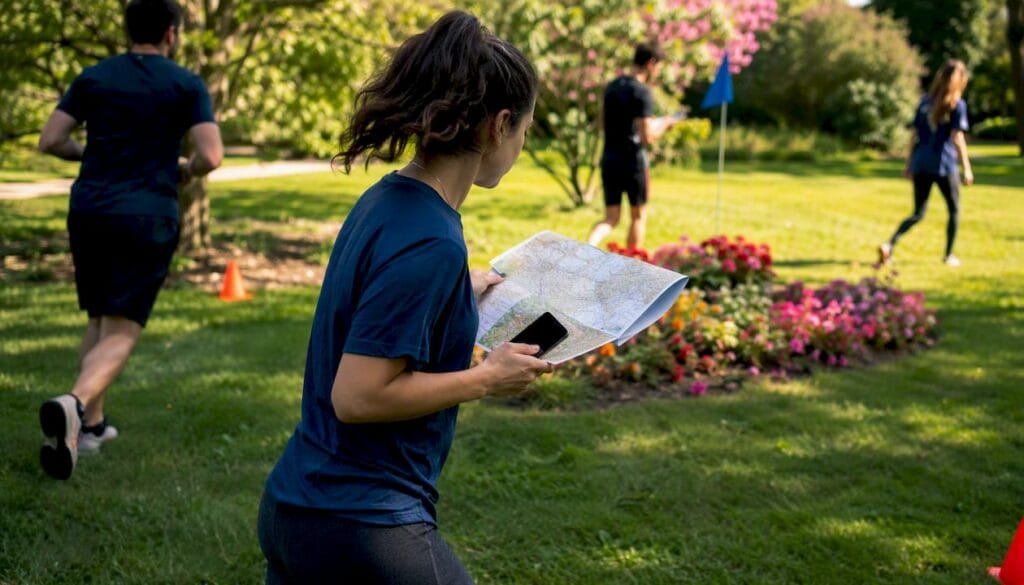
1. City or campus scavenger hunts
Teams of a few solve location-based clues using a shared app (tools like Scavify or GooseChase work well). Scale from small to large groups by running parallel routes. Add AR photo booths and AR scavenger hunt elements to increase shareability and give remote observers a live feed. Suitability: spring through fall; have an indoor backup venue for rain.
2. Team relay races and field day Olympics
A classic format that still works because competition is optional. Offer non-athletic stations (trivia, puzzle assembly, blind taste tests) alongside physical ones so every fitness level can contribute. Permit requirements vary by park; book municipal venues 8–12 weeks out.
3. Pop-up village fair
Rent a parking lot or corporate campus lawn and set up vendor stalls, food trucks, lawn games, and a live acoustic act. Rotational format means attendees move at their own pace. Budget anchor: food trucks typically run in the mid-range per person for a short service window in most U.S. markets.
4. Guided urban hike or nature walk
A local naturalist or city historian leads a 90-minute walk. Low cost, low logistics, high conversation density. Cap groups at 25 for quality interaction. Pair with a post-hike picnic for a half-day program.
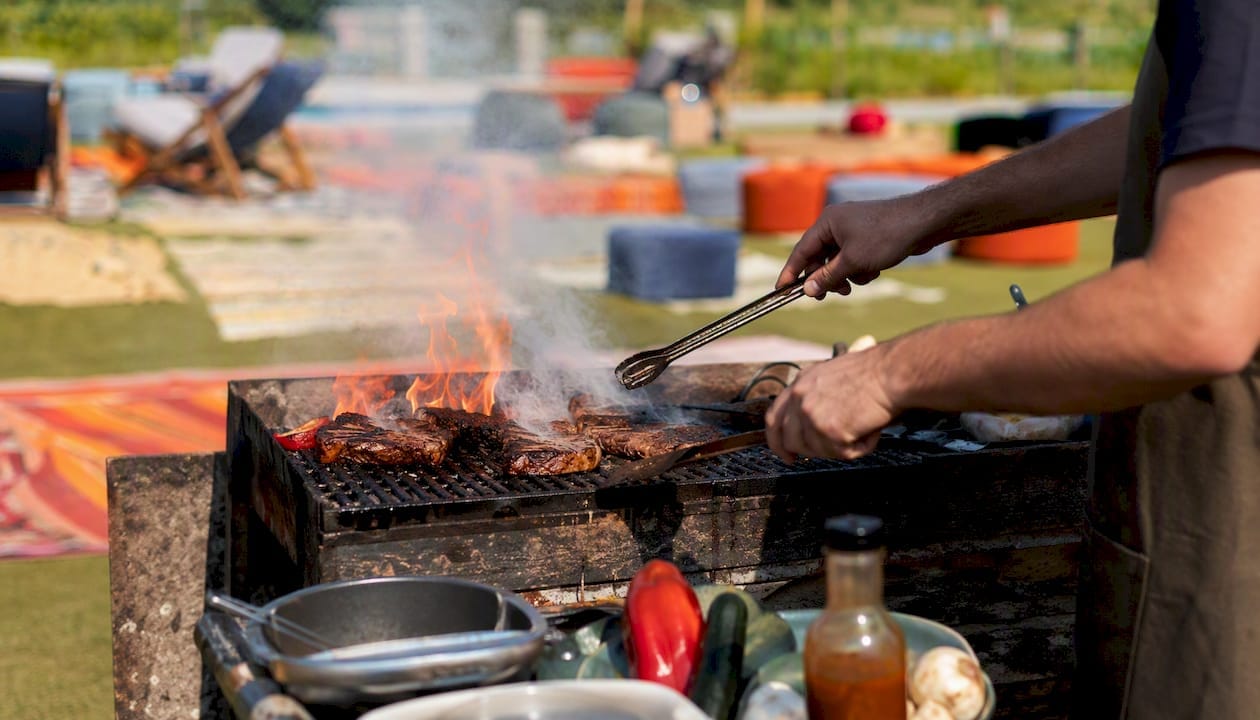
5. Outdoor cooking or barbecue challenge
Teams compete on a grilling or cooking challenge judged by a local chef. Pairs naturally with a food-truck social for non-competitors. Requires a permit for open flame in most city parks; confirm with your venue 6+ weeks ahead.
6. Charity build day (outdoor edition)
Teams assemble care packages, build garden beds for a local nonprofit, or paint a community mural. Ties the event to a measurable social outcome, which research on employee engagement links directly to purpose-driven retention.
7. Sporting event outing
Block seats at a local professional sporting event and add a pre-game tailgate. Low facilitation overhead; the shared experience does the work. Works best for culture refresh rather than skill-building goals.
8. Picnic festival with rotating activity zones
Blankets, lawn games, a DJ, and three or four activity booths (photo activation, trivia, craft station). Self-directed format suits neurodiverse attendees who prefer lower-pressure social settings.
Accessibility pro tips for outdoor events:
- Designate shaded, seated quiet zones at every outdoor venue.
- Confirm ADA-compliant pathways before booking any park or campus space.
- Offer alternative activities (trivia, craft stations) alongside physical challenges.
- Collect mobility and dietary needs during RSVP, not on the day.
- Carry event liability insurance and confirm vendor certificates of insurance before signing contracts.
Pro Tip: For outdoor events over 75 people, hire a dedicated accessibility coordinator for the day. This single role prevents the most common inclusion failures and signals to your team that the event was designed for everyone.
Indoor event ideas that deliver fun regardless of weather
Indoor formats remove weather risk and give you full control over atmosphere, pacing, and AV quality. The best ones share a design principle: move beyond the hotel ballroom and replace passive entertainment with participatory moments.
9. Escape room experience (venue or mobile kit)
Venue-based escape rooms work for groups of several to a few dozen; mobile escape kits scale to larger groups. The problem-solving format builds communication skills with a clear narrative arc. Budget: venue-based rates fall within a typical range per person; mobile kits add a facilitator fee. AV needs are minimal.
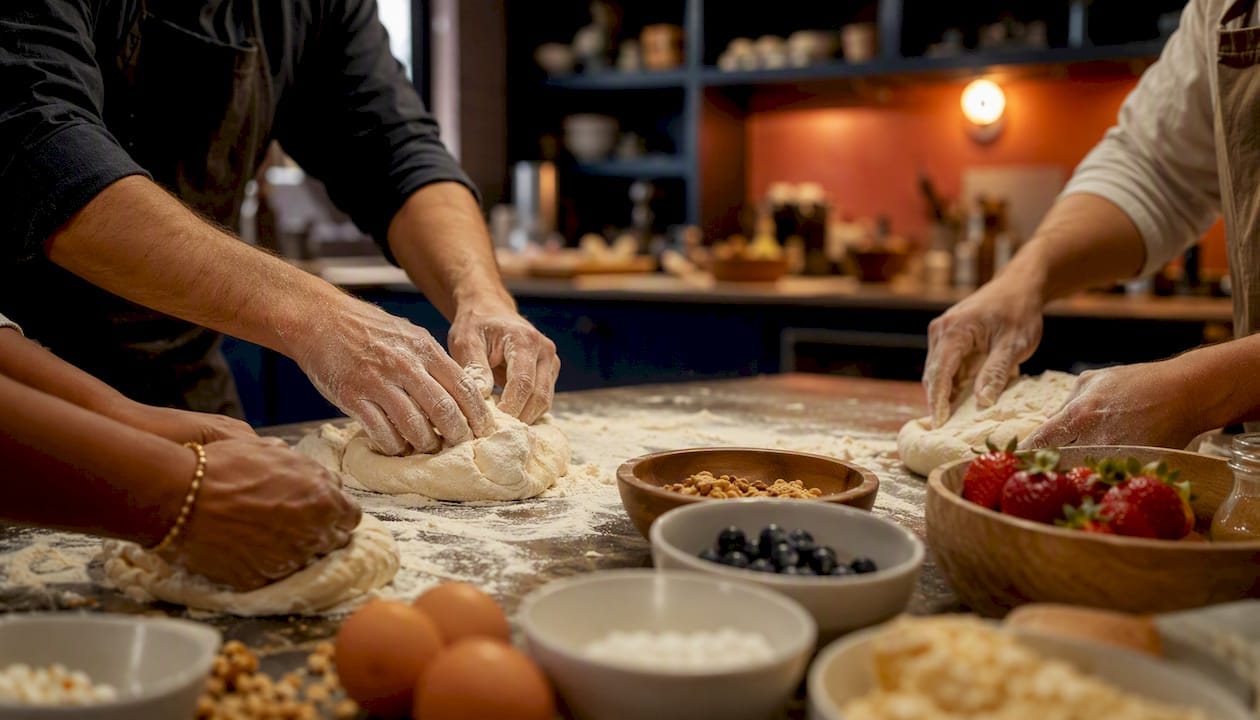
10. Cooking or mixology class
Culinary and mixology classes remain top choices for accessible, skill-building social formats. A professional chef or mixologist leads teams through a recipe or cocktail build. Works in-person, hybrid (with pre-shipped ingredient kits), or fully virtual. Budget: medium, driven by ingredient quality and instructor fee. Dietary accommodations require 2-week advance notice to most vendors.
11. Paint and sip or creative arts workshop
A local artist guides teams through a themed painting or craft project. Low competitive pressure makes this one of the most inclusive formats for mixed groups. Room layout: round tables of 6–8 with easels; natural light preferred. Budget: low to medium.
12. Murder mystery dinner
A facilitated narrative where attendees play characters and solve a crime over a three-course meal. Staffing: one facilitator per 20 guests. Catering sync is critical; the narrative pacing must align with course timing. Budget: medium to high, driven by catering.
13. Live-band karaoke
A live band backs singers from the audience, replacing the pre-recorded track with real musicians. Interactive entertainment formats like this consistently outperform passive entertainment slots because guests have agency over the experience. AV needs: full PA system, stage lighting, and a green room for the band. Budget: high.
14. Innovation hackathon or panel challenge
Teams pitch solutions to a real business problem in 90 minutes, judged by a panel of leaders. Pairs well with a post-event roadmap handoff so the ideas don’t disappear. Team-building activities tied to workplace skills show clearer ROI when paired with post-event action plans.
15. Tabletop tournament (trivia, board games, card games)
Station-based format with rotating opponents. Scales from 20 to 150 people with minimal AV. Budget: low. Staffing: one emcee and one scorekeeper per 40 players.
16. Game show night
A professional host runs a custom-branded version of a game show (think company-specific trivia, a “Price Is Right” format, or a team quiz bowl). High energy, low physical demand, and naturally inclusive. Budget: medium, concentrated in the host fee and AV rental.
17. Themed dinner with interactive stations
A seated dinner where each course pairs with a short activity (a wine pairing lesson, a blind taste test, a chef Q&A). Breaks the passive dinner format without requiring guests to leave their seats. Catering and entertainment must be coordinated 4–6 weeks out.
Budget brackets for U.S. indoor corporate events:
- Low ($20–$50/person): trivia nights, tabletop tournaments, paint and sip, icebreaker game kits.
- Medium ($50–$150/person): escape rooms, cooking classes, murder mystery, innovation hackathons with catering.
- High ($150–$350+/person): live-band karaoke, themed dinners with full AV, game show productions with professional hosts.
Cost concentrates in three areas: entertainment talent, AV production, and catering. Cutting any one of these below a quality threshold hurts the whole experience more than reducing headcount does.
Virtual and hybrid event ideas that keep remote teams genuinely engaged
The biggest mistake in virtual event planning is treating remote participants as viewers. Virtual team-building works when it is intentionally designed with tools like breakout rooms, pre-shipped kits, and flexible participation paths. The formats below treat remote attendees as full participants.
18. Virtual escape room
Browser-based platforms (Teambuilding.com, Weve, or custom builds) run teams of 4–8 through a narrative puzzle. No shipping required. Works across time zones with asynchronous clue-release options. Tech requirement: a breakout-capable video platform (Zoom, Microsoft Teams, or Hopin).
19. Remote mixology or cooking kit experience
Pre-ship ingredient kits to every participant’s home address 5–7 days before the event. A live instructor guides the group through the recipe or cocktail build in real time. This format works in-person, hybrid, or fully remote and creates a shared sensory experience that video alone cannot replicate.
20. AI-matched speed networking
An algorithm (tools like Brella or Grip) pairs attendees for 5-minute one-on-one video calls based on shared interests or cross-functional goals. Runs in 60–90 minutes. Particularly effective for large organizations where employees rarely meet outside their department.
21. Hybrid scavenger hunt with AR elements
In-office teams and remote participants complete parallel challenge tracks. AR elements (QR codes, location-tagged photos, augmented filters) give remote players a comparable experience to on-site ones. Requires a mobile-friendly app and a low-latency streaming setup for the reveal moment.
22. Live-streamed interactive band or DJ set
A performer streams live with a request interface so remote attendees can queue songs, vote on setlists, or trigger visual effects. Crowd-curated concerts give guests agency over the experience, which drives higher engagement than a passive stream.
23. Micro-workshops broadcast with breakout rooms
A 20-minute keynote followed by 30-minute breakout workshops on specific skills (presentation coaching, negotiation tactics, creative problem-solving). Breakout rooms of 6–8 keep conversations focused. For innovation-focused workshop formats, structured facilitation guides produce stronger outputs than open discussion.
24. Virtual trivia or game show
A live host runs a custom trivia game via a platform like Kahoot!, Mentimeter, or a dedicated virtual event tool. Low tech barrier; high participation rate. Works as a standalone 45-minute event or as a warm-up for a longer program.
25. Asynchronous video challenge
Teams record short videos (cooking a dish, completing a challenge, sharing a skill) and submit them to a shared channel. Voting happens over 48 hours. Suits global teams spread across multiple time zones where synchronous events exclude someone.
Pro Tip: For global teams, schedule synchronous virtual events within a 3-hour overlap window that works for the majority of participants. Offer an asynchronous participation path (recorded session plus a Slack or Teams channel for reactions) for anyone outside that window. Inclusion is not just about captions; it is about not making someone choose between the event and sleep.
Tech requirements for virtual and hybrid events:
- Low-latency streaming platform with breakout room capability.
- Closed captions enabled by default (not on request).
- QR and AR-ready assets tested on both iOS and Android before the event date.
- Pre-shipped kits confirmed with a 7-day lead time and a backup digital option for late registrants.
- A dedicated tech host separate from the content facilitator.
For more on keeping distributed teams connected between events, the remote team engagement guide for managers covers tools and cadence in detail.
Themed socials and party formats that are easy to run and genuinely fun
A strong theme does three things: it gives attendees a costume or dress code to rally around, it creates a cohesive atmosphere without heavy production, and it gives the planning team a clear creative brief. The formats below are proven in U.S. corporate settings and scale from 30 to 300 attendees.
26. Decade crawl
Each room or zone represents a different decade (the ’70s, ’80s, ’90s, 2000s) with era-specific music, decor, and a themed cocktail or mocktail. Attendees rotate every 30–40 minutes. Interactive entertainment models like this outperform single-room passive formats. Scale: medium to large. Formality: casual to semi-formal.
27. Casino night
Professional-grade tables (blackjack, roulette, poker) with play money and a prize redemption station. No real gambling required. Pairs well with a cocktail hour and a DJ. Decor: black and gold, vintage Vegas. Scale: 50–250 people. Formality: semi-formal.
28. Cultural festival
Each department or team sponsors a “country” booth with food, music, trivia, and a craft activity from that culture. Celebrates workforce diversity while creating natural conversation starters. Scale: 40–400 people. Formality: casual. Requires 4–6 weeks of cross-team coordination.
29. Awards gala with gamified voting
A classic awards night, but attendees vote in real time via a mobile app (Slido, Mentimeter) for categories like “Most Creative Solution of the Year” or “Best Team Player.” Replacing long speeches with short video messages and interactive Q&A significantly increases engagement by reducing the passive listening burden. Scale: 50–500 people. Formality: formal to black tie.
30. Costume party with a creative brief
Give attendees a specific brief (“come as your favorite fictional CEO,” “dress as a decade in company history”) rather than a generic costume prompt. Specificity drives participation and creates more memorable photos. Scale: any. Formality: casual.
31. Industry roast (light rules)
A facilitated roast of a company milestone, a product launch, or a fictional “character” (never a real individual without explicit consent). Ground rules are set upfront: no personal attacks, no protected characteristics. A professional emcee keeps the tone warm. Scale: 30–100 people. Formality: casual to semi-formal.
32. Global tasting tour
A curated food and beverage journey through six to eight countries, with a guide at each station explaining the cultural context. Pairs with a passport-style card attendees get stamped at each stop. Scale: 40–200 people. Formality: casual.
33. Retro game night
Arcade machines, classic board games, and a vintage photo booth. Low production cost, high nostalgia factor. Works as a standalone evening or as the social component of a multi-day retreat. For corporate entertainment ideas that pair well with themed formats, live music acts and interactive performers add significant energy to any of these themes.
Experiential and retreat-style events that produce lasting results
A one-day social refreshes culture. A well-designed retreat changes it. The distinction matters when you are deciding where to allocate budget. Smaller, frequent, high-production-value gatherings create greater long-term engagement than one large annual event for many organizations, and retreats fit naturally into a quarterly cadence alongside lighter monthly or bimonthly socials.
Three retreat styles cover most corporate needs:
Strategy sprint bootcamp: Teams arrive with a defined problem (a product roadmap, a go-to-market plan, a restructuring decision) and leave with a prioritized action plan and named owners. Expected outcome: strategic alignment and a 30/60/90-day execution roadmap.
Creativity and innovation retreat: Structured ideation sessions, cross-functional mixing, and facilitated prototyping. Expected outcome: a pipeline of new ideas with at least two or three ready for pilot. Innovation workshop formats that combine structured sprints with open exploration consistently produce stronger outputs than unstructured brainstorming.
Wellbeing reset: Combines light facilitation (values clarification, team communication workshops) with restorative activities (yoga, nature walks, cooking together). Expected outcome: reduced burnout indicators and stronger interpersonal trust. Harvard Business Review’s research on burnout identifies disconnection from peers and purpose as two of the primary drivers, both of which a well-designed wellbeing retreat directly addresses.
Sample 2-day retreat agenda:
- Day 1, morning: Arrival, welcome session, team alignment workshop (current state, shared goals).
- Day 1, afternoon: Facilitated strategy or creativity sprint (two 90-minute blocks with a break).
- Day 1, evening: Micro-activation social (themed dinner, live entertainment, or outdoor activity).
- Day 2, morning: Reflection session, action planning, owner assignment.
- Day 2, afternoon: Experiential session (local activity, guest speaker, or skills workshop).
- Day 2, close: Commitment ceremony, artifact handoff (roadmap, action cards), and departure.
Follow-up cadence:
- 30 days: check-in meeting against action plan; confirm owners are resourced.
- 60 days: mid-point review; surface blockers and adjust priorities.
- 90 days: outcomes review; measure against the metrics set at the retreat.
The artifact handoff is what separates a retreat from a vacation. Without a physical or digital document that names owners and deadlines, the energy dissipates within two weeks.
A results-focused retreat in practice: the Nomad Excel approach
The table below outlines a representative timeline and milestone structure for a Nomad Excel-style business retreat, from initial planning through the 90-day follow-up. Specific outcome metrics will vary by team; the placeholders below indicate where your organization’s data should be inserted.
| Phase | Timeline | Key Activities | Success Markers |
|---|---|---|---|
| Pre-retreat planning | Weeks 1–6 | Goal-setting call, participant survey, agenda design, logistics confirmation | Confirmed objectives, participant list, venue booked |
| On-site Day 1 | Day 1 | Alignment workshop, strategy sprint, evening micro-activation | Team alignment score (pre/post survey) |
| On-site Day 2 | Day 2 | Experiential session, action planning, artifact handoff | Action plan with named owners and deadlines |
| 30-day check-in | Week 8 | Progress review against action plan | % of action items on track |
| 60-day review | Week 12 | Blocker identification, priority adjustment | |
| 90-day outcomes | Week 18 | Full outcomes review, NPS survey, stakeholder report |
Nomad Excel designs each retreat end-to-end, from facilitation and workshops to logistics and local experiences. The program combines business impact with authentic connection, which is why teams return with both a clearer strategy and stronger relationships.
What planners and participants say matters most:
- Facilitated sessions with a clear output (not just discussion).
- A mix of structured work and genuine social time.
- A follow-up system that keeps momentum alive after the event.
For a closer look at how Nomad Excel structures inspiring business retreats for remote teams, the program overview covers formats, outcomes, and how to start a conversation about your team’s specific goals.
Micro-experiences and low-friction activations that lift any event
Micro-activations are the most underused tool in corporate event planning. A 10-minute activation dropped into a networking break can produce more genuine interaction than a 45-minute keynote. The key is designing them to be self-explanatory and self-contained so they run without a dedicated facilitator.
34. Instant-share photo activation
A branded photo booth or open-air setup with props and a QR code that delivers the image to the attendee’s phone in under 30 seconds. No app download required. Setup time: 20 minutes. Space: 10×10 feet minimum.
35. Speed networking pods
Pairs of chairs facing each other, a 5-minute timer, and a prompt card on each seat. Attendees rotate every 5 minutes for 30 minutes. Produces 6 new connections per person with zero facilitation overhead after setup.
36. Micro-workshop booths
Three to four 10-minute skill stations (a negotiation tip, a presentation hack, a breathing technique) that attendees visit between sessions. Each booth needs one subject-matter expert and a one-page takeaway card.
37. Charity build station
Teams assemble hygiene kits, school supply packs, or care packages for a local nonprofit in 15 minutes. Requires pre-packed materials and a nonprofit partner confirmed 4 weeks out. High emotional impact per minute of engagement.
38. Pop-up AR experience
A QR code on a wall or table triggers an augmented reality animation on the attendee’s phone. No app download required with WebAR tools. Produces shareable content and creates a memorable moment with minimal production cost.
39. Surprise 10-minute act
A magician, spoken word artist, beatboxer, or comedian appears unannounced during a break. The surprise element amplifies the impact. Book through a local talent agency; confirm the act’s corporate suitability in advance.
40. “Wall of wins” activation
Attendees write a team win from the past quarter on a sticky note and add it to a shared wall. Takes 3 minutes per person, produces a visible artifact of collective achievement, and naturally sparks conversation.
41. Blind taste test station
Coffee, chocolate, hot sauce, or wine (non-alcoholic options alongside). Teams compete to identify origins or ingredients. Self-running after setup. Budget: low.
Logistics checklist for micro-activations:
- Confirm space allocation (minimum 10×10 feet per station).
- Assign one staff member per two stations for troubleshooting.
- Pre-test all digital assets (QR codes, AR triggers) on multiple devices.
- Brief all station leads 30 minutes before doors open.
- Build a 5-minute buffer between activations and the next scheduled session.
Timing guide: 5-minute activations (photo booth, wall of wins) work during registration or breaks. 10–15 minute activations (speed networking, charity build) work between sessions. 20-minute activations (micro-workshops, AR experiences) work as standalone programming slots.
How to pick the right event: a planning checklist and the questions to ask vendors
The right event format is the one that matches your specific purpose, audience, and constraints. A format that works brilliantly for a 40-person product team will fall flat for a 200-person all-hands. Use this checklist before you commit to any idea.
Planning checklist (prioritized):
- Define the purpose. Is this a culture refresh, a strategic alignment session, a skill-building event, or a celebration? The answer determines the format.
- Know your audience. Team size, physical ability range, remote vs. in-person ratio, dietary needs, and any known accessibility requirements.
- Set a realistic budget range. Include venue, catering, entertainment, AV, staffing, and a 10–15% contingency line.
- Define success metrics upfront. Attendance rate, participation rate, event NPS, and at least one business outcome metric (see the measuring success section below).
- Confirm accessibility requirements. Mobility access, dietary accommodations, sensory-friendly spaces, and quiet zones.
- Build a contingency plan. Weather backup for outdoor events, tech failure protocol for virtual events, and a vendor cancellation clause in every contract.
Questions to ask every vendor before signing:
- What does your liability insurance cover, and can you provide a certificate of insurance?
- What is your cancellation and rescheduling policy, and what triggers a full refund?
- What are your minimums, and what happens if attendance drops below them?
- Can you provide a sample run-of-show from a comparable event?
- What AV equipment is included, and what requires a separate rental?
- Do you have references from corporate clients in a similar industry or size?
Red flags: vague proposals with no itemized breakdown, no references from comparable events, hidden fees revealed after the contract is signed, and vendors who cannot provide a certificate of insurance.
Recommended lead times by event type:
- Micro-activation or half-day internal event: 4–6 weeks.
- Full-day team event (indoor or outdoor): 8–10 weeks.
- Overnight or multi-day offsite retreat: 14–18 weeks.
Sample budgets and timelines for three common event scenarios
Budget planning is where most corporate events go wrong. Planners underestimate AV and staffing costs, overestimate venue discounts, and forget the 10–15% contingency that every real event needs. The table below uses realistic U.S. cost ranges for 2026 planning.
| Scenario | Venue | Catering | Entertainment/AV | Staffing | Per-Person Budget |
|---|---|---|---|---|---|
| Small internal event (20–50 people, 1 day) | $500–$1,000 | $25–$60/person | $500–$1,500 | 1–2 staff | $75–$150/person |
| Mid-size offsite (50–150 people, 1–2 days) | — | $60/person | — | 3–6 staff | $150–$300/person |
| Full experiential retreat (15–50 people, 2–3 days) | — | $100–$200/person | — | 4–8 staff | $300–$500/person |
Main cost drivers and where to save:
- Entertainment and AV typically represent 30–40% of total event cost. Booking local talent and using the venue’s in-house AV system (rather than an external rental) are the two fastest ways to reduce this line.
- Off-peak dates (Tuesday through Thursday, January through March) can reduce venue costs by 20–30% compared to Friday/Saturday peak pricing.
- Micro-format events (3–4 hours, dense programming) deliver comparable engagement to full-day events at roughly 60% of the cost.
- Sponsor partnerships with vendors or local businesses can offset food and beverage costs in exchange for branded presence at the event.
Two timeline examples:
8-week plan for a 1-day team event:
- Weeks 1–2: Define purpose, audience, and budget; shortlist venues.
- Weeks 3–4: Book venue and anchor vendor; send save-the-date.
- Weeks 5–6: Confirm catering, entertainment, and AV; collect dietary and accessibility needs.
- Week 7: Send full agenda; confirm headcount; brief all vendors.
- Week 8: Final run-of-show review; day-of logistics confirmed.
16-week plan for a 2-day offsite retreat:
- Weeks 1–3: Goal-setting and audience analysis; retreat format decision.
- Weeks 4–6: Venue shortlist, site visits, and contract signing.
- Weeks 7–9: Facilitator and vendor contracts; agenda design.
- Weeks 10–12: Participant communications; pre-event survey; kit shipping for hybrid elements.
- Weeks 13–14: Final agenda confirmation; vendor briefings; contingency plan review.
- Weeks 15–16: Pre-event check-in with all leads; day-of logistics finalized.
Accessibility, inclusion, and safety rules every planner must follow
Inclusion is not a checkbox. An event that excludes 10% of your team because of a mobility barrier, a dietary oversight, or a sensory environment that is too loud sends a message about company culture that no amount of fun programming can undo. These are the non-negotiable minimums.
High-impact checklist:
- Confirm ADA-compliant access (ramps, elevators, accessible restrooms) at every venue before booking.
- Collect dietary needs (allergies, religious restrictions, preferences) at registration, not on the day.
- Designate a quiet room or low-stimulation zone at every event of 30+ people.
- Provide closed captions for all video content and live-streamed sessions by default.
- Establish a clear, confidential grievance and reporting channel before the event, and communicate it in the pre-event briefing.
- Have a written emergency plan (evacuation routes, first aid location, emergency contacts) and brief all staff on it.
- When alcohol is served, provide equally prominent non-alcoholic options and never make drinking a prerequisite for participation in any activity.
- For outdoor events involving physical activity, confirm event liability insurance covers all planned activities.
Collecting accessibility needs without stigma: Add a single open-text field to your RSVP form: “Is there anything we can do to make this event more comfortable or accessible for you?” This phrasing invites responses without requiring attendees to self-identify with a specific category.
Pro Tip: Run a 5-minute “inclusion audit” of your final agenda with one team member who was not involved in planning. Ask them to flag any moment where a participant might feel excluded, uncomfortable, or unable to participate. Fresh eyes catch what familiarity misses.
For virtual sessions specifically: assign a dedicated moderator (separate from the host) to monitor the chat, manage breakout room transitions, and support any participant who has a technical issue. Flexible participation paths (live, recorded, or asynchronous) are not optional for global teams.
How to measure success and prove ROI from corporate events
The most common post-event mistake is sending a single satisfaction survey and calling it done. Real ROI measurement requires three data points: immediate reaction, short-term behavior change, and a business outcome tied to the event’s stated purpose.
Metric framework:
- Attendance rate: registered vs. attended. Below 80% signals a communication or scheduling problem worth diagnosing.
- Participation rate in core activities: what percentage of attendees engaged with the primary programming (not just the catering)?
- Event NPS: “How likely are you to recommend this type of event to a colleague?” Score of 8–10 is a strong signal; below 6 requires a format review.
- Short-term behavior indicators (30 days): cross-team projects launched, follow-through on commitments made at the event, new internal connections formed.
- Business outcomes (90 days): roadmap items completed, revenue initiatives launched, retention rate among event attendees vs. non-attendees.
Sample survey questions:
Immediate (within 24 hours):
- “What was the single most valuable moment of today’s event for you?”
- “On a scale of 0–10, how likely are you to recommend this event format to a colleague?”
30-day follow-up:
- “Have you followed through on any commitments or ideas from the event? If yes, what?”
- “Has the event changed how you work with anyone on your team?”
90-day follow-up:
- “What measurable outcomes can you trace back to the event?”
Presenting ROI to stakeholders: combine the NPS score with two or three concrete behavior indicators and one business outcome. A stakeholder presentation that says “87% NPS, four cross-team projects launched, and two new revenue initiatives in pilot” is far more persuasive than a satisfaction score alone. Team-building activities tied to workplace skills show clearer ROI when paired with post-event action plans, which is why the measurement framework must be designed before the event, not after.
For teams building a culture of continuous measurement, frameworks for using events to generate measurable business outcomes offer a practical starting point.
Key Takeaways
The most effective corporate events combine a clear purpose, participatory formats, and a post-event follow-up system that converts energy into measurable outcomes.
| Point | Details |
|---|---|
| Match format to purpose | Retreats drive strategic alignment; one-day socials refresh culture. Choose based on your business goal, not budget alone. |
| Prioritize participation over production | Interactive formats (micro-activations, escape rooms, speed networking) consistently outperform passive entertainment for engagement. |
| Build inclusion into the design | Collect accessibility needs at registration, designate quiet zones, and offer asynchronous paths for remote participants. |
| Measure with three data points | Track immediate NPS, 30-day behavior change, and 90-day business outcomes to build a credible ROI case for stakeholders. |
| Nomadexcel for outcome-driven retreats | Nomadexcel designs end-to-end business retreats with facilitated strategy sprints, mentorship, and a 30/60/90-day follow-up structure. |
When a retreat beats a one-day social (and when it does not)
The conventional wisdom says “do a big annual event and supplement with quarterly socials.” That advice is not wrong, but it misses the more useful question: what does your team actually need right now?
A one-day social is the right call when morale needs a lift, when the team has been heads-down for a period and needs to reconnect as humans rather than colleagues, or when budget and lead time are limited. It refreshes the social fabric without requiring anyone to block multiple days from their calendar. Done well, it is genuinely valuable.
A retreat is the right call when something structural needs to change. When a team is misaligned on priorities, when a new strategy needs buy-in, when trust has eroded after a difficult period, or when the organization needs a creative breakthrough that a 90-minute workshop cannot produce. The immersive format creates conditions that a single day cannot. The physical separation from the office removes the default patterns that keep teams stuck.
Three fast decision checkpoints:
- Business goal alignment: Does the event need to produce a specific business artifact (a roadmap, a decision, a new initiative)? If yes, choose a retreat. If the goal is connection and morale, a social works.
- Budget and lead time: Retreats require multiple months of planning and a per-person investment significantly higher than a day event. If neither is available, a well-designed day event with strong micro-activations will outperform a rushed retreat every time.
- Expected follow-through: Will leaders commit to a 30/60/90-day accountability structure after the event? Without that commitment, a retreat’s outputs evaporate. A social has no such dependency.
The most effective annual cadence for most mid-size organizations combines one or two retreats per year with three or four lighter socials. The retreats set direction; the socials maintain the human connection that makes executing that direction possible.
Nomadexcel designs retreats that produce real business outcomes
Most corporate retreats produce good memories and a slide deck that no one opens six weeks later. Nomadexcel builds them differently. Every program is designed around a specific business outcome, whether that is a product roadmap, a go-to-market alignment, or a team reset after a period of rapid growth. The facilitation, workshops, and local experiences are all in service of that outcome, not the other way around.
For teams that need a facilitated strategy sprint, a creativity and innovation session, or a structured wellbeing reset, Nomadexcel handles the full program: goal-setting, agenda design, facilitation, logistics, and the 30/60/90-day follow-up structure that keeps momentum alive after the event. The company retreats program is built for teams of 10–50 who want to leave with more than a good time.
If your team is ready to move from “we should do a retreat” to a program with a clear agenda and measurable outcomes, explore the Nomadexcel retreat options or reach out to discuss your team’s specific goals.
Further reading and sources
The sources and resources below back the recommendations throughout this article and offer deeper reading on specific topics.
- SHRM: Employee Engagement in the New Era of Work — the foundational research on belonging and participation as retention drivers; backs the engagement and ROI arguments throughout.
- Harvard Business Review: When Your Employee Tells You They’re Burned Out — supports the wellbeing retreat rationale and the disconnection-from-purpose burnout finding.
- Gusto: 50 Indoor Team-Building Activities Your Team Will Actually Enjoy — backs the indoor activity catalog and the ROI argument for skill-tied team building.
- Slack: 13 Ideas for Company Team-Building Activities — backs the virtual team-building effectiveness finding and the flexible-tools recommendation.
- Dan Piano Studio: Corporate Event Entertainment Ideas — practical entertainment formats for themed socials and indoor events.
- Nomadexcel: Innovation Exercises for Teams — practical workshop formats that pair with experiential retreats and micro-activations.
- Nomadexcel: Remote Team Engagement Ideas for Managers — tools and cadence guidance for virtual and hybrid event planning.
- Nomadexcel: Company Retreats — overview of Nomadexcel’s retreat formats and outcomes for teams considering an offsite program.
Comments are closed.