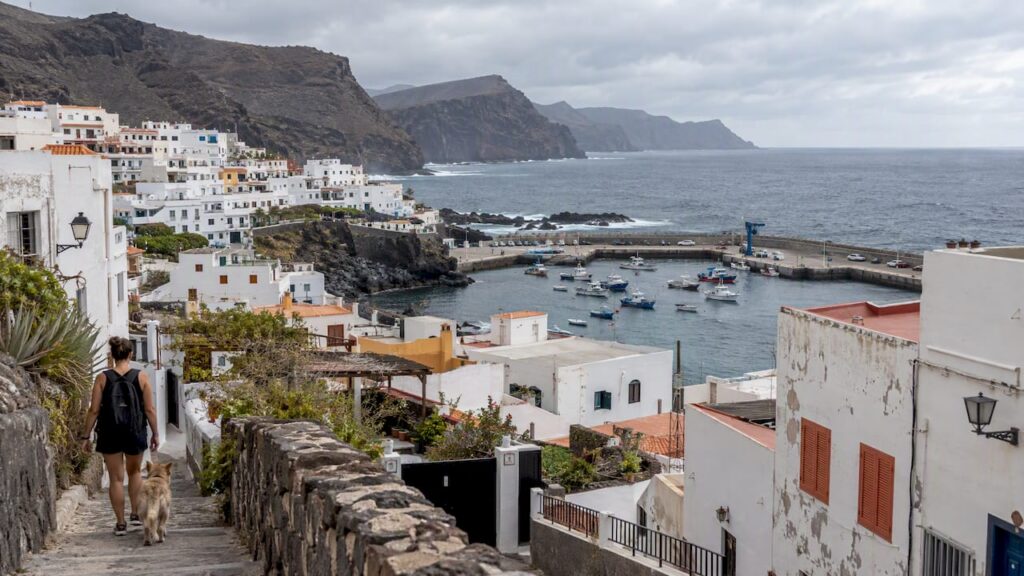
Remote Vacation Destinations: How to Choose and Prepare
The best remote vacation destination is the one that matches how remote you actually want to be. For some travelers that means a quiet beach town with fast Wi-Fi and a coworking space. For others it means a place where the nearest hospital is a boat ride away. Those are very different trips, with very different budgets, permits and risks, and most lists blur them together.
This guide separates them. You will see three tiers of remoteness, what each realistically costs, the safety habits that matter once help is far away, and how to pick a place if you plan to work part of the time. We run entrepreneurship bootcamps and company retreats in places like the Canary Islands, Panama and Brazil, so we have a practical view of what makes a far-from-home location work for real people.
TL;DR
- “Remote” covers three different trips: connected hubs where you can work, quiet coastal or rural bases, and true expedition-level places that need permits.
- Budget drives the choice. Nomad-hub monthly costs run roughly $900 to $1,200 in places like Vietnam and Georgia, while luxury or extreme destinations can exceed $10,000 per trip.
- Safety in remote places depends less on the destination and more on your risk assessment, evacuation insurance and check-in routine.
- Go in the off-season where you can. Overtourism is the main threat to the fragile places people want to see.
- If you want to work or build a business while you travel, choose connectivity and community first, scenery second.
Table of Contents
- Three kinds of remote, and why the difference matters
- Connected remote: far away, still easy to live in
- Quiet remote: small places with real character
- Expedition remote: when the destination sets the rules
- How much does a remote vacation cost?
- Staying safe when help is far away
- Choosing a destination if you plan to work
- Our perspective: remote is a choice about focus
- Where to go if you want to build something while you travel
- A simple way to decide
- FAQ
- Sources
Three kinds of remote, and why the difference matters
Search results for this topic mix Antarctica, Bhutan, Mongolia and small beach towns in the same list. That is entertaining, but it does not help you decide. A more useful way to sort is by what you need to arrive, stay and get help.
| Tier | What it feels like | Typical examples | Planning load |
|---|---|---|---|
| Connected remote | Far from home, easy day to day: reliable internet, cafes, a clinic nearby | Da Nang, Tbilisi, Lisbon, Chiang Mai | Low: flights, lodging, basic insurance |
| Quiet remote | Small towns, surf or farm country, limited services, patchy connection | Coastal villages in Panama, Brazil, the Canary Islands | Medium: local transport, backup connectivity, medical planning |
| Expedition remote | Few or no services, restricted access, weather-dependent logistics | Antarctica, South Georgia, Kermadec Islands | High: permits, specialized transport, evacuation cover |
Most travelers who type this query want the first or second tier. The third is a different category of trip and deserves its own planning, which we cover below.
Connected remote: far away, still easy to live in
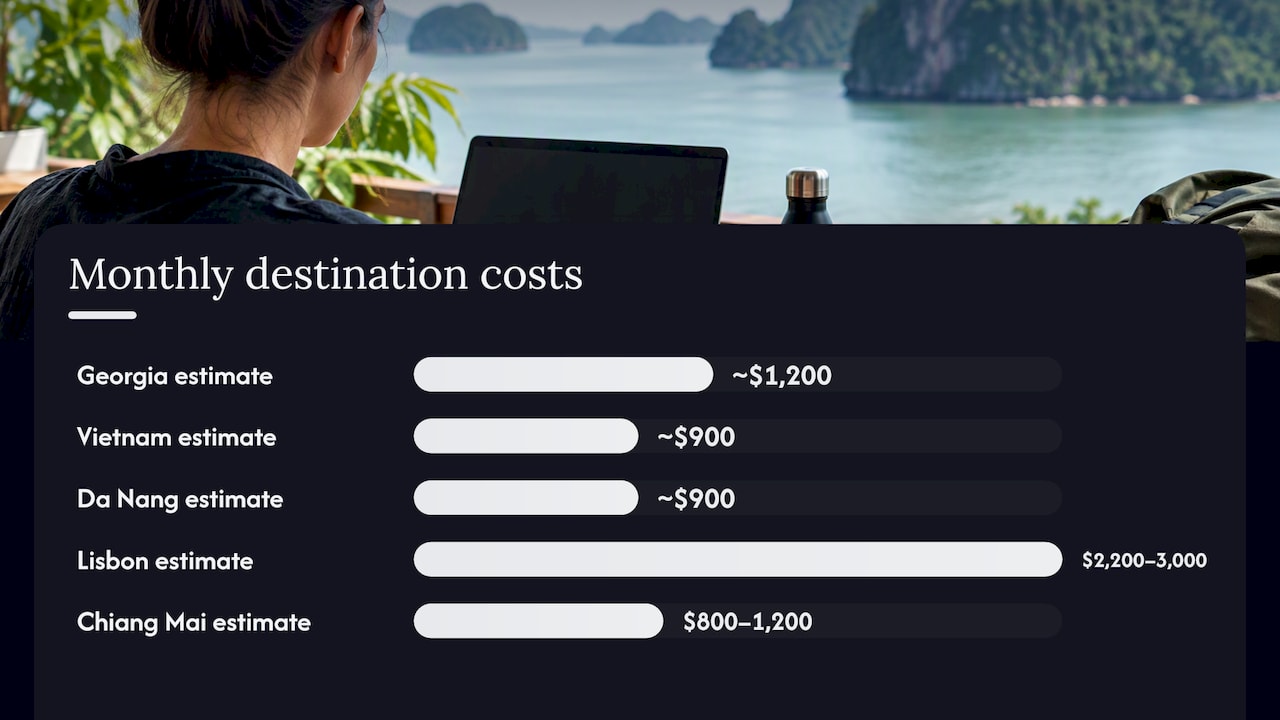
If you want distance from your routine without giving up a good desk and a decent clinic, the established nomad hubs are the safe bet. They also keep a trip affordable. Outgrid’s destination ranking weights cost of living, climate and safety, and it lists Georgia at an average cost of about $1,200 a month and Vietnam at about $900. A separate 2026 guide puts Da Nang near $900 and Tbilisi near $1,000 a month.
Compare that with a European base. A 2026 workation comparison estimates Lisbon at $2,200 to $3,000 a month against $800 to $1,200 for Chiang Mai, with Wi-Fi and coworking prices listed side by side. Treat all of these as ranges, since your rent and habits will move them.
What these places have in common is infrastructure. You can land, find a monthly rental, buy a local SIM and be productive within a week. That is why they work for people who want a vacation that does not completely stop their income.
What to check before you book a connected hub
- Internet you can test. Ask the host for a speed test screenshot, not a promise.
- Time zone overlap. If you work with a US team, a place seven hours ahead of New York gives you a short shared window. Plan for it.
- Visa rules. Tourist stays and nomad visas differ by country and change often, so check the official government page for your passport before you pay for a flight.
- Medical access. Know where the nearest clinic with English-speaking staff is.
Quiet remote: small places with real character
The middle tier is where many of the most memorable trips happen. Think of a surf village in Panama, a fishing and dune town in northeast Brazil, or a small port on the northwest coast of Gran Canaria. These places usually have a few good cafes, a handful of long-term travelers and very little nightlife. Internet can be good but not guaranteed, and the nearest hospital may be an hour away.
The trade-off is worth naming honestly. You get space, nature and a slower rhythm. You give up redundancy: if the power or the connection fails, there is often no second option down the street. Pack for that. Carry an unlocked phone that accepts a local SIM or eSIM, which also helps you avoid gaps in coverage, a power bank, and offline maps.
Plan your connectivity like a professional
If you work during the trip, treat connectivity as a system with a backup. Use the main line at the rental, a local data plan as the second layer, and a coworking day pass or cafe you have already tested as the third. Our guide to working from anywhere without losing momentum walks through routines that hold up when the plan changes.
Respect the place you are visiting
Quiet places are quiet because few people go. That can change fast when a spot goes viral. Research from Brazil’s tourism sector in 2025 points to a real tension between wanting off-the-beaten-path travel and the damage it can do, and it recommends regenerative tourism, including off-season visits and support for local conservation. The same report warns that relying on social media to find destinations tends to speed up harm to fragile sites.
Practical translation: travel outside peak months, stay longer in fewer places, hire local guides and eat where residents eat. If you want to read more about off-season travel and responsible visits, that is a good place to start thinking about how your own trip lands on a community.
Expedition remote: when the destination sets the rules
The far end of the spectrum is another world. Antarctica, South Georgia, and New Zealand’s Kermadec Islands appear on lists of the most remote places on Earth, and they are not casual vacations.
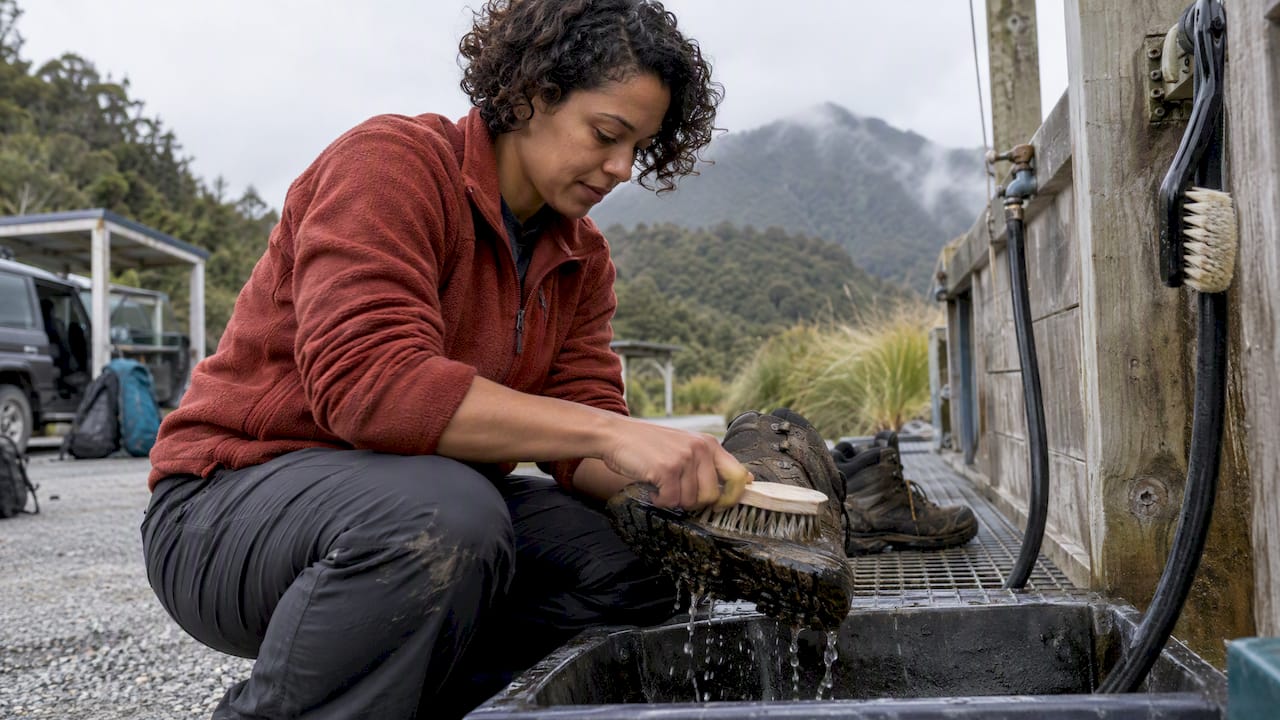
Take the Kermadecs. New Zealand’s Department of Conservation states that these islands can only be visited with permits obtained before leaving mainland New Zealand. Processing can take 30 or more working days, access is restrictive, and biosecurity rules, such as cleaning boots and gear, are strict. Travelers who treat this like a standard tourist visa risk being refused or expelled.
Remote territories like these rarely have a hotel to walk into. You usually reach them through an organized expedition, which is also where the budget climbs. A 2025 cost analysis notes that luxury or extreme remote trips frequently exceed $10,000 per trip once logistics, permits and specialized transport are included. If your question is whether $5,000 is enough for a vacation, the short answer is that it can cover one to two comfortable months in a lower-cost hub like Da Nang or Tbilisi, and it will not stretch far into expedition territory.
How much does a remote vacation cost?
Budgets vary more by tier than by country. Use these as a starting frame, then replace them with real quotes.
| Trip style | Reference point | Source |
|---|---|---|
| Lower-cost connected hub, one month | About $900 to $1,200 | Outgrid |
| Higher-cost European hub, one month | About $2,200 to $3,000 for Lisbon | Faroway |
| Luxury hubs such as Switzerland or the Maldives | Roughly $20,000 to $25,000 per month | Outgrid |
| Extreme remote expedition | Often above $10,000 per trip | Nomadoutfit |
Two cost lines that people forget: evacuation or medical transport insurance and the cost of getting from the nearest airport to the actual place. In remote areas both can rival your lodging bill.
Younger travelers are especially value-conscious. Contiki’s research reports that 40% of Gen Z travelers rank value for money as their top priority, and that 59% are unwilling to pay significant extra to travel responsibly even though 91% say sustainability matters. That gap is worth noticing in your own planning: choose a longer stay in one place over three short hops, and you usually lower both cost and footprint.
Staying safe when help is far away
In remote regions, emergency services may be thin or centralized far from you. The State Department and conservation experts frame it clearly: self-sufficiency, a sound pre-trip risk assessment and strong evacuation insurance matter more than which destination you pick. That same advisory page, for Malaysia, shows how country-level guidance can contain local detail: it is a Level 1 advisory overall, but it advises increased caution on islands and maritime areas off the coast. Read the advisory for every country on your route, and check it again before you fly, since levels change.
A short pre-trip checklist
- Read the official travel advisory for your destination and any country you transit.
- Buy insurance that covers evacuation, and confirm that it covers the activities and altitude you plan.
- Know the local hazards. Natural hazards vary by region, from earthquakes and floods to volcanic activity. The OSAC guide on preparing for travel in a potential crisis zone explains how natural disasters and evacuation operations can unfold.
- Set a check-in routine. Agree with someone at home on a contact schedule, for example every 8 to 24 hours. If two check-ins in a row are missed, they notify local authorities or your embassy, per the same OSAC guidance.
- Protect your devices. Public transit hubs, borders and cafes are common weak points. Assume networks may be monitored, keep software updated and carry only what you need. Harvard’s global support team has a plain-language page on keeping your data safe abroad.
If you have a medical condition, take prescriptions on a long trip, or plan to be more than a few hours from a hospital, talk to your doctor or a travel medicine clinic before you book. They can tell you what to carry and which vaccinations apply.
Choosing a destination if you plan to work
Many people now fold a vacation into work weeks. The context changes the answer. Deloitte’s 2025 summer travel research suggests travelers use AI for itinerary planning (43% in 2025) but lean on friends, family and community reviews for high-stakes bookings. That fits our experience: ask people who have actually stayed there.
Then test the place against these criteria:
- Solo freelancer: Fast internet, a community of other independent workers, low monthly costs, and a visa you can get without lawyers.
- Founder building a company: Everything above, plus an environment that supports focus and peers who push back on your ideas. Our overview of the digital nomad lifestyle covers the freedom and the practical limits.
- Team on a retreat: Secure, redundant connectivity, meeting space and group logistics. A place that is perfect for a solo nomad can be wrong for a team, which is why we design company retreats around the group’s goals first.
If you are still deciding whether this lifestyle suits you, start with what a digital nomad is and the kinds of work people do on the road.
Our perspective: remote is a choice about focus
We do not think the most remote place is the best one. We think the best place is where you can do the thing you came to do. For a vacation, that is rest. For a founder, it is clarity and execution. Those goals ask for different surroundings.
What we see in our bootcamps is that people arrive carrying a business problem they cannot solve at home, because home is full of familiar interruptions. Moving to a new setting, with a small group of driven peers and daily structure, breaks the pattern. A beach town with reliable Wi-Fi and a shared purpose does more for a first-time founder than a remote peak with no signal.
We also hold ourselves to the same habits we recommend here: pick locations with working infrastructure, plan logistics ahead of arrival, and design the days so there is time to recharge. Remote does not have to mean isolated. The strongest part of any trip we have seen is the community that forms and continues afterward.
— Amichai
Where to go if you want to build something while you travel
If the idea of a remote trip appeals to you because you want a business, not just a break, a structured program can give you the setting and the accountability at once. Our in-person entrepreneurship bootcamps run in places chosen for focus and quality of life:
- Lisbon, Portugal: The Entrepreneurship Sprint Bootcamp is offered at Idea Space for €1,350 and at Second Home for €1,500. You can read more on the Idea Space Lisbon page.
- Playa Venao, Panama: a 2-week entrepreneurship bootcamp with a €400 registration fee.
- Pipa, Brazil: a 10-day entrepreneurship bootcamp with a €400 registration fee.
- Agaete, Canary Islands: a 1-week entrepreneurship bootcamp with a €400 registration fee.
- Online: the Online Business Bootcamp at €500, or the 5-Day Online AI Bootcamp at €300, if you want to start before you travel.
Not sure which format fits? Our guide on why to join an entrepreneurship bootcamp lays out what you get and who benefits most. If you lead a team, see how business retreats compare with bootcamps.
A simple way to decide
- Define the purpose. Rest, adventure, work, or a mix?
- Pick the tier. Connected, quiet or expedition remote, based on your purpose and your tolerance for logistics.
- Set the budget with the extras. Include insurance, local transfers and a contingency.
- Travel in the shoulder or off-season, when your visit supports locals and puts less pressure on fragile places.
- Build your safety plan before you book. Advisory, insurance, check-ins, device habits.
- Test the first week. Stay somewhere flexible for the first few nights, then commit to a longer rental once you know the Wi-Fi and the neighborhood.
FAQ
What are some of the most remote places in the world?
Places such as Antarctica, South Georgia, Pitcairn and New Zealand’s Kermadec Islands regularly appear in lists of the most remote places. Most require expedition-style logistics, and some require permits that can take 30 or more working days. For most travelers, a quiet coastal village or a connected hub offers remoteness without that level of planning.
Is $5,000 enough for a vacation?
It depends on the tier. In lower-cost hubs like Da Nang or Tbilisi, where monthly living costs run around $900 to $1,000, $5,000 can cover a comfortable one to two month stay. For long-haul remote trips with permits and specialized transport, it is often not enough.
How do I stay safe in a remote destination?
Start with the official travel advisory, evacuation insurance and a check-in schedule with someone at home. Learn the regional hazards, such as earthquakes or volcanic activity, and carry an unlocked phone for local SIMs or eSIMs. If you have health concerns, see your doctor or a travel medicine clinic before you go.
Can I work while I vacation somewhere remote?
Yes, if you choose a place with reliable internet and plan a backup connection. Test the Wi-Fi before you commit, check time-zone overlap with your team, and confirm that your visa status allows remote work. Our remote travel guide covers how to keep momentum.
Sources
- Outgrid: all 138 destinations ranked for digital nomads
- Nomadoutfit: best digital nomad destinations 2026
- Faroway: best workation destinations 2026
- Embratur: Tourism Trends 2025
- Deloitte: 2025 summer travel survey
- Contiki
- U.S. State Department: Malaysia travel information
- OSAC: How to prepare for travel in a potential crisis zone
- Harvard Global Support: Keeping your data safe abroad
- New Zealand DOC: Visiting Rangitāhua/Kermadec Islands
Comments are closed.