What Digital Nomads Do for Work—Flexible Careers Unveiled
Every remote entrepreneur dreams of turning work into an adventure, but the digital nomad lifestyle is more than just switching cities. Flexible careers powered by digital tools now let you balance autonomy with global travel, reshaping how and where you earn. This guide clarifies what defines the digital nomad work style, highlights key career paths, and shares tips for mastering routines and legal requirements. Discover how location independence unlocks lasting business growth and personal freedom worldwide.
Table of Contents
- Defining Digital Nomad Work And Lifestyle
- Popular Remote Careers And Job Types
- Essential Skills And Daily Routines
- Legal, Tax, And Compliance Considerations
- Common Challenges And How To Succeed
Key Takeaways
| Point | Details |
|---|---|
| Digital Nomad Definition | A digital nomad combines remote work, location independence, gig flexibility, and intentional travel, differentiating it from standard remote work. |
| Types of Digital Nomads | Different nomad types exist, such as freelance digital nomads and salaried digital nomads, each with unique work structures and travel patterns. |
| Skills for Success | Key skills include self-discipline, organization, adaptability, and communication, essential for balancing work and travel effectively. |
| Legal Considerations | Understanding visa requirements and tax obligations is crucial to maintaining a legal and sustainable digital nomad lifestyle. |
Defining Digital Nomad Work and Lifestyle
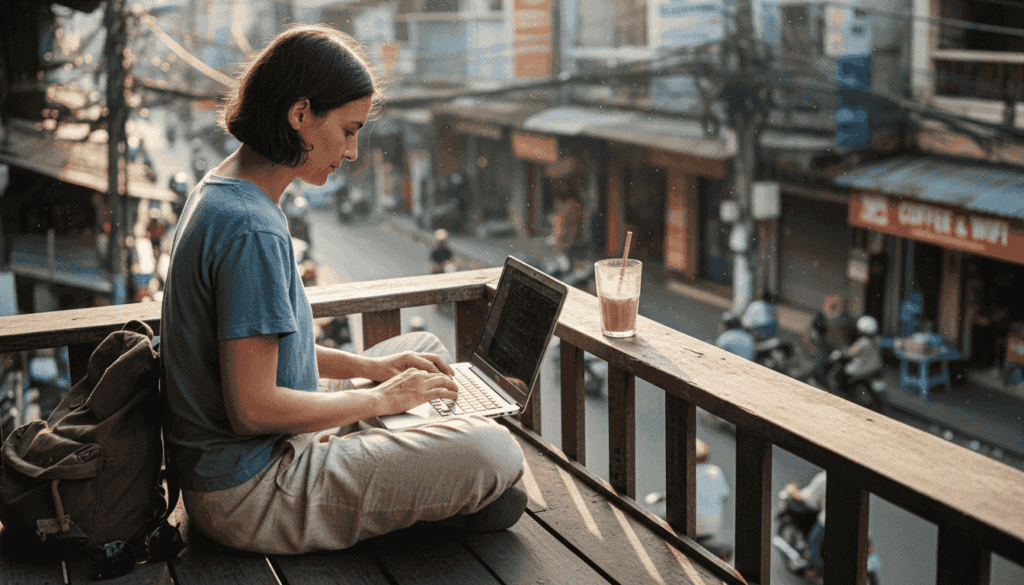
A digital nomad is someone who works remotely using digital tools while traveling and living in different locations worldwide. This isn’t just about taking your laptop to a coffee shop in Paris—it’s a complete reimagining of how, where, and why you work.
The definition combines four core elements: digital work (remote employment via internet), gig-based flexibility (project-based rather than traditional 9-to-5), location independence (working from anywhere), and intentional travel (blending work with exploration and lifestyle experiences). These pieces work together to create something fundamentally different from standard remote work.
Digital nomadism evolved significantly during the 2010s and became mainstream following the COVID-19 pandemic, which normalized remote work globally and opened possibilities for millions of workers.
Unlike a remote employee who works from a home office, digital nomads actively choose new locations as part of their lifestyle. This means your office might be a coworking space in Bangkok one month and a beach apartment in Portugal the next.
The lifestyle embraces autonomy over mobility—some nomads prioritize frequent travel, while others maintain a stable homebase and travel occasionally. There’s no single “correct” way to be a digital nomad.
Research identifies several digital nomad types based on how they structure their work and travel patterns:
- Freelance digital nomads: Self-employed professionals offering services to multiple clients
- Digital nomad business owners: Running their own companies remotely
- Salaried digital nomads: Employees working remotely for traditional companies
- Experimental digital nomads: Testing the lifestyle temporarily before committing
- Armchair digital nomads: Location-independent by choice but stable in one place
Work-life balance looks different for every nomad. Some maintain strict boundaries between working hours and travel time. Others integrate work seamlessly into their lifestyle, treating it as part of their overall experience rather than something separate.
Here is a quick reference comparing digital nomad types and their key characteristics:
| Nomad Type | Typical Work Structure | Travel Frequency | Income Stability |
|---|---|---|---|
| Freelance Digital Nomad | Multiple clients, project-based | Frequent to moderate | Moderate, varies by client |
| Digital Nomad Business Owner | Runs own company remotely | Flexible, often less frequent | Stable if business established |
| Salaried Digital Nomad | Remote for one employer | Typically low to moderate | High, regular paycheck |
| Experimental Digital Nomad | Testing nomad lifestyle | High, short-term focus | Variable, often less secure |
| Armchair Digital Nomad | Stays in one place, remote work | Rare or occasional | High, stable location |
Legal legitimacy matters too. Digital nomads navigate visa requirements, tax obligations, and residency rules differently depending on their nationality, income source, and destination countries. This complexity is why many successful nomads invest time in understanding these details upfront.
Pro tip: Start by identifying which nomad type aligns with your goals—do you want frequent travel, stable income, or maximum freedom? Your answer shapes every career and location decision you’ll make.
Popular Remote Careers and Job Types
Digital nomads work across dozens of professions, each with its own rhythm and income potential. The best remote careers offer flexibility, location independence, and the ability to earn sustainable income from anywhere.

The most accessible entry point for many aspiring nomads is content creation. This includes writing, blogging, copywriting, and social media management. Companies worldwide need people who can craft compelling messages, and these skills translate across industries and geographies.
Technology roles remain among the highest-paying remote positions. Software developers, web designers, and mobile app developers command strong rates because their skills are in constant demand. Programming knowledge isn’t required for all tech roles—UX designers, technical writers, and IT support specialists also thrive remotely.
Creative professionals have exceptional opportunities. Graphic designers, illustrators, photographers, and video editors serve global clients through platforms and direct relationships. Your portfolio matters far more than your location.
Popular digital nomad careers span creative roles, technology positions, and bilingual support services, each offering flexibility and location independence.
Marketing and business strategy consulting attract nomads with experience. Digital marketing specialists, SEO consultants, and business coaches work with clients across time zones. These roles often start as freelance work and evolve into personal brands.
Language skills open unique doors. Translation and interpretation services command premium rates, especially for less common language pairs. Teaching English online remains viable but increasingly competitive.
Project management and operations roles are growing rapidly. As companies embrace distributed teams, they need people to coordinate workflows, manage timelines, and keep projects on track remotely.
Here’s what separates sustainable nomad careers from burnout:
- Recurring revenue from retainer clients or subscriptions, not one-off projects
- Flexible hours that allow for time zone differences and travel
- Skills that command rates high enough to cover nomad expenses
- Work that doesn’t require constant networking or client acquisition
- Fields with genuine demand rather than oversaturated markets
Landing international clients as a remote freelancer requires understanding market rates, building credibility, and positioning yourself strategically in your niche.
The reality: not every remote job suits the nomad lifestyle. Customer service roles with strict shift requirements, jobs requiring office presence for meetings, and positions dependent on in-person relationships create friction with constant travel.
Below is a comparison of popular digital nomad career fields based on flexibility, earning potential, and client acquisition:
| Career Field | Flexibility Level | Earning Potential | Ease of Finding Clients |
|---|---|---|---|
| Content Creation | High, asynchronous work | Moderate | Moderate, platform-based |
| Technology Roles | High, project or salary | High | High demand, global |
| Creative Services | Flexible, portfolio-driven | Moderate to high | Competitive, network aids |
| Consulting/Marketing | Medium, deadlines-driven | High with experience | Requires reputation |
| Language Services | Schedule varies | Moderate to high | Niche, language dependent |
| Project Management | Moderate, time-bound | Moderate | Growing with remote teams |
Pro tip: Choose a career where your expertise and rates can sustain your desired lifestyle in affordable countries, so you’re not exhausted grinding for survival.
Essential Skills and Daily Routines
Success as a digital nomad depends less on your job title and more on mastering a specific set of skills and building routines that actually stick. The lifestyle demands more discipline than traditional employment, not less.
Self-discipline forms the foundation. Without a boss or office structure, you’re responsible for showing up to work every single day. This means creating non-negotiable work blocks and protecting them from the constant temptation of exploration and leisure.
Organization and time management prevent chaos. You’re juggling different time zones, client deadlines, administrative tasks, and constant location changes. One missed invoice or forgotten email can damage client relationships or create legal problems.
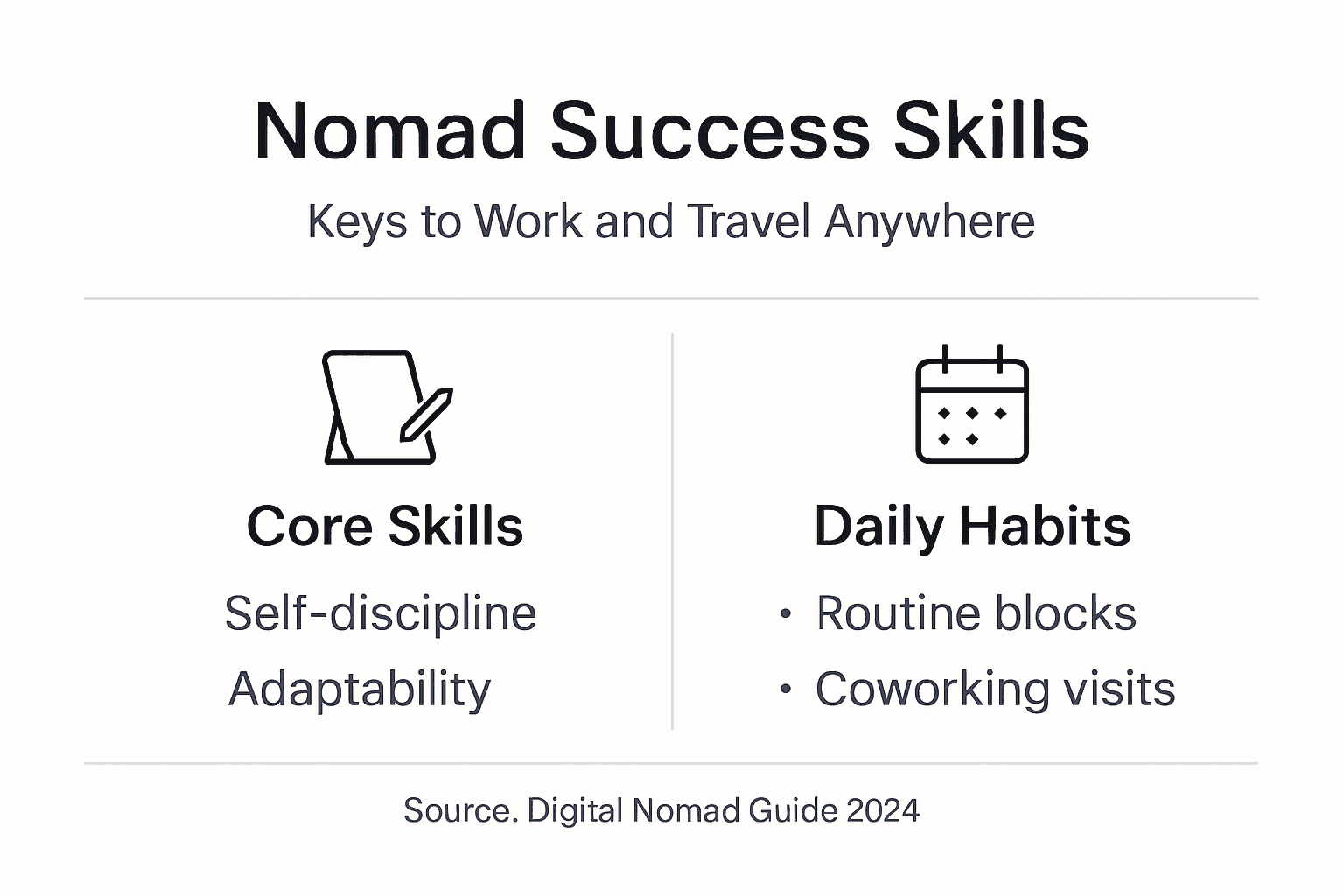
Adaptability and resilience keep you moving when things break. Internet cuts out. Flights get delayed. Your favorite coworking space closes. Nomads who succeed treat obstacles as puzzles to solve, not reasons to quit.
Communication skills matter enormously. Remote work removes face-to-face cues, so clarity becomes critical. Client misunderstandings, team alignment issues, and project scope creep all stem from poor communication.
Soft skills like organization, adaptability, and resilience underpin a digital nomad’s ability to combine work and travel effectively.
Creativity helps you solve problems in unconventional ways. When your standard solution doesn’t work due to location constraints, creative thinking finds workarounds.
A sustainable daily routine looks different for every nomad, but effective ones share common elements:
- Morning work block (2-4 hours of focused, high-quality work before mid-morning)
- Co-working or designated workspace (reduces distractions and combats isolation)
- Structured breaks (exercise, meals, and social time prevent burnout)
- Client-facing time (meetings scheduled during overlapping business hours)
- Administrative buffer (invoicing, emails, and planning before the week ends)
- Evening exploration (travel and leisure happen after work wraps)
Time zone management requires intentionality. Many successful nomads work during early morning hours to overlap with clients in different regions, then use afternoons for solo work or exploration.
Regular social interaction keeps isolation at bay. Coworking spaces, digital nomad communities, and local social groups provide human connection. Bootcamp experiences like those at Nomad Excel create concentrated periods of genuine community that sustain motivation for months afterward.
Administrative tasks compound if neglected. Weekly invoicing, tracking expenses, updating insurance, and monitoring visa requirements prevent crises from sneaking up on you.
Pro tip: Build one rock-solid routine habit first (like morning work blocks), then add new elements gradually—trying to overhaul your entire life at once guarantees failure.
Legal, Tax, and Compliance Considerations
The romantic image of working from a beach hides a complex reality: taxes, visas, healthcare, and legal obligations follow you everywhere. Ignoring these details creates massive problems later.
Tax residency determines where you owe taxes. Most countries tax residents on worldwide income, but you might qualify as a non-resident if you spend fewer than 183 days there annually. This varies by country, so assumptions can be dangerous.
Double taxation is a real risk. You could owe taxes in both your home country and your current location. International tax treaties exist to prevent this, but understanding them requires expertise.
Work status clarity matters legally. Are you self-employed, a freelancer, a business owner, or an employee? Your status affects tax obligations, social security contributions, and healthcare eligibility. Getting this wrong creates liability.
Tax frameworks for digital nomads are rapidly evolving, with dedicated visas and clarified residency rules helping nomads maintain legal standing.
Visa regulations determine where you can legally work. Some countries prohibit remote work on tourist visas. Others offer digital nomad visas specifically designed for remote workers, with clear legal status and tax benefits.
Many countries now offer competitive visa programs:
- Estonia digital nomad visa (one year, straightforward application)
- Portugal D7 passive income visa (long-term residency)
- Thailand Long Term Resident (LTR) visa (ten-year option)
- Barbados Welcome Stamp (one year, minimal requirements)
- Croatia digital nomad visa (one year)
Social security and healthcare obligations shift depending on where you’re classified as a resident. Some countries require contributions even for remote workers. Others exempt nomads. This complexity is why accountants and tax specialists earn their fees.
Keep meticulous financial records. Track income by source and client, expenses by category, and location changes by date. When tax time arrives, scrambling to reconstruct six months of finances creates stress and errors.
Understanding whether to add tax to freelance invoices depends on your location and client jurisdiction, making this a critical invoicing decision.
Consult professionals before making major moves. A tax accountant familiar with digital nomads costs less than the penalties and complications from DIY mistakes. Investment in proper advice pays itself back repeatedly.
Pro tip: Before moving to a new country, research its tax treaties with your home country and verify digital nomad visa eligibility—five hours of research beats months of tax complications.
Common Challenges and How to Succeed
The digital nomad lifestyle sounds perfect until you’re alone in a new city, your internet cuts out during an important client call, and you haven’t had a real conversation in weeks. The challenges are real, but they’re all manageable with the right approach.
Loneliness and isolation top the list for most nomads. You’re constantly meeting people, yet building deep relationships becomes difficult when you’re always leaving. The paradox: you’re surrounded by humans but feel genuinely alone.
Work-life balance blurs dangerously. Your bedroom becomes your office. Your vacation destination becomes your workplace. Without clear boundaries, work expands to fill every waking hour, and burnout arrives faster than you’d expect.
Internet reliability can make or break your career. Spotty WiFi, power outages, and connectivity failures aren’t minor inconveniences—they’re income threats. One failed client call or missed deadline damages relationships built over months.
Income instability creates financial stress. Freelance work ebbs and flows. Project-based income means some months are feast and others are famine. Without steady paychecks, financial planning feels chaotic.
Cultural adjustment and homesickness affect mental health more than many nomads expect. Missing family events, struggling with language barriers, and adjusting to new customs takes a psychological toll.
Successful nomads manage challenges through routines, local communities, and self-care practices, including coworking spaces and slow travel strategies that reduce burnout.
Here’s how to actually succeed:
- Build routines that create stability despite constant change (same work hours, exercise, meals)
- Join communities through coworking spaces, local groups, and digital nomad networks
- Practice slow travel by staying 2-4 weeks per location instead of bouncing weekly
- Set clear work boundaries (hours, locations, communication expectations)
- Invest in relationships with clients and fellow nomads—community prevents isolation
- Use project management tools to maintain income stability and track work
- Schedule regular connection with family and friends back home
Accountability matters enormously. Building systems to stay accountable keeps you on track when external structure disappears. Community-based bootcamps and peer groups provide this external accountability.
Internet reliability requires redundancy. Use multiple providers, keep backup power solutions, and scout coworking spaces with proven connectivity before relying on them for important work.
Income stability comes from diversification. Multiple clients, passive income streams, and retainer relationships reduce the impact of losing one project.
Pro tip: Choose one location per quarter and spend 6-8 weeks there instead of moving monthly—meaningful relationships and routine stability reduce isolation and burnout dramatically.
Transform Your Digital Nomad Career with Actionable Support
Navigating the flexible, dynamic world of digital nomad careers can feel overwhelming. From mastering self-discipline and managing client relationships to building reliable income streams and sustaining community connection, the challenges are real. If you seek clarity on defining your nomad work style or want proven frameworks to launch or scale your business while traveling, you are not alone. The journey demands structured mentorship, a supportive network, and practical execution strategies.
Nomad Excel offers immersive entrepreneurship bootcamps that empower digital nomads to refine their offers, validate ideas, and develop scalable business systems through expert guidance and daily accountability. Explore how our Business Archives deliver insights relevant to your remote career goals while immersing yourself in a community that accelerates growth and overcomes isolation. Ready to create sustainable income and work-life balance on your terms Visit Nomad Excel to learn about our programs and start your entrepreneurial adventure today.
Frequently Asked Questions
What types of careers are popular among digital nomads?
Digital nomads often pursue careers in content creation, technology roles, creative services, consulting, language services, and project management. Each of these fields offers the flexibility and location independence that suit the nomadic lifestyle.
How do digital nomads maintain work-life balance while traveling?
Digital nomads often establish clear boundaries between work hours and leisure time. This can include creating structured daily routines, setting non-negotiable work blocks, and scheduling regular breaks to prevent burnout and ensure productivity.
What skills are essential for success as a digital nomad?
Key skills for digital nomads include self-discipline, organization, adaptability, communication, and creativity. Mastering these skills enables nomads to navigate the challenges of remote work while maintaining a fulfilling travel lifestyle.
How do digital nomads handle legal and tax obligations?
Digital nomads must be aware of tax residency, double taxation risks, and visa regulations. Researching these factors prior to traveling and potentially consulting with tax professionals can help ensure compliance and minimize legal issues.
Recommended
- What Is a Digital Nomad? Complete Overview – Nomad Excel – Your Entrepreneurial Adventure Starts Here
- Digital Nomad Lifestyle: Freedom, Community, Reality
- Navigating Post-COVID Entrepreneurship as a Digital Nomad
- Why Pursue Flexible Entrepreneurship for Life Design
- INUSUAL | Transformación digital en liderazgo: Clave para innovar
Comments are closed.