
How to Stay Accountable as Entrepreneur for Lasting Growth
Staying accountable while building a thriving business is no small feat for any American or international digital nomad. Research shows that over 80 percent of entrepreneurs abandon their goals within the first year without systems for clear tracking and honest feedback. As you travel from one inspiring location to the next, creating a resilient framework for growth becomes your edge. Here, you will find concrete steps to align your vision, track progress, and build lasting connections that fuel personal and professional success.
Table of Contents
- Step 1: Define Your Personal And Business Goals Clearly
- Step 2: Set Up Effective Tracking Systems And Routines
- Step 3: Engage Your Community For Continuous Feedback
- Step 4: Partner With Mentors For Accountability Check-Ins
- Step 5: Review Results And Adjust Your Strategies
Quick Summary
| Key Point | Explanation |
|---|---|
| 1. Set Clear Personal and Business Goals | Define distinct personal and business targets using SMART criteria to guide entrepreneurial success. |
| 2. Implement Effective Tracking Systems | Utilize digital tools for tracking time and tasks, ensuring consistent monitoring of progress. |
| 3. Engage the Community for Feedback | Foster relationships with stakeholders for genuine input and insights to enhance business strategies. |
| 4. Partner with Mentors for Guidance | Create a diverse mentor network for accountability and varied perspectives to support your growth. |
| 5. Review Results and Adjust Strategies | Conduct regular evaluations of performance to adapt strategies and maintain alignment with goals. |
Step 1: Define your personal and business goals clearly
Successfully defining your entrepreneurial trajectory begins with crystal-clear goal setting that bridges your personal aspirations with concrete business objectives. Developing an entrepreneurial vision represents the foundational blueprint that transforms abstract dreams into actionable strategies.
Start by creating two parallel goal tracks: personal development and business growth. For personal goals, consider aspects like work life balance, skill acquisition, financial independence, and lifestyle design. On the business side, articulate specific metrics like revenue targets, customer acquisition rates, market expansion plans, and product development milestones. These goals should be specific, measurable, achievable, relevant, and time-bound (SMART). Break down larger objectives into quarterly or annual benchmarks that allow you to track progress systematically.
The most effective goal-setting approach involves consistent review and recalibration. Schedule monthly or quarterly check-ins to assess your progress, celebrate achievements, and adjust strategies as needed. Remember that entrepreneurial journeys are dynamic your goals should remain flexible yet focused.
Pro tip: Create a visual goal tracking dashboard that combines both personal and professional objectives to maintain holistic perspective and motivation.
Step 2: Set up effective tracking systems and routines
Entrepreneurs need robust tracking systems to transform strategic goals into measurable progress. Creating systematic approaches to daily workflows allows you to monitor performance, identify bottlenecks, and maintain consistent momentum toward your objectives.

Begin by selecting digital tools that align with your working style and business needs. Time tracking methods play a critical role in understanding productivity patterns, so explore applications that offer comprehensive insights into task duration, project progress, and resource allocation. Consider using task management platforms that integrate time tracking, goal setting, and performance analytics. Implement techniques like time blocking, where you dedicate specific time slots to particular activities, ensuring focused work and preventing multitasking distractions.
Establish a consistent review routine to assess your tracking systems effectiveness. Schedule weekly or biweekly sessions to analyze your performance metrics, adjust workflows, and realign strategies. This iterative approach ensures your tracking systems remain dynamic and responsive to changing business requirements.
Pro tip: Integrate automation tools that can passively track your work patterns and generate productivity reports, reducing manual tracking time and providing objective performance insights.
Here’s a summary of key systems and tools that can enhance entrepreneurial tracking routines:
| System Type | Example Tools | Benefit for Entrepreneurs |
|---|---|---|
| Time Tracking | Toggl, RescueTime | Measure productivity, analyze focus |
| Task Management | Asana, Trello | Organize projects, set priorities |
| Performance Analytics | Google Analytics, Power BI | Monitor business metrics, gain insights |
| Automation | Zapier, IFTTT | Reduce repetitive tasks, save time |
Step 3: Engage your community for continuous feedback
Building a dynamic feedback ecosystem is crucial for entrepreneurial growth and adaptability. Meaningful community engagement requires intentional strategies that foster two way communication and create environments where authentic insights can emerge naturally.
Start by identifying the key stakeholders in your entrepreneurial journey including peers, potential customers, mentors, and industry connections. Develop communication channels that promote ongoing dialogue and mutual learning, such as monthly virtual meetups, specialized online forums, targeted surveys, and interactive workshops. Utilize digital platforms that allow for both structured feedback collection and spontaneous conversations. Create safe spaces where community members feel comfortable sharing candid perspectives about your business strategies, product offerings, and potential improvements.
Implement a systematic approach to feedback integration by establishing clear protocols for collecting, analyzing, and acting on community insights. Develop a transparent process that demonstrates how external input directly influences your business decisions, which encourages continued engagement and builds trust among your network.
Pro tip: Create a dedicated feedback dashboard that visually tracks community suggestions and shows which recommendations have been implemented, signaling your commitment to collaborative growth.
Compare how different feedback channels contribute to business improvement:
| Feedback Channel | Strength | Typical Challenge |
|---|---|---|
| Online Forums | Candid insights, detailed discussion | Lower participation rates |
| Surveys | Quantifiable feedback | Limited depth, survey fatigue |
| Virtual Meetups | Real-time interaction | Scheduling conflicts |
| Workshops | Collaborative problem-solving | Resource-intensive |
Step 4: Partner with mentors for accountability check-ins
Successful entrepreneurs understand the transformative power of strategic mentorship. Supportive accountability through mentor relationships can dramatically enhance goal achievement and personal growth, providing critical external perspective and motivation that self guided efforts often lack.
Begin by carefully curating a diverse network of mentors who bring unique insights and experiences relevant to your entrepreneurial journey. Build a circle of mentors who can offer guidance, honest feedback, and help maintain consistent progress toward your objectives. Establish clear expectations for your mentorship relationships including frequency of check ins, communication preferences, and specific areas where you seek guidance. Schedule regular virtual or in person meetings designed to review your progress, discuss challenges, and receive constructive input. During these sessions, come prepared with specific questions, progress updates, and areas where you need strategic advice.
Create a structured accountability framework that goes beyond occasional conversations. Develop a shared document or tracking system where mentors can provide ongoing insights, review your goal progress, and offer real time recommendations. This approach transforms mentorship from occasional advice to a dynamic partnership focused on your continuous improvement.
Pro tip: Rotate your mentor network periodically to ensure you are receiving diverse perspectives and preventing potential echo chambers in your entrepreneurial thinking.
Step 5: Review results and adjust your strategies
Successful entrepreneurs treat strategy as a dynamic process requiring continuous evaluation and refinement. Systematic review of results provides critical insights that support iterative improvements and strategic realignment, enabling you to stay responsive to changing business environments.
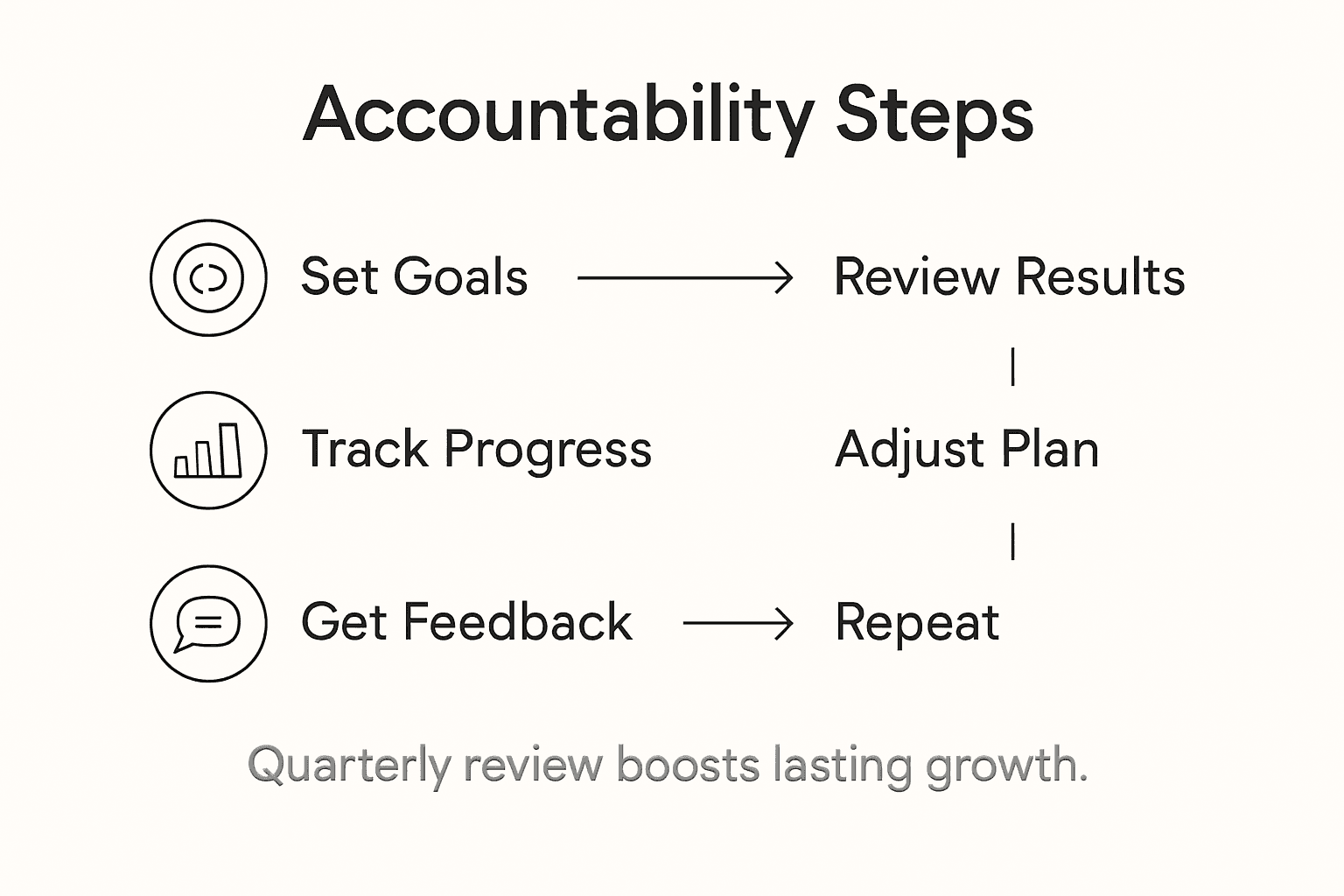
Develop a structured approach to performance analysis by establishing clear key performance indicators (KPIs) that align with your core business objectives. Reviewing related studies and performance metrics allows identification of potential gaps and opportunities for strategic adjustment, transforming data into actionable intelligence. Schedule quarterly comprehensive reviews where you analyze progress across financial metrics, customer feedback, operational efficiency, and personal growth indicators. During these sessions, critically assess what strategies worked, which approaches need modification, and identify emerging opportunities or potential challenges.
Cultivate a mindset of adaptive learning by creating a feedback loop that continuously integrates insights from your performance reviews. Develop a flexible strategic framework that allows for quick pivots and incremental improvements based on real world data. This approach ensures your entrepreneurial journey remains agile and responsive to market dynamics while maintaining a consistent focus on your long term vision.
Pro tip: Implement a rolling forecast method that updates your strategic plan every quarter based on the most recent performance data and market trends.
Accelerate Your Entrepreneurial Accountability with Nomad Excel
Staying accountable as an entrepreneur is challenging when managing personal goals and business growth simultaneously. This article emphasizes the importance of structured accountability, community feedback, and mentorship to maintain momentum and achieve lasting success. If you often struggle with consistent progress, motivation, or integrating feedback into your strategy, you are not alone. Concepts like goal tracking, mentor check-ins, and engaging communities are critical to turning vision into reality.
At Nomad Excel, we specialize in empowering entrepreneurs just like you through immersive Entrepreneurship Archives. Our hands-on bootcamps provide daily accountability, expert mentorship, and a thriving community designed to tackle these exact pain points. Whether you want to sharpen your strategic focus or make meaningful connections that hold you accountable, our programs deliver real-world results. Explore how our experience-led approach can help you build sustainable growth. Take the step today by visiting Nomad Excel and learn how to transform your entrepreneurial journey into a thriving adventure.
For inspiring stories and actionable insights to fuel your progress, also check out the Inspiration Archives and Business Archives on our site.
Frequently Asked Questions
How can I set effective goals as an entrepreneur?
To set effective goals, create two parallel tracks: personal development and business growth. Use the SMART criteria to define specific, measurable, achievable, relevant, and time-bound objectives, and break down larger goals into quarterly or annual benchmarks to track progress.
What tracking systems should I implement to monitor my entrepreneurial progress?
Implement robust tracking systems such as time tracking and task management tools to measure productivity and organize projects. Schedule weekly or biweekly reviews to assess your performance metrics and adjust workflows as necessary to maintain progress toward your goals.
How do I engage my community for valuable feedback?
Identify key stakeholders such as peers, customers, and mentors, and create communication channels for ongoing dialogue. Utilize monthly virtual meetups or targeted surveys to foster candid discussions and gather insights that inform business strategies.
What role do mentors play in maintaining accountability?
Mentors provide external perspective and motivation, helping you achieve your goals by offering guidance and feedback. Schedule regular check-ins and come prepared with specific questions to ensure that your mentorship relationship remains focused and beneficial.
How often should I review my results and adjust my strategies?
Conduct quarterly reviews to analyze your performance against established key performance indicators (KPIs). This systematic approach helps identify gaps, opportunities for strategic adjustment, and enables you to remain responsive to market dynamics while pursuing your long-term vision.
What is a good way to create a feedback culture within my community?
A feedback culture can be fostered by creating safe spaces for sharing insights and establishing clear protocols for feedback collection and integration. Develop a dedicated feedback dashboard to visually track community suggestions and highlight how their input effectively influences your business decisions.
Comments are closed.