
Why Choose In-Person Bootcamps: What You Gain Beyond the Curriculum
An in-person bootcamp is worth choosing when you need more than information. You need focus, direct feedback from people who have built businesses, and a group of peers who push you to finish what you start. Content is easy to find. What a room of committed founders adds is momentum, accountability and relationships that last after the program ends.
This guide explains what in-person bootcamps do well, what the research says about mentorship, peer learning and training, how to judge whether the format suits you, and what to expect on price.
TL;DR
- In-person bootcamps combine three things that are hard to assemble alone: hands-on mentorship, a peer community and daily accountability.
- Research on entrepreneurship training points to specific, local, experienced mentor knowledge as a key driver of results, more than abstract classroom content.
- Fit matters: match the bootcamp’s length, stage focus and style to your business, schedule and how you learn.
- Costs vary widely. Our published prices run from 300 EUR for a 5-day online program to 1,500 EUR for a Lisbon sprint, with 400 EUR registration fees for destination bootcamps.
- Use the format to execute: arrive with an idea or a live business, leave with a tested offer, a plan and a network.
Table of Contents
- What an in-person bootcamp actually is
- The case for choosing in-person
- What the research says about training and outcomes
- In-person, online or self-taught: how they differ
- What you do and learn day to day
- Is an in-person bootcamp right for you?
- What an entrepreneurship bootcamp costs
- Ready to join a cohort?
- FAQ
- Sources
What an in-person bootcamp actually is
A bootcamp is a short, intensive program built around doing. Instead of watching lessons at your own pace, you work through structured sprints, such as validating an idea, refining an offer or building a simple system, with mentors and a cohort working alongside you.
At Nomad Excel, in-person bootcamps run from one to four weeks and bring together a curated group of founders. A typical day mixes workshops, working sessions, mentor time and accountability check-ins. You can see the format on our entrepreneurship bootcamps page and read about the approach in our program overview.
Researchers have long noted that entrepreneurship education tends to work best as learning by doing. A paper presented at the HEAD22 conference on social entrepreneurship training notes this, and describes a four-day residential enterprise school in the UK’s Lake District that worked well for building knowledge and skills. Being away from your usual routine, in one place with one purpose, is part of why that format holds attention.
The case for choosing in-person
1. Mentors who know your situation
Generic advice rarely survives contact with a real business. A mentor who has run something similar can tell you which step to take first and which to skip.
The evidence here is encouraging. In a randomized study in Kenya, mentorship from a successful entrepreneur in the same industry increased short-term profits for inexperienced female microenterprise owners, while classroom training alone did not move profits. The researchers’ reading is that local, specific knowledge helped, while abstract, general information did not.
That is the logic behind how we build our programs: direct guidance from experienced entrepreneurs, marketers and operators, tied to your own business rather than a case study. Our step-by-step mentoring process shows how that guidance is structured.
2. Peer energy you can feel
Surrounding yourself with other builders changes your standards. When the person at the next table ships an offer on Tuesday, you want to ship yours on Wednesday.
First-time founder Vega-Sanz put it this way in a TechCrunch piece on accelerators: if you are competitive, you see other companies doing well and being praised in front of everybody, and that motivates you. Healthy competition is one side of community. The other is support: someone to test your pitch on, a second opinion on pricing, an introduction you would not have found alone.
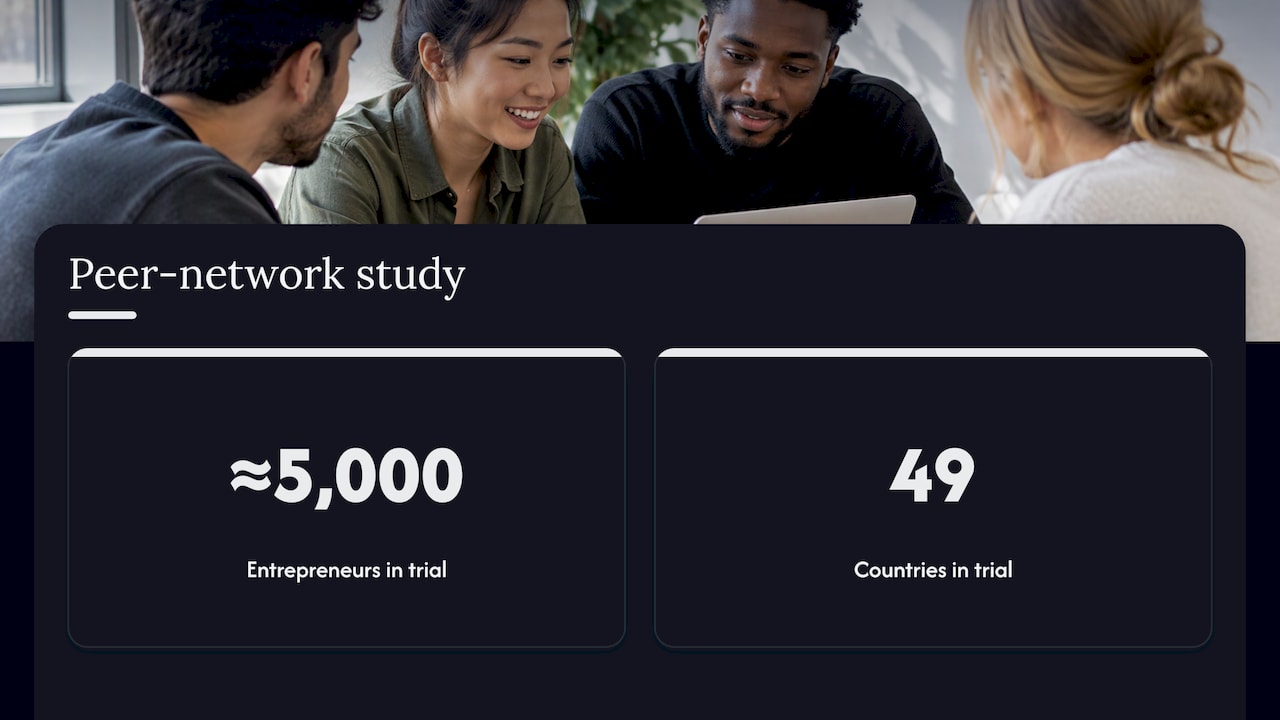
The research on peer networks adds a useful nuance. A Pan-African randomized trial run through IZA, with almost 5,000 entrepreneurs from 49 countries, found positive effects on the submission and quality of business plans when peer interaction was designed with some intermediate diversity among participants. In other words, a good cohort is built on purpose, not just assembled. That is why we curate each group rather than filling seats at random. For more on this, see our piece on peer collaboration and entrepreneur success.
3. Accountability that does not depend on willpower
Most aspiring founders do not lack ideas. They lack a deadline that someone else cares about. In a bootcamp, the structure supplies it: sprints with defined outputs, daily check-ins and a group that notices when you go quiet.
In the IZA trial, face-to-face interaction had a positive effect on whether participants submitted business plans, which is a measure of follow-through. Showing up in person, with people expecting your work, is a simple way to turn intention into output.
If you coach or mentor clients yourself, you may later want a client management platform for coaches to handle bookings, check-ins and progress tracking, so the same accountability habits carry into your own business.
4. Immersion and fewer distractions
A week or two away from your inbox, your clients’ small emergencies and your couch changes what is possible. Decisions that have sat in your to-do list for months get made in an afternoon because you have the time, the people and the headspace.
This is especially relevant for freelancers and remote professionals whose work and home life blur together. A destination bootcamp separates the two for a short, productive stretch, and the setting itself, whether a coastal town or a European city, adds energy that a spare bedroom rarely does.
5. A network that outlasts the program
The people you meet become collaborators, referrers, clients and friends. Shared time, meals and problem-solving build trust faster than a chat thread does. Our alumni community stays active after each cohort ends, which is a core part of what we offer.

What the research says about training and outcomes
Honest guidance means looking at the whole evidence base, because results depend on the participant and on how a program is designed.
A synthesis from the Centre for Economic Policy Research finds that standard entrepreneurship training has modestly positive average effects, with reasonably high returns given the low cost per participant. It also reports that incubators and accelerators look positive, with the caveat that some effects may reflect who gets selected or what the program contains. A related VoxDev article from November 2025, drawing on McKenzie’s meta-analysis, adds that firms assigned to training see modest but significant gains in profits and sales, and in many cases earn back the cost within two years.
Two practical lessons follow.
- Coaching and application beat lectures. A World Bank study of a business support program in Tanzania found that basic in-class training had little effect, while enhanced training with visits from business coaches improved the adoption of new business practices. The entrepreneurs who gained most were those with at least nine years in their main activity. Pairing teaching with personal coaching is the design choice that matters.
- Behavior change needs reinforcement. In the Kenya study, classroom trainees were more likely to keep formal records at first, but that effect faded after four months. Habits stick when a community and a follow-up structure keep supporting them, which is why ongoing mentorship and a lasting peer group are central to our model.
The CEPR paper also stresses selection: matching the type of training to the type of enterprise. That is a practical reminder to choose a program built for your stage.
In-person, online or self-taught: how they differ
Each route has a place, and many founders combine them. The question is what you need at this moment.
| What you need | Self-teaching | Online bootcamp | In-person bootcamp |
|---|---|---|---|
| Flexible pace and lowest cost | Strongest | Strong | Lower |
| Structured sprints and deadlines | You build them yourself | Built in | Built in, plus daily presence |
| Mentor access | Hard to find alone | Scheduled sessions | Hands-on, in the room and between sessions |
| Peer bonding and relationships | Limited | Possible | Deepest: shared days, meals, projects |
| Distraction-free focus | Depends on you | Depends on your environment | Created by the setting |
Online learning works. An IPA randomized evaluation of live online training for women-owned microenterprises in Guatemala and Mexico found a 24 percent increase in monthly sales after two months, and in Mexico the live online version cost less per participant than in-person delivery (US$50 against US$62). The same study saw the gain fade by six months, which underlines the value of follow-up support after any program.
That is why we offer both. If you want to start with a lower commitment, our Online Entrepreneurship Bootcamp and 5-Day Online AI Bootcamp bring the structure to your screen. You can also read about the benefits of remote bootcamps. When you want immersion, relationships and deep focus, the in-person format is built for that.
What you do and learn day to day
Programs differ, but a well-run entrepreneurship bootcamp usually moves through the same arc:
- Clarity. You test your idea or current offer against real customer needs and decide what to build, sell or fix first.
- Offer and positioning. You refine who you serve, what you promise and how you price it.
- Systems and revenue skills. You build the simple, scalable processes behind sales, marketing and delivery.
- Execution sprints. Short, focused cycles with defined outputs, reviewed by mentors and peers. Our guides on what a business sprint is and how to run business sprints explain the method.
- Next steps. You leave with a plan, accountability partners and continued community access.
Alongside the business content, our bootcamps include personal development, because clarity about how you want to live and work shapes the business you build.
Is an in-person bootcamp right for you?
A perfect program for one founder can be entirely wrong for another. Ask yourself five questions.
- Where is your business? Idea stage, first customers or early revenue each call for different content. Look for a program that names your stage.
- Do you learn by doing? If you retain more from building, discussing and getting feedback than from watching lectures, in-person is a natural fit.
- Can you step away? A week or two requires planning around clients and family. Shorter sprints, such as a one-week program, make this easier.
- Do you want community? If you work alone, remote or as a freelancer and miss peers, the cohort may be the biggest benefit.
- Are you ready to act? Arrive with a specific question, such as “Who is my first customer?” or “How do I price this?” and you will get far more from every mentor conversation.
Digital nomads, remote professionals and freelancers often find the format especially suitable, since they can combine learning with travel. Our pages for digital nomads, remote professionals and remote freelancers describe how we support each. Our guide on why join an entrepreneurship bootcamp goes further into the decision.
What an entrepreneurship bootcamp costs
Price depends on length, location, format and what is included, such as workshops, mentoring, community access and, for destination programs, the experience around them. Here is what we currently publish for Nomad Excel programs:
| Program | Format | Price |
|---|---|---|
| 5-Day Online AI Bootcamp | Online | 300 EUR |
| Online Business Bootcamp | Online | 500 EUR |
| Entrepreneurship Sprint Bootcamp, Idea Space | Lisbon | 1,350 EUR |
| Entrepreneurship Sprint Bootcamp, Second Home | Lisbon | 1,500 EUR |
| 2-Week Entrepreneurship Bootcamp | Playa Venao, Panama | 400 EUR registration fee |
| 10-Day Entrepreneurship Bootcamp | Pipa, Brazil | 400 EUR registration fee |
| 1-Week Entrepreneurship Bootcamp | Agaete, Canary Islands | 400 EUR registration fee |
The CEPR synthesis notes that training programs tend to deliver reasonably high returns relative to their cost, which is a helpful way to think about the investment: judge a program by the offer you could validate, the clients you could win and the skills you will keep using. Check the upcoming bootcamps page for current schedules, details and what each price covers.
Our perspective
We built Nomad Excel on a simple belief: founders grow faster when they act, with good people around them. Information has never been the scarce resource. Clarity, execution and community are.
In our bootcamps, you spend your days building. You validate the idea, sharpen the offer and set up the systems, with experienced entrepreneurs, marketers and operators guiding each phase. Daily accountability and structured sprints turn plans into results, and the cohort you share the experience with becomes the network that supports you long after you fly home.
We also believe the setting matters. Inspiring destinations give you room to think differently, and the personal development alongside the business skills helps you build a company that fits the life you want. That combination is what we designed our programs to deliver.
Amichai
Ready to join a cohort?
If you are weighing the format, start with our upcoming bootcamps to see locations and lengths, or look at the Lisbon sprint bootcamp if you want an intensive, city-based week. Prefer to see who has gone before you? Browse our previous bootcamps.
Leading a team rather than building your own business? We also design custom company retreats. Read about business retreats versus bootcamps for teams or visit our business owners page.
FAQ
What are the benefits of in-person bootcamp training?
The main benefits are direct mentorship, a committed peer group, daily accountability and time away from distractions. Research on entrepreneurship training suggests that specific guidance from experienced people is especially valuable. You also leave with relationships that can keep supporting your business.
How long does a bootcamp usually last?
It varies by program. Our in-person bootcamps run from one to four weeks, with options such as a one-week program in the Canary Islands, a 10-day program in Brazil and a two-week program in Panama. Online options start at five days.
How much does a bootcamp cost?
Price depends on length, location and format. Our published prices range from 300 EUR for the 5-Day Online AI Bootcamp to 1,500 EUR for a Lisbon sprint bootcamp, and destination programs have a 400 EUR registration fee. See the upcoming bootcamps page for what each includes.
Does a bootcamp actually work?
Research finds that entrepreneurship training has modestly positive effects on average, and that programs combining teaching with personal coaching tend to do better than classroom content alone. Results also depend on you: your stage, your preparation and how you apply what you learn afterward.
Sources
- Local Mentorship and Business Training to Increase Profits among Microenterprises in Kenya (J-PAL)
- Peer Networks and Entrepreneurship: A Pan-African RCT (IZA)
- Without desks and a demo day, are accelerators worth it? (TechCrunch)
- Training Entrepreneurs (CEPR)
- Training Entrepreneurs, Issue 4 (VoxDev)
- The Profits of Wisdom (World Bank)
- Comparing Online and Physical Social Entrepreneurship Training (HEAD22)
- Measuring the Effectiveness of Online Skills Training for Female Microenterprises (IPA)