
How to spark team innovation: A practical guide
TL;DR:
- Most teams lack conditions that enable talented members to take creative risks, not talent itself. Building psychological safety, supporting autonomy, and fostering collaboration are essential for sustained team innovation and growth. Effective leadership habits, continuous interaction, and structured programs transform organizational culture into a lasting source of creative capability.
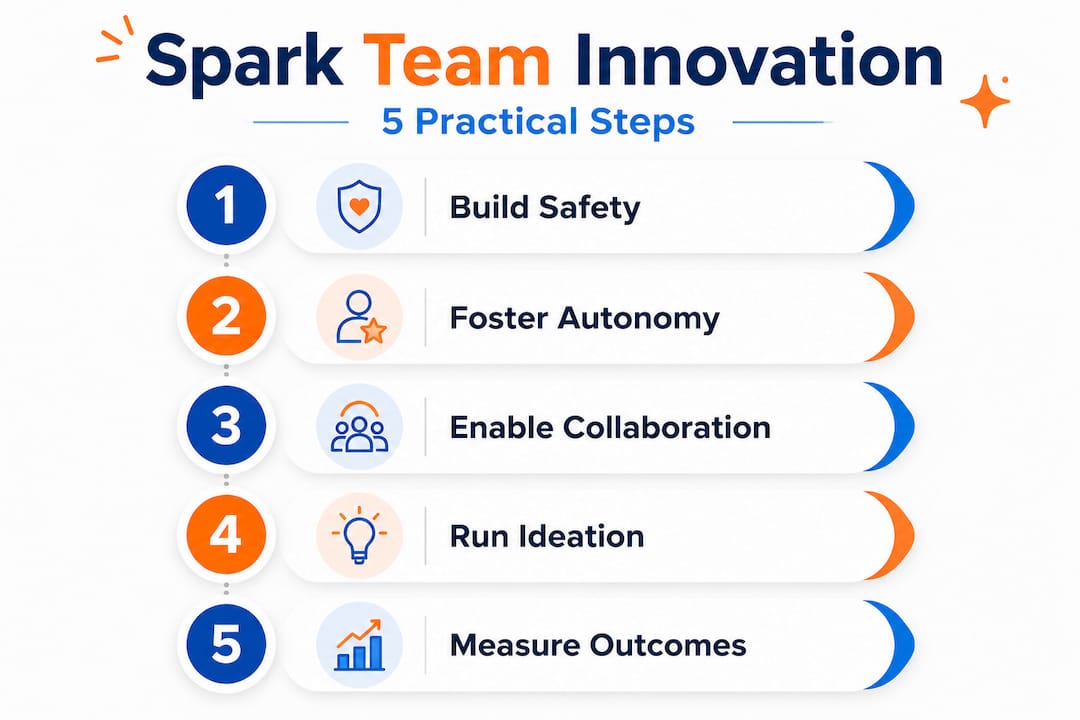
Most teams don’t lack talented people. They lack the conditions that allow talented people to take creative risks. If you’ve sat through a brainstorming session where the same three voices dominate and everyone else stares at the table, you already know the problem. Knowing how to spark team innovation isn’t about running more workshops or posting an idea-submission form in Slack. It’s about building the leadership patterns, psychological conditions, and collaboration structures that make creativity a repeatable outcome rather than a happy accident.
Table of Contents
- Understand the foundation: psychological safety and its impact on innovation
- Leverage autonomy-supportive motivation to sustain creative engagement
- Build collaboration mechanisms that harness psychological safety for dynamic team capabilities
- Run structured ideation sessions that empower team creativity
- Verify innovation outcomes and avoid common pitfalls
- The uncomfortable truth about sparking team innovation
- Boost your team’s innovation with Nomad Excel’s entrepreneurial programs
- Frequently asked questions
Key Takeaways
| Point | Details |
|---|---|
| Psychological safety foundation | Creating a safe space for team members to express ideas without fear is critical to sparking innovation. |
| Support autonomy | Meeting team members’ needs for choice, competence, and connection boosts motivation for creative work. |
| Foster collaboration | Enabling trust and open communication builds dynamic capabilities that sustain team innovation. |
| Structure ideation | Well-planned ideation sessions with clear steps and ground rules lead to higher-quality ideas. |
| Leadership role | Sustained innovation requires leaders to embed repeatable behaviors and team norms, not just occasional events. |
Understand the foundation: psychological safety and its impact on innovation
Before any brainstorming technique or team ritual can work, one thing has to be in place: psychological safety. This term, developed by Harvard researcher Amy Edmondson, describes the shared belief among team members that they can speak up, take risks, and propose half-formed ideas without fear of embarrassment or retaliation. It’s not about comfort or avoiding hard feedback. It’s about removing the social cost of being honest.
The research here is hard to ignore. Interventions building psychological safety lead to measurably higher perceived innovativeness, better team performance, and stronger team stability across a randomized controlled trial involving over 500 teams. That’s not a soft culture finding. That’s a causal relationship.
Practically speaking, managers can build psychological safety through a few deliberate moves:
- Model fallibility. Share a decision you got wrong and what you learned. This sets the norm that mistakes are data, not failures.
- Reframe disagreement. When someone challenges an idea, respond with curiosity rather than defensiveness. “Tell me more” is one of the most powerful phrases a manager can use.
- Create structured space in meetings. Use a round-robin format so quieter voices get airtime before the room anchors on one perspective.
- Use 1:1s to gauge safety. Ask directly: “Is there anything you’ve been hesitant to bring up in team meetings?” The answers will tell you exactly where trust needs reinforcing.
Psychological safety doesn’t emerge from a team-building exercise or a motivational speech. It builds through consistent, daily manager behaviors. To foster innovation for team growth, this foundation isn’t optional. It’s the bedrock on which everything else is built.
Leverage autonomy-supportive motivation to sustain creative engagement
Psychological safety opens the door. Motivation is what keeps people walking through it. Self-Determination Theory (SDT), one of the most well-validated frameworks in motivational psychology, identifies three core psychological needs that, when met, produce genuine intrinsic motivation rather than reluctant compliance.
Those needs are autonomy (feeling a sense of choice and ownership), competence (feeling effective and capable), and relatedness (feeling connected to and valued by teammates). Autonomy-supportive environments fulfill these needs and produce stronger self-motivation and creativity compared to environments that rely on external pressure, deadlines, or competitive incentives.
Here’s how each need plays out on a real team:
- Autonomy: A product manager who tells her team what problem to solve but lets them decide how to approach it sees more original solutions than one who prescribes the process step by step.
- Competence: A developer stretched into a new technical challenge, with the support to succeed, will engage more deeply than one assigned tasks they could do in their sleep.
- Relatedness: A team that genuinely likes and respects each other shares early, messy ideas more freely, which is exactly where the best thinking often starts.
External pressure, tight surveillance, and incentive-only cultures tend to narrow thinking. People optimize for the reward, not the problem. That’s the opposite of what creativity and innovation for growth actually requires.
Pro Tip: Before assigning a new project, ask yourself, “How can I frame this task to increase my team member’s sense of ownership?” Even a small shift in language, from “do this” to “here’s the challenge we’re trying to solve,” changes how people engage with the work.
Build collaboration mechanisms that harness psychological safety for dynamic team capabilities
Psychological safety and motivated individuals are the raw materials. But innovation also requires the right structural conditions for teams to adapt, recombine ideas, and respond to new information quickly. Researchers call this capacity “dynamic capabilities,” referring to a team’s ability to sense opportunities, reconfigure resources, and act before a window closes.
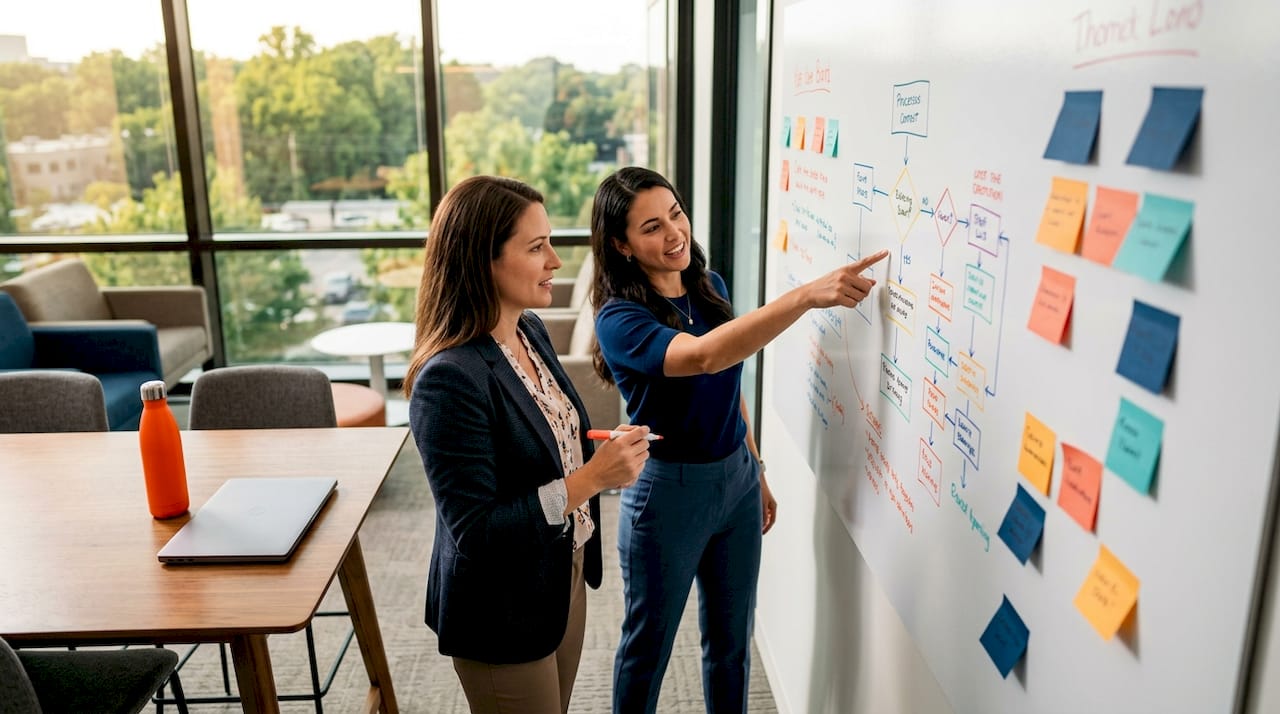
Psychological safety significantly improves cooperation and team dynamic capabilities across both Brazil and Germany, suggesting these effects hold regardless of organizational culture. Open communication, trust, and inclusiveness aren’t soft values. They’re functional mechanisms that allow teams to act on new information faster.
Here’s what those mechanisms look like in practice, along with their innovation impact:
| Collaboration mechanism | What it looks like | Impact on innovation |
|---|---|---|
| Open communication | Regular debriefs, transparent project updates | Faster idea iteration and problem identification |
| Psychological trust | Low fear of interpersonal conflict | Willingness to challenge and improve ideas |
| Inclusive participation | All voices invited, rotating facilitation | Broader idea diversity and fewer blind spots |
| Coordinated effort | Clear roles, shared accountability | Higher rate of idea implementation |
To build these mechanisms deliberately, leaders can follow these steps:
- Audit your current meeting norms. Do the same people always speak first? Rotating who opens discussion redistributes influence.
- Introduce a “build-on” rule. During problem-solving meetings, require each person to acknowledge a previous idea before adding their own. This builds connective thinking.
- Invest in off-site collaboration. Activities like team building events accelerate trust-building outside of work pressure, which then transfers into sharper in-room collaboration.
- Track participation, not just output. Note who speaks and who doesn’t. Follow up privately with quieter team members to understand barriers.
- Create feedback loops. After each project phase, run a structured retrospective. Teams that debrief together learn faster than teams that don’t.
Explore innovation strategies for teams that integrate these mechanisms into your day-to-day workflow.
Run structured ideation sessions that empower team creativity
With the right foundation in place, structured ideation is where ideas actually surface. But most sessions fail not because of bad ideas, but because of poor design. The research is direct: psychological safety is the single most important factor for effective ideation sessions, reinforced by findings from both Google and Harvard.
A well-run ideation session follows three phases:
- Problem framing. Before ideas, you need a focused problem statement. “How might we reduce onboarding friction for new users in the first 30 days?” is useful. “How do we improve the product?” is not. Clarity here determines the quality of what follows.
- Idea generation. This is where technique matters. Three methods that consistently outperform standard group brainstorming include:
- Brainwriting: Everyone writes ideas silently for 5 minutes, then passes papers to build on others’ ideas. This removes status effects.
- SCAMPER: Prompt the team to Substitute, Combine, Adapt, Modify, Put to other uses, Eliminate, or Reverse elements of the current solution.
- Rapid sketching: Visual thinkers often produce ideas that verbal thinkers miss. A 10-minute sketch round can unlock concepts the group wouldn’t have reached otherwise.
- Evaluation. Use dot voting or a simple impact-versus-effort matrix to prioritize without judgment. Move the best ideas into an owner-and-timeline structure before the session ends.
Ground rules to establish before every session:
- Defer judgment entirely during generation
- Welcome unusual, half-formed ideas
- Prioritize quantity before quality
- Build on ideas rather than shutting them down
Pro Tip: Alternate between solo thinking and group discussion throughout the session. Ideas developed individually before group sharing consistently produce more diverse, original thinking. This directly combats groupthink, where early strong voices anchor the room.
Explore innovation exercises for teams that you can run before or after formal ideation sessions to keep creative momentum alive.
Verify innovation outcomes and avoid common pitfalls
Running an ideation session is easy. Knowing whether it worked, and why, is harder. Common mistakes in ideation include poor time management, unclear problem statements, and allowing judgment during idea generation. Each of these quietly kills the creative output a team is capable of.
Start with these indicators to assess whether your innovation efforts are producing real results:
- Volume and diversity of ideas generated. Are you consistently producing more ideas, from more people, across different perspectives?
- Implementation rate. Of ideas that get shortlisted, how many actually move into execution? A strong idea pipeline means nothing if nothing gets built.
- Team engagement scores. Teams that feel their input matters will show it in engagement surveys. Declining engagement is often a signal that innovation culture is performative rather than genuine.
- Time from idea to test. The faster a team can run a small experiment on a new idea, the more it learns and the more motivated it stays.
To embed innovation into the team’s ongoing rhythm rather than treating it as a quarterly event, consider these practices:
- Assign idea owners. Every shortlisted idea gets a name attached. Accountability transforms good thinking into action.
- Normalize small failures. Teams that are penalized for experimenting stop experimenting. Celebrate the learning from a failed test as openly as you’d celebrate a win.
- Build a feedback loop into every project. A 20-minute retrospective after each sprint keeps the team’s learning compounding over time.
- Track innovation metrics alongside business KPIs. Ideas implemented, experiments run, and team participation rates belong on the same dashboard as revenue and retention.
For a deeper look at how this connects to long-term business performance, explore team innovation and growth strategies that integrate these practices company-wide.
The uncomfortable truth about sparking team innovation
Here’s what most articles on this topic won’t tell you: sporadic innovation events don’t build innovative teams. Neither do idea boxes, hackathons, or innovation bonuses in isolation. The uncomfortable truth is that most leaders who say they want more innovation from their teams are actually asking for more ideas, when what they need is a fundamentally different leadership pattern.
As the Harvard Kennedy School frames it, leading innovation requires building repeatable knowledge-exchange practices rather than collecting ideas. Innovation isn’t an event. It’s a capability that grows through consistent, well-designed interactions over time.
The managers who build genuinely innovative teams aren’t necessarily the most creative people in the room. They’re the ones who make it consistently safe to think out loud, who give people real ownership of problems, and who treat every project as a learning opportunity rather than a performance review. That’s a pattern of behavior, not a personality trait. It can be built and, more importantly, it can be taught.
What makes a company innovative isn’t the quality of its idea pipeline. It’s the quality of its leadership habits. Explore what makes a company innovative to understand the deeper organizational conditions behind sustained creative output.
The real work of fostering team creativity isn’t done in the brainstorm. It’s done in the hallway, the 1:1, the retrospective, and the moment a leader chooses curiosity over defensiveness. Build those habits consistently, and innovation follows.
Boost your team’s innovation with Nomad Excel’s entrepreneurial programs
If you’re ready to move beyond internal workshops and give your team a genuinely transformative experience, Nomad Excel’s programs are designed to do exactly that. The online entrepreneurship bootcamp builds the kind of entrepreneurial thinking and leadership clarity that helps managers create the conditions for innovation in their own teams. For teams that need to reconnect, realign, and return with fresh creative energy, the business retreats for remote teams offer end-to-end facilitated experiences that combine strategic workshops with genuine human connection. Emerging teams will also find the team building for startups program a focused way to build trust and collaboration from the ground up.
Frequently asked questions
What is psychological safety and why is it important for team innovation?
Psychological safety means team members feel safe to take risks and share ideas without fear of embarrassment or punishment, and teams feeling safe to voice ideas consistently show higher innovation, performance, and stability. It’s the single foundational condition that enables all other creative collaboration to function.
How can leaders support autonomy to boost their team’s creativity?
Leaders can support autonomy by giving team members meaningful choices in how they approach problems, offering growth opportunities that build competence, and nurturing strong team relationships. Autonomy-supportive environments fulfill psychological needs and produce stronger self-motivation than external pressure ever will.
What are effective collaboration mechanisms to enhance innovation in teams?
Collaboration mechanisms like open communication, trust, inclusiveness, and coordinated effort, enabled by psychological safety, strengthen the dynamic capabilities that drive consistent innovation. Psychological safety positively affects cooperation and team adaptability across different cultural contexts, making these mechanisms universally applicable.
What are common mistakes to avoid when running ideation sessions?
Common mistakes include vague problem framing, skipping ground rules, allowing judgment during idea generation, poor time management, and letting the loudest voices dominate. Mistakes like poor time management and premature judgment are among the most damaging to creative output and are entirely preventable with better session design.
How do programs like Nomad Excel’s bootcamps help teams innovate?
Structured programs build leadership skills, strengthen psychological safety, and create the kind of immersive collaboration that accelerates team innovation well beyond what internal efforts typically achieve. They give teams a shared reference point, a renewed sense of purpose, and practical tools they can apply immediately on return.
Comments are closed.