
Networking Strategies Explained: Building Powerful Connections
Most American founders discover that networking can impact their startup’s trajectory more than funding alone. In today’s global bootcamps, forming purposeful connections is what turns ideas into opportunities. When you master effective networking strategies, you unlock hidden paths to mentorship, partnerships, and business growth. This guide shares actionable insights that help you build meaningful relationships and avoid common mistakes, so your journey moves beyond simple introductions.
Table of Contents
- Defining Effective Networking Strategies
- Types of Networking and Key Contexts
- Core Techniques for Building Connections
- Leveraging Mentorship and Peer Networks
- Common Pitfalls and How to Avoid Them
Key Takeaways
| Point | Details |
|---|---|
| Effective Networking is Intentional | Building professional relationships requires strategic communication and a focus on mutual value creation rather than immediate gains. |
| Diversify Your Networking Strategies | Combine various types of networking, such as formal, informal, and mentorship, to enhance relationship-building opportunities. |
| Cultivate Active Listening and Curiosity | Prioritize active engagement and ask thoughtful questions to foster deeper connections and insights during interactions. |
| Avoid Common Networking Pitfalls | Steer clear of a transactional mindset, inconsistency in communication, and limited diversity in your networking circle to build genuine relationships. |
Defining Effective Networking Strategies
Networking is a strategic process of building and nurturing professional relationships that can transform entrepreneurial potential. For founders participating in immersive bootcamps, understanding effective networking strategies is crucial for accelerating business growth and creating meaningful connections.
At its core, networking goes beyond simply collecting business cards or adding contacts on social media. Comprehensive research highlights the importance of intentional relationship building through strategic communication, personal branding, and targeted interaction. Successful networking requires a mindset of mutual value creation, where entrepreneurs seek to understand and support their connections rather than merely extracting immediate benefits.
Effective networking strategies encompass several key dimensions:
- Purposeful Connection: Identifying and engaging with individuals who align with your professional goals and can provide genuine value
- Active Listening: Developing deep communication skills that prioritize understanding over self-promotion
- Strategic Follow-up: Creating systematic approaches to maintaining and nurturing professional relationships
- Digital and In-Person Engagement: Leveraging both technological platforms and face-to-face interactions to expand your network
Pro tip: Before attending any networking event, research attendees and prepare three specific, thoughtful questions that demonstrate genuine interest in their work and background.
Types of Networking and Key Contexts
Networking is not a monolithic concept but a dynamic ecosystem with diverse approaches tailored to different professional environments. Professional networks encompass multiple contexts and strategies that extend beyond traditional interactions, creating opportunities for meaningful professional growth and collaboration.
The landscape of networking can be categorized into several distinctive types, each serving unique purposes for entrepreneurs and professionals:
- Formal Networking: Structured interactions at conferences, industry events, and professional associations
- Informal Networking: Spontaneous connections through social interactions, shared interests, and community gatherings
- Digital Networking: Online platforms like LinkedIn, professional forums, and virtual meetups
- Mentorship Networking: Targeted relationships focused on guidance, knowledge transfer, and professional development
- Peer Networking: Connections with professionals at similar career stages who can provide mutual support and insights
Each networking type offers distinct advantages. Formal networks provide structured opportunities for targeted introductions, while digital platforms enable global reach and continuous connection. Mentorship networks offer deep, personalized guidance, and peer networks create supportive ecosystems for shared learning and growth.

Here’s a quick comparison of networking types and their core benefits for entrepreneurs:
| Networking Type | Typical Setting | Unique Benefit | Best Use Case |
|---|---|---|---|
| Formal | Conferences, associations | Structured introductions | Expanding industry connections |
| Informal | Social, informal gatherings | Spontaneous relationship-building | Discovering hidden opportunities |
| Digital | Online platforms, forums | Global reach, continuous contact | Building international presence |
| Mentorship | One-on-one, expert-driven | Personalized guidance | Skill and career growth |
| Peer | Peer groups, cohorts | Support and shared insights | Collaborative problem-solving |
Pro tip: Create a diversified networking strategy that combines at least three different networking types to maximize your professional connection opportunities.
Core Techniques for Building Connections
Successful networking transcends simple social interactions, requiring strategic approaches that transform casual encounters into meaningful professional relationships. The art of building connections involves intentional techniques that prioritize authenticity and value creation, focusing on creating genuine rapport rather than transactional exchanges.
Key techniques for effective connection building include:
- Active Listening: Demonstrating genuine interest by fully engaging with conversation partners
- Curiosity Cultivation: Asking thoughtful, open-ended questions that reveal deeper professional insights
- Value Proposition: Understanding and articulating how you can contribute to potential connections
- Consistent Communication: Maintaining regular, meaningful touchpoints after initial interactions
- Reciprocal Support: Creating a mindset of mutual assistance and collaborative opportunity
Building powerful connections requires emotional intelligence and strategic approach. Entrepreneurs must learn to read social dynamics, recognize shared interests, and create meaningful dialogue that goes beyond surface-level interactions. This involves developing communication skills that demonstrate empathy, professionalism, and authentic engagement.
To optimize connection-building, match networking techniques to specific outcomes:
| Technique | Intended Outcome | Most Effective When |
|---|---|---|
| Active Listening | Build trust and rapport | First introductions |
| Curiosity Cultivation | Discover new insights | Exploring collaboration |
| Value Proposition | Attract high-value connections | Strategic partnerships |
| Consistent Communication | Sustain professional momentum | Post-event follow-up |
| Reciprocal Support | Foster ongoing collaboration | Team-building and alliances |
Pro tip: Always prepare a compelling one-minute professional narrative that succinctly communicates your unique value, interests, and potential collaboration opportunities.
Leveraging Mentorship and Peer Networks
Mentorship and peer networks represent powerful catalysts for entrepreneurial growth, transforming individual potential through strategic relationships and collaborative learning. Advanced technological platforms now enable more dynamic and personalized mentorship connections, breaking down traditional barriers of geography and access.
Effective mentorship and peer networking strategies encompass several critical dimensions:
- Targeted Mentorship: Identifying mentors who align with specific professional goals and industry expertise
- Reciprocal Learning: Creating relationships that provide mutual value and knowledge exchange
- Structured Interactions: Developing clear communication protocols and expectations
- Diverse Network Cultivation: Building connections across different experience levels and backgrounds
- Continuous Feedback: Establishing mechanisms for ongoing professional development and accountability
Successful entrepreneurs understand that mentorship transcends simple advice-giving. It involves cultivating deep, trust-based relationships that challenge assumptions, provide strategic insights, and offer emotional support during challenging business transitions. Supportive mentorship relationships can dramatically improve career satisfaction and professional trajectory, creating pathways for accelerated personal and professional growth.
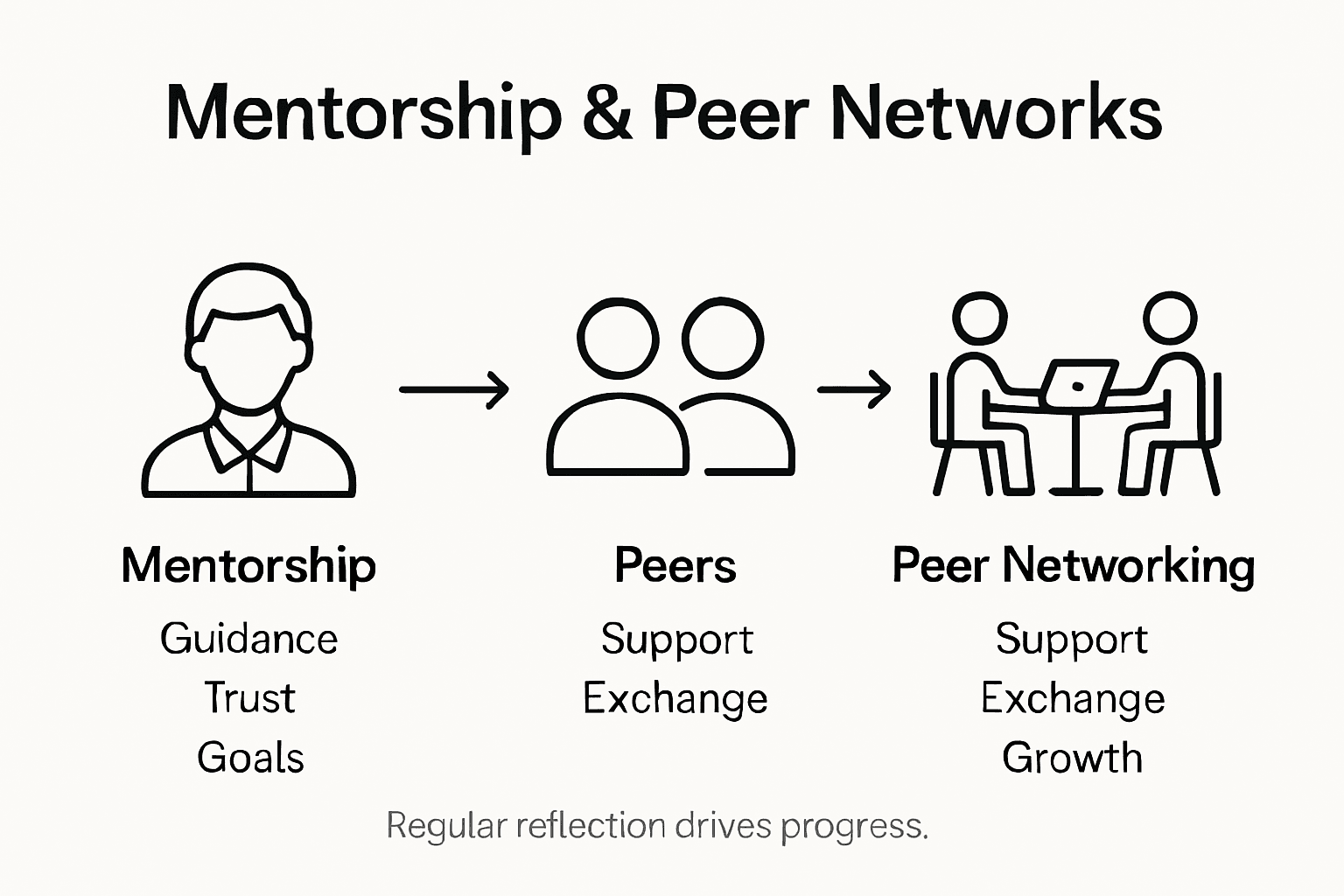
Pro tip: Schedule quarterly reflection sessions with mentors and peers to assess progress, realign goals, and identify emerging opportunities for collaboration and personal development.
Common Pitfalls and How to Avoid Them
Networking requires strategic navigation, with many entrepreneurs inadvertently sabotaging their potential connections through common mistakes. Professional networks demand careful approach to avoid critical errors that can derail relationship building, requiring intentional and thoughtful interaction strategies.
Major networking pitfalls entrepreneurs frequently encounter include:
- Transactional Mindset: Treating connections as immediate business opportunities
- Inconsistent Communication: Failing to maintain meaningful follow-ups
- Oversharing: Dominating conversations without genuine listening
- Limited Diversity: Networking only within familiar professional circles
- Lack of Authenticity: Presenting an inauthentic or overly polished persona
Successful networking is fundamentally about building genuine relationships. Modern professional interactions require nuanced understanding of communication dynamics and strategic engagement, emphasizing quality of connection over quantity of contacts. Entrepreneurs must develop emotional intelligence, active listening skills, and a collaborative approach that transcends superficial interactions.
Pro tip: Before each networking interaction, set a personal goal to learn three meaningful things about the people you meet, focusing on their passions and challenges rather than their professional titles.
Unlock Your Networking Potential with Nomad Excel
The challenges of building authentic connections and maintaining meaningful professional relationships outlined in this article are exactly what aspiring entrepreneurs and teams face when striving to accelerate business growth. If you are ready to move beyond transactional networking and embrace purposeful connection, active listening, and consistent mentorship, Nomad Excel offers immersive bootcamps and company retreats designed to help you master these very skills.
Through hands-on learning, direct mentorship, and a vibrant community, our programs empower founders and teams to build strategic partnerships and expand their networks with clarity and confidence. Discover how entrepreneurship bootcamps combine business frameworks with execution focus to give you the tools to nurture relationships that drive lasting growth. For companies seeking deeper team alignment and innovative connections our business retreats provide curated experiences that strengthen communication and foster authentic collaboration.
Why wait to transform your networking strategy into real opportunities? Take the first step to sharpen your skills and expand your circle by exploring all Nomad Excel has to offer at https://nomadexcel.co. Start building powerful, lasting connections that propel your entrepreneurial journey today.
Frequently Asked Questions
What are effective networking strategies for entrepreneurs?
Effective networking strategies include purposeful connections, active listening, strategic follow-ups, and utilizing both digital and in-person engagement. These techniques focus on building meaningful relationships rather than merely collecting contacts.
How can I build stronger professional connections?
To build stronger professional connections, practice active listening, ask open-ended questions, demonstrate genuine curiosity, and maintain regular communication with your contacts.
What types of networking are most beneficial for entrepreneurs?
The most beneficial types of networking for entrepreneurs include formal networking at events, informal networking through social interactions, digital networking on online platforms, mentorship networking for guidance, and peer networking for shared support and insights.
What common mistakes should I avoid when networking?
Common networking mistakes include having a transactional mindset, failing to maintain consistent communication, oversharing during conversations, limiting networking to familiar circles, and lacking authenticity in interactions.
Comments are closed.