
Founders: 4 Expansion Strategy Types and How to Test Them
Expansion strategy types are the distinct ways a business grows, organized most usefully by the Ansoff Matrix: market penetration, market development, product development, and diversification. Growth leaders extend that core framework with inorganic routes like mergers and acquisitions, partnerships, and digital channel expansion, each carrying its own risk profile and capital demands.
TL;DR:
- Market penetration remains the safest starting point, but it is limited by rising customer acquisition costs and market size.
- Market development and geographic expansion involve higher risks, requiring careful mode selection and validation efforts before committing significant capital.
- Inorganic growth through programmatic M&A strategies outperforms occasional large deals by building reusable playbooks and lowering integration risks.
- Diversification, especially unrelated, is the highest risk expansion route, demanding disciplined sequencing and rigorous pilot testing.
- Proper diagnosis of growth constraints and staged, gated experiments are critical to avoiding common pitfalls like focus dilution and integration tax.
Table of Contents
- What Are Expansion Strategies and Which Frameworks Organize Them?
- Market Penetration: Tactics, Metrics, and When to Choose It
- Market Development and Geographic Expansion: Entry Methods and Selection Criteria
- Product Development and Diversification: New Offers, New Risk
- Inorganic Expansion: M&A, Joint Ventures, Alliances, and Franchising
- Digital, Channel, and Platform Expansion: Omnichannel and Marketplace Routes
- How to Choose an Expansion Strategy: Diagnostic and Decision Checklist
- Common Pitfalls in Expansion: Integration Tax, Focus Dilution, and Red Flags
- How Nomad Excel Helps Teams Test, Learn, and Scale Expansion Moves
- Our Take on Sequencing Growth the Disciplined Way
- Ready to Build the Capability Before the Next Growth Bet
- FAQ
- Sources
What Are Expansion Strategies and Which Frameworks Organize Them?
A strategy specifies where you will compete and how you will win, and that distinction matters more than most founders realize when they sit down to plan the next twelve months. The HBS Online growth strategy framework treats growth as an equation: you need a structured model for choosing arenas and winning moves, not just a number on a spreadsheet.
The Ansoff Matrix remains the clearest starting point because it organizes every expansion decision into four quadrants built around two questions: are you selling an existing or new product, and are you selling to an existing or new market. According to the Ansoff framework outlined by Business LibreTexts, risk climbs steadily as you move away from what you already know:
- Market penetration sells more of what you already have to the customers you already have, the lowest-risk quadrant.
- Market development sells your existing product to new markets, geographic or demographic.
- Product development builds new offers for the market you already serve.
- Diversification combines new products with new markets, the highest-risk combination of the four.
Two complementary models round out the toolkit. Harvard Business Review’s “six ways to grow a company” breaks growth into new processes, new experiences, new features, new customers, new offerings, and new business models, which helps allocate an innovation budget across near-term and long-term bets. A three-horizon or growth-architecture approach, meanwhile, helps you sequence moves: defend and grow horizon one while seeding horizon two and three so near-term cash funds longer-range experiments. Pick the lens that matches your question. Ansoff answers “which direction should we grow,” while horizon thinking answers “in what order and at what pace.”
Market Penetration: Tactics, Metrics, and When to Choose It
Market penetration means growing sales of your current products within your current market, and it is the quadrant every founder should exhaust before reaching for anything riskier. You already understand the customer, the channel, and the unit economics, so the execution risk is lower and the feedback loop is faster than any other expansion type.
Five tactics do most of the work:
- Price and packaging adjustments that test willingness to pay without touching the product itself.
- Promotional campaigns timed to seasonal demand or competitor weak spots.
- Retention and loyalty programs that raise repeat-purchase rates among existing customers.
- Share-of-wallet plays like bundling or cross-selling that increase spend per customer.
- Channel intensification, adding sales reps, store hours, or ad spend in channels that already convert.
Measure penetration progress with retention rate, customer lifetime value against acquisition cost, and share-of-wallet trends by segment. A rising LTV to CAC ratio alongside flat or improving retention tells you the quadrant still has room to run.
Pro Tip: Track share-of-wallet by cohort monthly, not quarterly, since penetration tactics lose effectiveness fast and a quarterly lag can hide a plateau for months.
Penetration is exhausted when customer acquisition cost rises faster than lifetime value, when retention plateaus despite new campaigns, or when your addressable market within the existing segment simply runs out of new buyers. That is the signal to look at market development or product development instead of pushing harder on a strategy that has already paid out most of its returns.
Market Development and Geographic Expansion: Entry Methods and Selection Criteria
Market development means taking a product that already works and selling it to a market you have not served before, whether that market is a new country, a new region, or a new customer segment. It carries more risk than penetration because you are relearning the customer even while keeping the product fixed, and every new market brings its own regulatory, cultural, and competitive terrain.
Six entry modes cover most situations:
- Direct export keeps control high and capital needs low but limits local responsiveness.
- Distributor or agent partnerships trade some margin for faster local market access.
- Franchising scales quickly with lower capital outlay but sacrifices some brand control.
- Licensing monetizes intellectual property without building local operations at all.
- Greenfield investment gives full control and local presence at the highest capital and time cost.
- Acquisition of a local player buys speed and market knowledge but adds integration complexity.
Selection among these comes down to four practical questions: how much capital can you commit, how fast do you need to move, how much control matters relative to speed, and how much local adaptation does the offer require. International expansion has also gotten more complicated on the regulatory front. The UNCTAD World Investment Report 2026 notes that cross-border expansion faces rising geopolitical and policy friction, with entry-mode decisions increasingly shaped by trade regulation and regional policy shifts rather than market attractiveness alone.
Before committing capital, run a short validation sequence: confirm demand with a small batch of real orders or signed letters of intent, map the regulatory and tax requirements for your specific entry mode, identify at least one local partner or advisor who can flag cultural mismatches before launch, and set a capital ceiling you are willing to lose if the pilot fails. Our guide to growth strategy types walks through how this fits alongside the other Ansoff quadrants if you want the fuller picture before choosing a market-entry method.
Product Development and Diversification: New Offers, New Risk
Product development means building a new offer for the market you already understand, while diversification means pursuing a new product in a new market at the same time, the combination the Ansoff Matrix treats as highest risk. The distinction matters because the two routes demand different muscles: product development leans on customer insight you already have, while diversification asks you to learn a product and a market simultaneously.
Diversification itself splits further. Related diversification builds on assets, skills, or customer relationships you already own, like a coffee roaster launching ready-to-drink cans through its existing retail relationships. Unrelated diversification moves into something with no connection to your current business, and Business LibreTexts flags this as the riskiest path for small businesses specifically, since it offers none of the risk-reduction that comes from leveraging existing capability.
A disciplined sequence protects the core business while you test new offers:
- Build a minimum viable version of the new product before committing full production or marketing budget.
- Pilot with a narrow cohort of existing or adjacent customers who already trust your brand.
- Set explicit gating criteria in advance, a conversion rate, margin floor, or retention benchmark the pilot must hit to earn further investment.
- Sequence investment across horizons, funding today’s core business while allocating a smaller, bounded share of resources to the new offer until it proves itself.
That sequencing, often described as a three-horizon model, keeps an exciting new idea from draining resources the core business needs to keep running.
Inorganic Expansion: M&A, Joint Ventures, Alliances, and Franchising
Inorganic expansion means growing by combining with, acquiring, or partnering with another business rather than building new capability from scratch. Companies turn to it when speed matters more than control, when a target holds a capability or customer base too expensive to build internally, or when a market is too fragmented to win through organic growth alone.
The evidence on how to run M&A well is clearer than most founders assume. McKinsey’s research on programmatic M&A finds that a repeatable, themed pipeline of moderate-sized deals generally outperforms infrequent large acquisitions and carries lower integration risk, because programmatic acquirers build reusable playbooks for targeting, due diligence, and integration rather than reinventing the process for every deal. A related McKinsey study on buy-and-scale strategies echoes this: governance, resourcing, and a repeatable post-merger integration playbook matter more than any single deal’s size.
A short readiness checklist before pursuing acquisitions or major partnerships:
- Confirm a clear strategic thesis for why this target or partner, not just any target, fits your growth path.
- Build an integration plan before closing, covering systems, culture, and reporting lines.
- Set a governance cadence for tracking post-deal performance against the original thesis.
- Size the deal to your integration capacity, not just your available capital.
Pro Tip: If this is your first acquisition, start smaller than you think you need to, since the playbook you build on a modest deal is what makes the next one faster and safer. Our piece on avoiding the integration tax in organic versus inorganic growth goes deeper into the trade-offs founders face at this decision point.
Digital, Channel, and Platform Expansion: Omnichannel and Marketplace Routes
Channel expansion changes how customers reach you rather than what you sell them, and the choice of channel reshapes your cost structure as much as your reach. Selling direct-to-consumer online, joining a third-party marketplace, building a branded app, or opening wholesale distribution each carry distinct fulfillment, payment, and support obligations.
Platform and marketplace channels bring network effects into play. A marketplace listing can reach buyers instantly but ties your margin and customer relationship to the platform’s rules, while a branded channel costs more to build but keeps the customer data and relationship in your hands. BCG’s research on CEO growth priorities recommends instrumenting unit economics by channel before scaling, tracking customer acquisition cost, fulfillment cost, return rates, and churn separately for each channel so a profitable overall number does not hide one channel quietly losing money.
Before committing to a new channel, confirm four things work end to end:
- Fulfillment capacity can handle the new channel’s volume and speed expectations.
- Payment processing supports the currencies, methods, and compliance the channel requires.
- Support coverage matches the channel’s typical response-time norms.
- Data instrumentation captures channel-level unit economics from day one, not after scale.
A low-cost way to test channel fit is a two-week marketplace listing or a limited-run app feature before building the full infrastructure, letting early conversion and return data tell you whether the channel deserves a permanent build.
How to Choose an Expansion Strategy: Diagnostic and Decision Checklist
The first step is not picking a strategy type at all. It is diagnosing the actual constraint holding growth back, whether that is talent, product-market fit, distribution reach, or capital, because HBR’s six-ways framework warns against “activity for activity’s sake”: chasing a new market when your real bottleneck is hiring just adds complexity without fixing anything.
Once the constraint is clear, four criteria narrow the options:
- Strategic fit, does this move build on capability you already have or ask you to learn something new.
- Capital available, matched honestly against the capital each path realistically requires.
- Time horizon, how soon you need results versus how long the path takes to pay back.
- Regulatory and execution risk, particularly for cross-border or acquisition-based moves.
Programmatic, repeatable acquisition strategies tend to outperform occasional large one-off deals and reduce variance in returns, according to McKinsey’s analysis of M&A value creation. That single finding should shape how any growth-stage company thinks about inorganic growth: build the capability once, then reuse it.
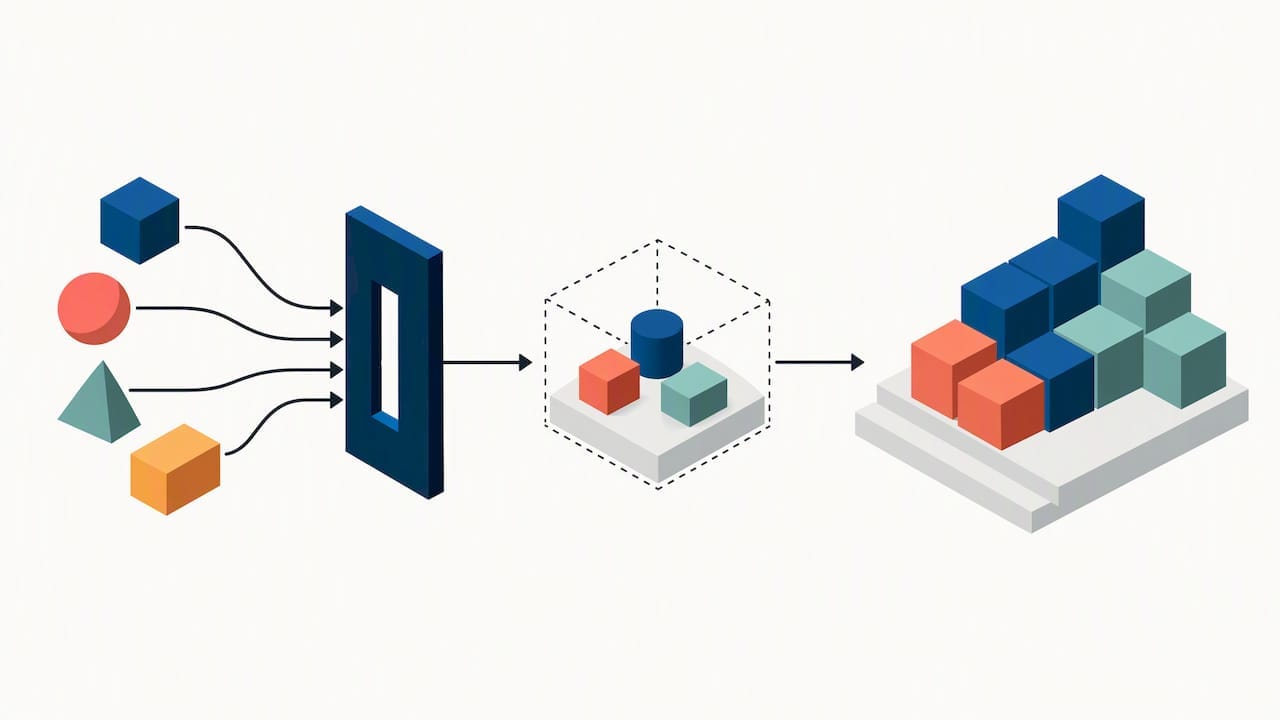
Stage the actual path in three gates: research the option with desk work and a handful of customer conversations, run a small bounded pilot with a defined budget ceiling, and only scale once the pilot clears the metrics you set in advance. Skipping straight to scale is the single most common reason expansion strategies fail before they get a fair test.
Common Pitfalls in Expansion: Integration Tax, Focus Dilution, and Red Flags
Every expansion type carries its own failure mode, and most of them show up before the strategy itself gets a real chance to work.
- Integration tax, the hidden cost of merging systems, culture, and reporting lines after an acquisition or major partnership, routinely erodes deal value that looked solid on paper.
- Dilution of focus, spreading leadership attention across too many new initiatives at once, starves the core business of the management time it needs to keep performing.
- Operational strain, scaling fulfillment, support, or compliance faster than the team can absorb, which shows up as quality drops right when growth should be accelerating.
- Underpriced regulatory risk, especially in cross-border moves where policy shifts can change the entry calculus mid-project, a pattern the UNCTAD World Investment Report 2026 flags as increasingly common.
Mitigation starts with protecting the core: fund new initiatives from a bounded, separate budget so a failed experiment never threatens the business that pays the bills. Stage investment in tranches tied to gating metrics rather than committing the full budget up front, and build governance, a simple reporting cadence, before you need it rather than after something goes wrong.
Pro Tip: Set one red flag in writing before you start: a specific metric that, if missed twice in a row, triggers a pause and a leadership review rather than a quiet push to keep going.
How Nomad Excel Helps Teams Test, Learn, and Scale Expansion Moves
Picking the right expansion strategy type is a planning exercise that benefits from professional training courses to build the capability most teams need under pressure. Executing it well is a capability most teams have to build under pressure, which is exactly where structured, immersive programs earn their place.
- A sprint-format bootcamp gives founders a compressed window to diagnose their real growth constraint alongside mentors and a peer cohort, rather than guessing alone.
- A tailored company retreat aligns a leadership team around which expansion path to pursue before capital gets committed, surfacing disagreement early instead of mid-rollout.
- Daily accountability structures used across our programs mirror the staged, gated pilot process this article recommends: define the test, set the metric, review the result.
Our article on why business education is evolving for entrepreneurs explains the thinking behind this hands-on approach in more depth, and our complete guide to business growth frameworks pairs well with the diagnostic steps covered above.
Our Take on Sequencing Growth the Disciplined Way
Most founders reach for the expansion type that sounds exciting rather than the one their current capability can actually support. That is backward. Capital can buy you a market entry or an acquisition, but it cannot buy the judgment to run it well, so build capability before you commit capital, not after.
Programmatic experiments beat one big bet almost every time, whether that means a string of small market tests or a repeatable acquisition playbook. Set your stop and go signals in writing before you start, and treat a missed gate as information, not failure.
— Amichai
Ready to Build the Capability Before the Next Growth Bet
We built our programs around the exact gap this article describes: strategy frameworks are easy to read about and hard to execute under real constraints. Our Online Entrepreneurship Bootcamp gives early-stage founders a structured, mentor-guided space to validate a growth idea before committing real capital to it, and our in-person Entrepreneurship Sprint Bootcamp in Lisbon compresses that same diagnostic and pilot-design work into an immersive, hands-on week.
For leadership teams deciding between expansion paths together, our tailored company retreats create the alignment and shared clarity that staged, gated expansion plans depend on. Check our upcoming bootcamps to find the next cohort that fits your timeline.
FAQ
What are the three methods of expansion?
Business growth is often grouped into organic expansion (growing sales within existing operations), inorganic expansion (mergers, acquisitions, and partnerships), and channel or digital expansion (new platforms, marketplaces, or distribution routes). Each method carries different capital needs, speed, and risk, which is why the Ansoff Matrix is usually paired with inorganic and channel options for a fuller picture.
What are the 4 types of corporate strategy?
The four core types from the Ansoff Matrix are market penetration, market development, product development, and diversification, organized by whether you are selling an existing or new product to an existing or new market. Risk rises as you move from penetration toward diversification, according to the Ansoff framework detailed by Business LibreTexts.
How do I know which expansion strategy fits my business?
Start by diagnosing your actual growth constraint, whether that is talent, distribution, product fit, or capital, since the right strategy solves that specific bottleneck rather than chasing a trend. From there, weigh strategic fit, available capital, your time horizon, and regulatory risk before committing to a path.
Is market penetration always the safest first move?
Market penetration is generally the lowest-risk option because it relies on customers and products you already understand, but it eventually plateaus once retention and acquisition costs stop improving. At that point, market development or product development usually becomes the more productive next step.
Does M&A work better as a series of smaller deals or one large acquisition?
A repeatable, programmatic approach to smaller or moderate-sized deals tends to outperform occasional large acquisitions and carries lower integration risk, according to McKinsey’s research on M&A value creation. Building a reusable acquisition playbook matters more than the size of any single deal.
Sources
- 11: Growth Strategies for Small Businesses – Business LibreTexts
- The 6 Ways to Grow a Company – Harvard Business Review
- How one approach to M&A is more likely to create value than all others | McKinsey
- Business growth strategies – HBS Online Blog
- World Investment Report 2026 – UNCTAD
Comments are closed.