
How to Launch a Remote Business: A Step-by-Step Guide
Launching a remote business offers american entrepreneurs a new freedom, but nearly half of new ventures still fail within the first five years. Dreaming up an idea is just the beginning. You need a clear roadmap to turn ambition into a sustainable company that thrives outside a traditional office. This guide helps you lay a solid foundation, sharpen your vision, and build your remote business with purpose and confidence.
Table of Contents
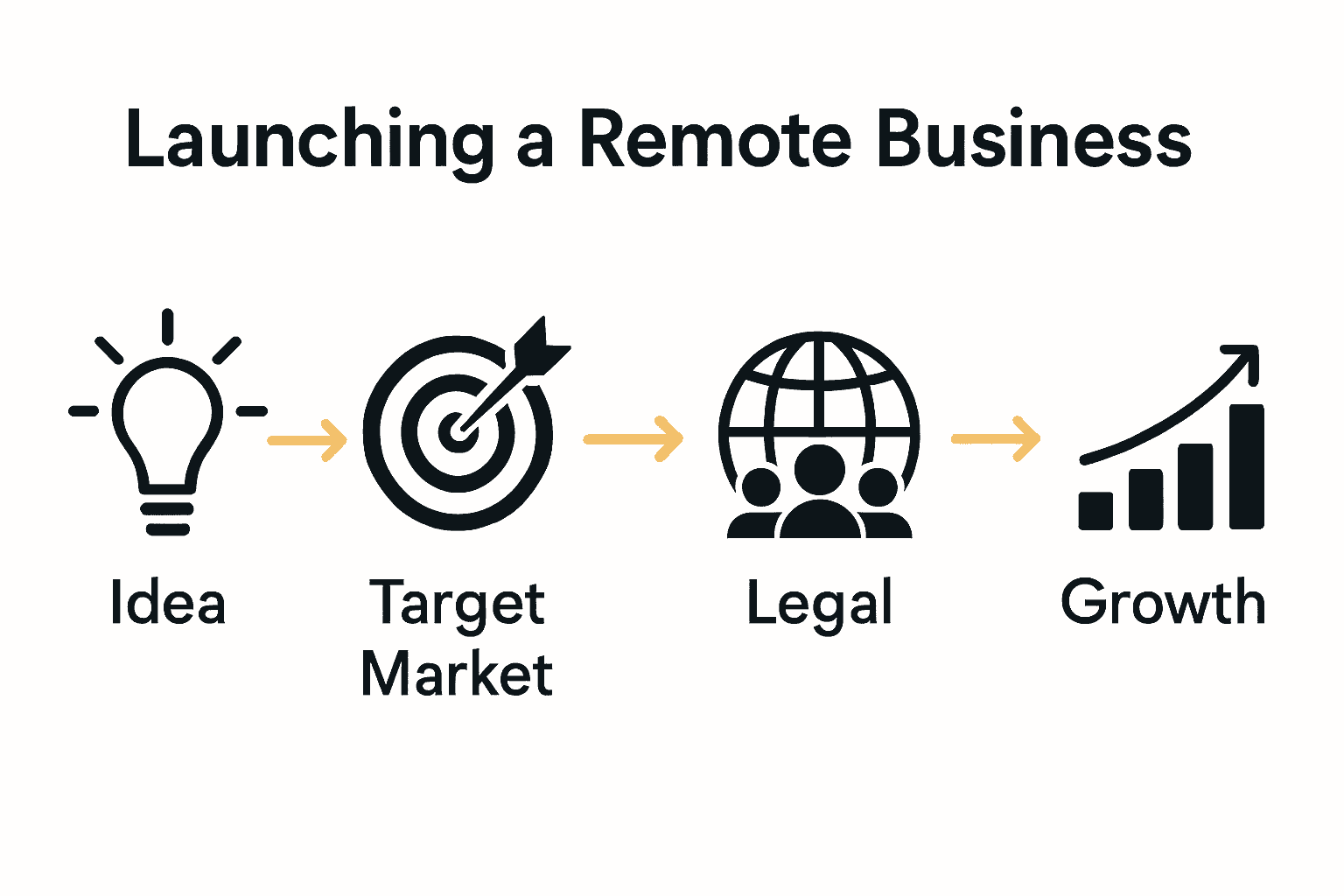
- Step 1: Clarify Your Remote Business Idea And Goals
- Step 2: Validate Your Market Fit And Business Model
- Step 3: Establish Your Legal Structure And Digital Presence
- Step 4: Build Remote Workflows And Hire Key Team Members
- Step 5: Test Operations And Optimize For Scalability
Quick Overview
| Major Insight | Explanation |
|---|---|
| 1. Clarify your business idea | Identify your unique skills and market needs to focus your business concept effectively. |
| 2. Validate your market fit | Test your assumptions with research and prototypes to ensure your solution meets customer demands. |
| 3. Establish legal structure | Choose an appropriate legal framework and create a strong digital presence to represent your business. |
| 4. Build effective workflows | Create remote workflows and hire team members who excel in communication and remote environments. |
| 5. Optimize for scalability | Conduct thorough testing of your operations and focus on strategic growth without compromising quality. |
Step 1: Clarify your remote business idea and goals
Launching a successful remote business starts with crystallizing your core concept and establishing clear objectives. According to arxiv, individual entrepreneurs must connect personal vision with structured experimentation to create lasting value.
To clarify your business idea, begin by conducting a comprehensive self assessment. Ask yourself critical questions: What unique skills or expertise do you possess? What problems can you solve for your target market? What type of remote work aligns with your professional strengths and personal interests? The goal is to identify a business concept that not only leverages your capabilities but also addresses genuine market needs.
The IpOp model suggests a strategic approach to pre-project analysis that can help refine your concept. Start by drafting a preliminary opportunity case that outlines your business vision, potential market, and initial value proposition. This exercise will help you transform a vague idea into a concrete business blueprint. Map out your potential revenue streams, target customer segments, and preliminary service or product offerings. Be specific about how your remote business will operate digital first while delivering exceptional value to your clients.
Warning: Avoid the common pitfall of trying to serve everyone. The most successful remote businesses are laser focused on solving specific problems for a well defined audience. Your initial clarity will become the foundation of your entire business strategy.
Step 2: Validate your market fit and business model
Validating your remote business model is a critical step that determines whether your innovative concept can transform into a sustainable venture. According to arxiv, successful startups leverage hybrid intelligence systems that combine human creativity with analytical machine capabilities to assess business model feasibility.
To validate your market fit, you must systematically test your core assumptions through targeted research and experimentation. Begin by creating a detailed customer persona that goes beyond basic demographics. Understand their pain points, desires, and current solutions. Conduct interviews with potential clients, distribute surveys, and seek feedback from your target audience. The goal is to confirm whether your proposed solution genuinely addresses a meaningful problem that customers are willing to pay for.
The Micro Canvas recommends developing a prototype or minimum viable product (MVP) to test your concept in real market conditions. This approach allows you to gather concrete feedback and iterate quickly. Track key metrics such as customer interest, engagement rates, and potential willingness to pay. Be prepared to pivot your initial idea based on actual market response.
Warning: Avoid falling in love with your original concept. Successful entrepreneurs remain flexible and view their initial business model as a hypothesis to be tested rather than an unchangeable blueprint. Your ability to adapt based on market insights will be crucial to your remote business success.
Step 3: Establish your legal structure and digital presence
Building a solid foundation for your remote business requires strategic decisions about legal structure and online representation. Just as Wikipedia Business Model Canvas suggests creating a visual framework for business activities, you need a clear blueprint for your legal and digital identity.
Start by selecting the most appropriate legal structure for your remote business. Consider options like sole proprietorship, limited liability company (LLC), or corporation based on factors such as personal liability protection, tax implications, and potential for future growth. Consult with a local business attorney or tax professional who can provide guidance specific to your location and business type. Simultaneously, begin establishing your digital infrastructure by registering a professional domain name that reflects your brand and securing corresponding email addresses and social media handles.
The Market Opportunity Navigator emphasizes the importance of strategic alignment when pursuing business opportunities. Translate this principle into your online presence by creating a professional website that clearly communicates your value proposition. Develop consistent branding across all digital platforms, including professional social media profiles, a polished LinkedIn presence, and potentially industry specific portfolio websites that showcase your expertise and services.
Warning: Invest time in properly setting up your legal and digital foundations. Cutting corners now can create significant complications and potential legal risks down the road. Your digital presence is often the first impression potential clients will have of your business, so make it count.
Step 4: Build remote workflows and hire key team members
Establishing effective remote workflows and assembling a high performing team requires strategic planning and intentional communication. According to arxiv, successful organizations must clarify and harmonize their goals to achieve seamless integration across different work streams and team members.
Begin by identifying the critical roles necessary for your remote business. Look beyond traditional job descriptions and focus on finding professionals who demonstrate exceptional communication skills, self motivation, and proven experience in remote work environments. Utilize specialized platforms like Upwork, Toptal, and LinkedIn to source talented candidates who align with your business objectives. Create comprehensive job descriptions that clearly outline expectations, required skills, and the unique remote work culture of your organization.
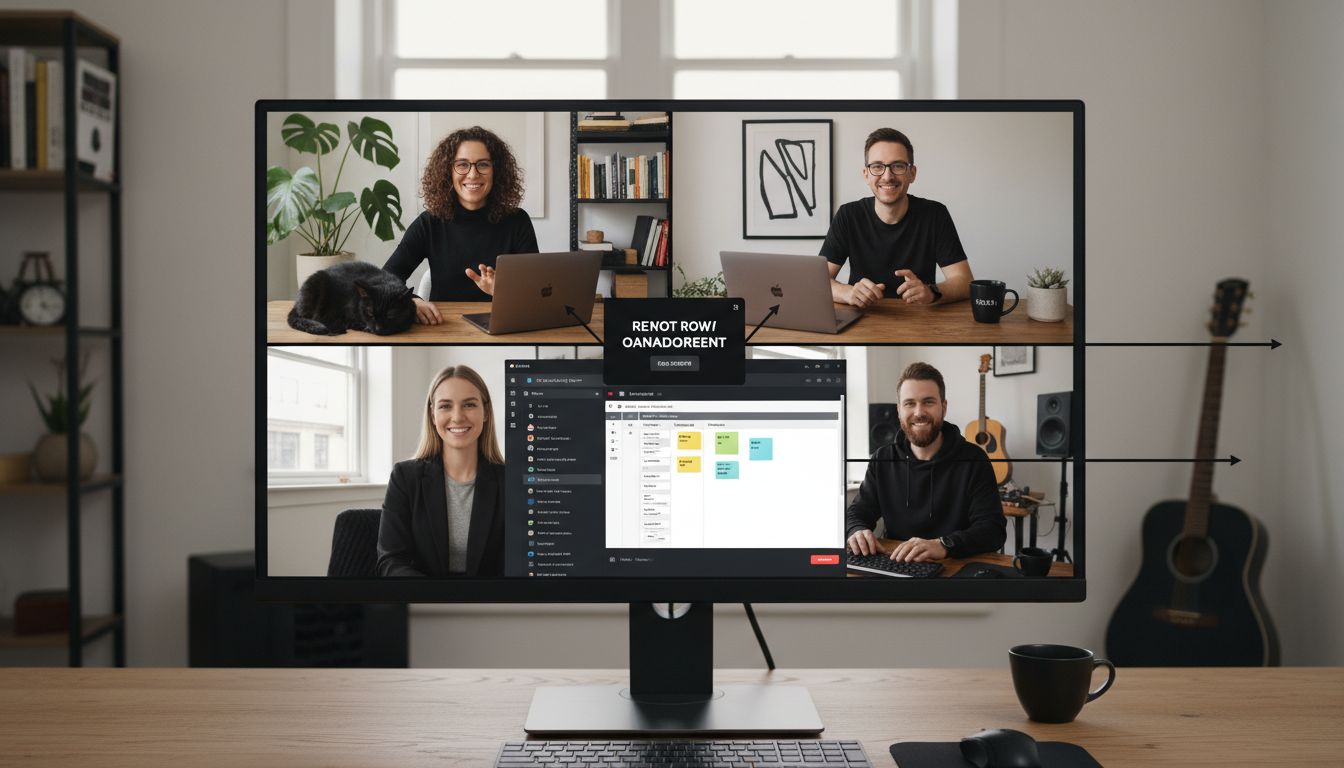
Design a robust workflow management system that transcends geographical boundaries. Implement collaborative tools such as Slack for communication, Trello or Asana for project management, and Google Workspace or Microsoft Teams for document sharing and real time collaboration. From Office to Online: How to Transition to a Fully Remote Career suggests establishing clear communication protocols that include regular video check ins, transparent progress tracking, and well defined performance metrics.
Warning: Remote team building is not just about hiring talented individuals but creating a cohesive culture. Invest time in virtual team building activities, establish clear communication channels, and develop shared goals that keep your distributed team aligned and motivated.
Step 5: Test operations and optimize for scalability
Testing and optimizing your remote business operations is a critical phase that transforms your initial concept into a sustainable enterprise. According to Minimum Viable Product, successful businesses leverage iterative processes to collect validated learning about customer needs with minimal effort.
Begin by developing a minimum viable product (MVP) that allows you to test your core business assumptions in real market conditions. This approach enables you to gather authentic customer feedback and identify potential improvements without committing extensive resources. Implement systematic testing protocols that measure key performance indicators such as customer acquisition cost, conversion rates, and customer satisfaction. Break down your operational processes into discrete components and analyze each for potential efficiency gains and scalability bottlenecks.
The Customer Development methodology emphasizes spending substantial time in the field understanding your potential consumers. Conduct targeted experiments that provide insights into your market segment, create feedback loops with early customers, and remain agile in adapting your business model. How to Avoid Burnout as a Freelancer or Remote Worker suggests establishing clear boundaries and sustainable work rhythms during this intensive optimization phase.
Warning: Scalability is not about rapid growth but strategic, intentional expansion. Focus on building robust systems that can handle increased demand without compromising quality or team well being.
 Your goal is creating a flexible business model that can adapt and grow organically.
Accelerate Your Remote Business Launch with Nomad Excel
Starting a remote business can feel overwhelming with the many challenges outlined in this guide such as validating your market fit, building remote workflows, and establishing your legal and digital presence. The key pain points like turning a clear idea into a scalable operation and creating an aligned remote team require focused support to overcome.
Nomad Excel offers immersive entrepreneurship bootcamps designed to give you step-by-step frameworks for refining your business model and building scalable systems with expert mentorship and a supportive community. If you want to turn your remote business dream into reality faster and smarter, discover proven strategies and a network committed to your growth in our Entrepreneurship Archives and Business Archives.
Ready to stop guessing and start launching with confidence? Visit Nomad Excel now to explore how our programs empower aspiring remote entrepreneurs like you to execute with clarity and momentum.
Frequently Asked Questions
How can I clarify my remote business idea?
To clarify your remote business idea, start with a self-assessment. Identify your unique skills, the problems you can solve for your target market, and what type of remote work aligns with your interests.
What are effective ways to validate my remote business model?
Effective validation involves creating customer personas and testing your core assumptions through interviews and surveys. Use this feedback to confirm if your proposed solution addresses a real problem that customers are willing to pay for.
How do I establish a strong legal structure for my remote business?
Establishing a strong legal structure requires choosing the right business type, like a sole proprietorship or LLC. Consult with a legal professional and ensure you understand the implications of each option for your business.
What tools or practices should I implement for effective remote workflows?
Implement collaborative tools for communication and project management, like using shared platforms for discussions and task tracking. Establish clear communication protocols and regular check-ins to keep your remote team aligned.
How can I optimize my remote business for scalability?
To optimize your business for scalability, develop a minimum viable product (MVP) and test it in the market. Regularly analyze performance metrics, refine processes, and ensure your operational systems can manage increased demand without compromising quality.
Recommended
- From Office to Online: How to Transition to a Fully Remote Career
- Entrepreneurship Skills Guide for Launching Your Own Venture – Nomad Excel – Your Entrepreneurial Adventure Starts Here
- Personal Business Growth: Complete Guide for Entrepreneurs – Nomad Excel – Your Entrepreneurial Adventure Starts Here
- A Step-by-Step Guide for Writing a Business Plan
Comments are closed.