
How to Launch a Freelance Business for Maximum Flexibility
More than thirty five percent of American professionals are now freelancing, turning individual expertise into thriving businesses. Breaking out on your own can feel intimidating, especially with endless information on the steps you should take. Yet defining your freelance niche, building a personal brand, and landing your first clients are not just crucial—they set the stage for long-term success. Discover strategies tailored for American freelancers determined to stand out and grow.
Table of Contents
- Step 1: Define Your Freelance Niche And Target Clients
- Step 2: Set Up Your Professional Branding And Online Presence
- Step 3: Develop Service Packages And Pricing Structures
- Step 4: Establish Clear Workflow And Client Onboarding Processes
- Step 5: Secure Your First Clients And Gather Testimonials
- Step 6: Evaluate Your Progress And Refine Your Business Model
Quick Summary
| Key Insight | Explanation |
|---|---|
| 1. Identify your freelance niche | Choose a specialized area where skills, passion, and market demand intersect. |
| 2. Build a strong online presence | Create professional profiles and a personal website to showcase your skills and attract clients. |
| 3. Develop service packages | Define clear service offerings and pricing to communicate value effectively. |
| 4. Streamline client onboarding | Establish a structured onboarding process to enhance client relationships and expectations. |
| 5. Collect client testimonials | Gather feedback and testimonials from clients to build credibility and attract new business. |
Step 1: Define your freelance niche and target clients
Choosing the right freelance niche is your first critical step toward building a successful independent business. This process involves identifying a specialized area where your skills, passion, and market demand intersect, allowing you to position yourself as an expert who solves specific problems for a well defined group of clients.
To pinpoint your ideal niche, start by conducting a comprehensive self assessment of your professional skills, industry knowledge, and unique strengths. Analyze your past work experiences, educational background, and areas where you consistently deliver exceptional results. Then validate your potential niche by researching market opportunities and customer needs. Look for industries or segments where businesses are struggling to find specialized talent and where your particular skill set can provide meaningful solutions.
As you narrow down potential niches, remember that specializing in a specific area allows you to develop deeper understanding of industry trends and challenges, which ultimately makes you more attractive to potential clients. Create detailed client personas that outline the exact type of businesses or individuals you want to serve, including their pain points, budget ranges, and typical project requirements. This strategic approach transforms you from a generalist into a sought after specialist who can command premium rates for your expertise.
Pro tip: Don’t get stuck in analysis paralysis. Choose a niche you can realistically serve, then be prepared to refine and adjust your focus as you gain more market insights and client experience.
Step 2: Set up your professional branding and online presence
Establishing a powerful professional brand is your gateway to attracting high quality clients and standing out in the competitive freelance marketplace. Your online presence will serve as a digital portfolio that communicates your unique value proposition and professional capabilities to potential clients worldwide.

Begin by building a comprehensive online professional profile that strategically showcases your skills, experience, and professional personality. LinkedIn offers an excellent platform for personal branding, allowing you to create a robust professional profile that highlights your expertise, work history, and professional achievements. Ensure your profile includes a professional headshot, a compelling summary that articulates your unique value, and detailed descriptions of your professional experiences and skill sets.
Expand your online presence beyond LinkedIn by creating a personal website or portfolio that demonstrates your work and provides potential clients with a deeper understanding of your professional capabilities. Include case studies, testimonials, and examples of your best work to build credibility and trust. Connect your various online profiles consistently, using the same professional tone and visual branding across platforms to create a cohesive and memorable professional identity.
Pro tip: Regularly audit and update your online profiles. The digital landscape evolves quickly, and keeping your professional brand current and dynamic signals ongoing professional growth and commitment to your craft.
Step 3: Develop service packages and pricing structures
Creating well defined service packages and strategic pricing is your roadmap to attracting the right clients and establishing a sustainable freelance business. This crucial step transforms your skills into marketable offerings that clearly communicate your value to potential clients.
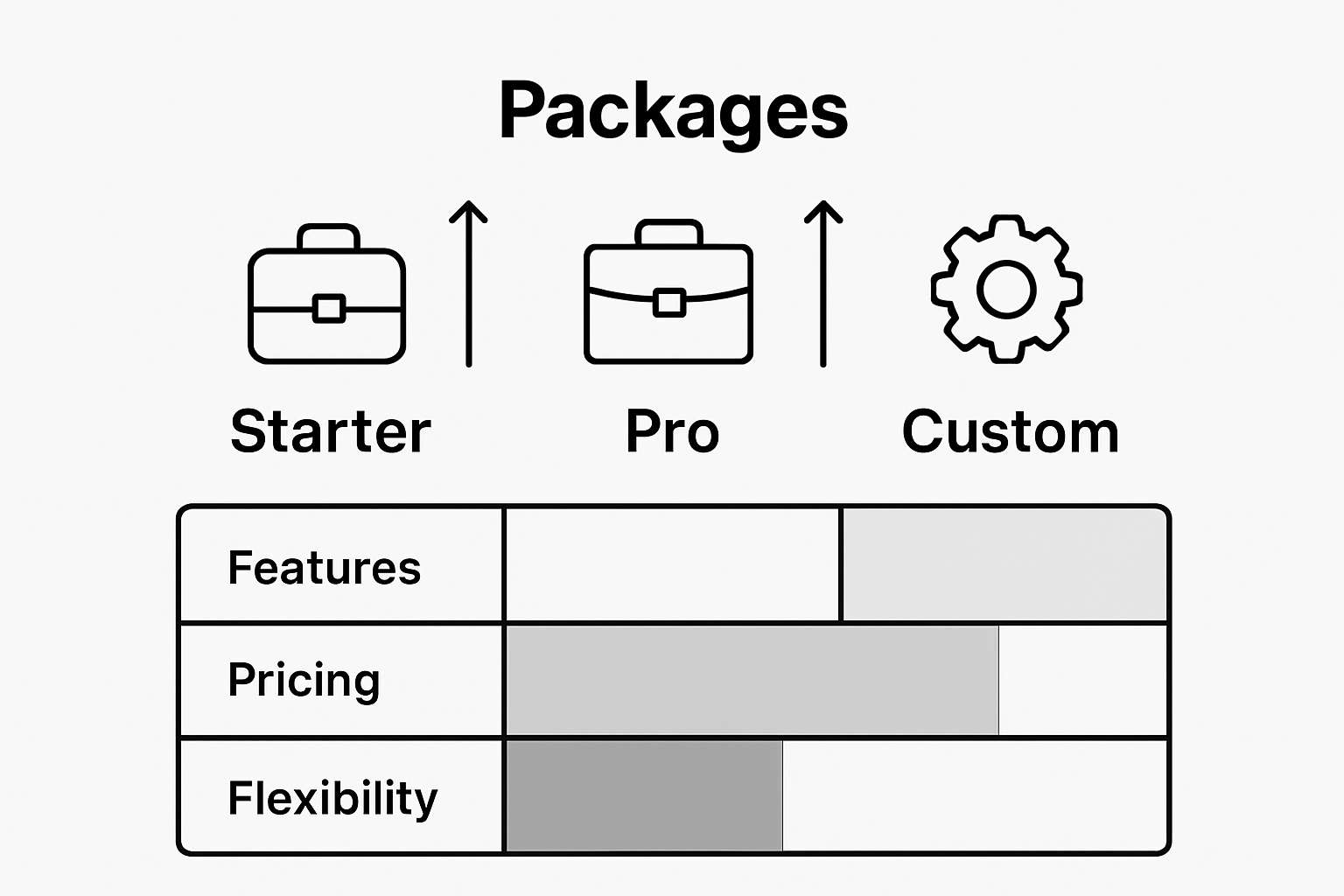
Identifying your unique value proposition is the foundation of developing compelling service packages. Break down your expertise into specific, outcome-focused service bundles that solve distinct client problems. Consider creating tiered packages that range from basic to premium options, allowing clients flexibility while demonstrating the depth of your professional capabilities. Each package should clearly outline deliverables, timelines, and the specific results clients can expect.
Research market rates in your niche and price your packages to reflect your expertise and the tangible value you provide. Exploring collaborative opportunities with other freelancers can also help you understand pricing dynamics and potential service combinations that might enhance your offering. Remember that pricing is not just about covering your costs but communicating the strategic value you bring to client projects.
Pro tip: Build in some pricing flexibility. While your packages should have clear structures, always leave room for customization that can address unique client needs and demonstrate your adaptability.
Step 4: Establish clear workflow and client onboarding processes
Designing a streamlined client onboarding process is your roadmap to building professional relationships that set expectations and create a smooth working experience. This critical step transforms potential client interactions from chaotic first encounters into structured, predictable partnerships that demonstrate your professionalism.
Communicating clearly with clients and consistently producing high quality results requires developing a systematic onboarding framework. Create a welcome packet that includes your standard operating procedures, communication protocols, project timelines, and payment terms. This documentation should outline exactly what clients can expect during each phase of your collaboration, including initial consultation, project scoping, milestone deliveries, and final submission.
Networking with fellow freelancers and industry professionals can provide invaluable insights into refining your workflow processes. Develop a standardized client intake form that captures essential project details, client objectives, and potential challenges. Implement a robust project management system that allows transparent tracking of progress, facilitates clear communication, and provides clients with real time updates on their projects.
Pro tip: Build flexibility into your workflow. While standardization is key, always maintain the ability to adapt your processes to unique client needs and project complexities.
Step 5: Secure your first clients and gather testimonials
Securing your initial clients is a critical milestone in launching your freelance business. This step transforms your professional potential into tangible opportunities, bridging the gap between your skills and real world market demand.
Start by leveraging your existing professional network and reaching out to potential clients through targeted outreach. Offer introductory rates or complimentary consultations to demonstrate your value and build initial trust. After completing projects, systematically collect feedback from satisfied clients to showcase your capabilities. When requesting testimonials, provide clear guidance about what makes a compelling recommendation, helping clients articulate the specific value you delivered.
Referrals from satisfied clients can help grow your professional network and establish long term relationships. Create a simple template for client testimonials that highlights concrete outcomes and measurable results. Display these testimonials prominently on your professional profiles and website, ensuring they represent diverse projects and demonstrate your versatility. Consider creating case studies that provide deeper insights into your problem solving approach and the tangible impact of your work.
Pro tip: Be proactive and strategic about collecting testimonials. The best recommendations come from clients who experienced significant positive transformation through your services.
Step 6: Evaluate your progress and refine your business model
Successfully launching a freelance business requires consistent self reflection and strategic adaptation. This critical phase transforms your initial efforts into a sustainable professional practice by systematically analyzing your performance and identifying opportunities for growth.
Advanced technological platforms are reshaping opportunities for freelancers to track and optimize their business performance. Develop a comprehensive tracking system that monitors key performance indicators such as client satisfaction rates, project completion times, revenue streams, and skill development progress. Use quarterly review sessions to analyze these metrics objectively, identifying patterns in your most successful projects and areas requiring improvement.
Online freelance marketplaces now provide unprecedented transparency in professional skills evaluation, offering data driven insights into your market positioning. Create a feedback loop that includes regular client surveys, peer reviews, and self assessments. Be prepared to pivot your service offerings, adjust pricing structures, and invest in skill development based on concrete data. Your ability to remain agile and responsive to market dynamics will distinguish you from competitors who remain static in their approach.
Pro tip: Treat your business model as a living document. Flexibility and continuous learning are your greatest assets in maintaining a competitive and fulfilling freelance career.
Unlock Your Freelance Potential with Nomad Excel
Launching a freelance business demands clear focus on your niche, strategic branding, and establishing workflows that deliver consistent value. This article highlights the challenges of defining your niche and setting prices while building client trust through structured processes and testimonials. If you are ready to move beyond uncertainty and build your freelance career with expert guidance, community support, and a proven framework, Nomad Excel can empower you to accelerate your growth.
Explore our Business Archives to dive deeper into strategies that transform your freelance vision into reality. Join immersive entrepreneurship bootcamps designed to sharpen your execution skills and connect you with mentors who help refine your offers. Take the next step in your journey today at Nomad Excel, where focused action and a powerful community will turn your freelance ambitions into sustainable success.
Frequently Asked Questions
How do I choose the right freelance niche for my business?
Choosing the right freelance niche involves assessing your skills, interests, and market demand. Start by evaluating your professional background and exploring areas where your expertise can solve specific client problems.
What should I include in my professional branding and online presence?
Your professional branding should include a comprehensive online profile that highlights your skills and experience. Create a personal website that showcases your work, and ensure your profiles across platforms feature consistent branding and a professional tone.
How do I create effective service packages and pricing structures?
To develop service packages, break down your skills into specific offerings that address client needs and problems. Research market rates to set competitive prices, and consider creating tiered packages to appeal to different client budgets.
What is an effective way to onboard new clients?
An effective client onboarding process involves providing clear documentation that outlines your services, timelines, and communication protocols. Start by creating a welcome packet for new clients that lays out what they can expect during your collaboration.
How can I collect testimonials to boost my freelance business?
To gather testimonials, proactively request feedback from satisfied clients after completing projects. Provide guidance on what to include in their recommendations, and display these testimonials prominently on your professional profiles and website.
How do I evaluate my progress and refine my freelance business model?
Evaluate your progress by tracking key performance indicators such as client satisfaction and project completion times. Use quarterly reviews to analyze this data, allowing you to identify successful strategies and areas needing improvement.
Recommended
- Should Freelancers Work for Free?
- Online Bookkeeping Options for Freelancers Working Remotely
- How to Start a Freelancing Business
- How to Launch a Remote Business: A Step-by-Step Guide
- How to Manage Expenses and Cover Payroll During Slow Periods
- 7 Essential Tax Return Tips 2025 for UK Small Businesses
- Tendances Entrepreneuriales À Dubaï : Guide 2025 Complet – Formation d’entreprise à Dubaï
Comments are closed.