
How to Build a Remote Team for Startup Success
Most remote startup teams lose clarity when roles and communication policies are poorly defined. With global collaboration on the rise, even American managers face confusion over job expectations and accountability. Clear frameworks for remote work help you sidestep common pitfalls like miscommunication, uneven workloads, and low engagement. This guide shows you practical ways to define remote roles, onboard talent, and build a more cohesive team, so your distributed startup can thrive.
Table of Contents
- Step 1: Define Roles And Remote Work Policies
- Step 2: Select And Onboard The Right Team Members
- Step 3: Implement Communication And Collaboration Tools
- Step 4: Establish Accountability Systems And Processes
- Step 5: Monitor Performance And Optimize Team Dynamics
Quick Summary
| Key Takeaway | Explanation |
|---|---|
| 1. Define remote work roles clearly | Create outlines for team responsibilities, expectations, and performance metrics to build a strong framework. |
| 2. Select team members with remote experience | Focus on candidates with proven skills in remote work, adaptability, and strong communication for better integration. |
| 3. Implement efficient communication tools | Choose tools supporting various communication modes, ensuring smooth interactions and clear guidelines for their use. |
| 4. Establish accountability systems | Set clear key performance indicators and regular check-ins to track team progress and promote a growth culture. |
| 5. Monitor team dynamics regularly | Use diverse methods, such as feedback surveys and retrospectives, to assess team health and enhance performance continuously. |
Step 1: Define roles and remote work policies
Defining clear roles and remote work policies is crucial for building a successful distributed team. Your goal is to create a comprehensive framework that outlines expectations, responsibilities, and performance standards for every team member.
Start by developing a detailed remote work policy document that addresses key operational elements. This document should include specific guidelines on work hours, communication protocols, technology requirements, and performance metrics. Break down each team member’s core responsibilities, reporting structures, and expected deliverables. Consider creating role descriptions that highlight not just job functions but also how each position contributes to the overall team objectives. Pay special attention to defining boundaries between synchronous and asynchronous work, expected response times for communications, and core collaboration windows.
Implement a transparent accountability system where team members understand how their performance will be measured. This might involve setting up regular check-ins, establishing clear key performance indicators (KPIs), and using project management tools that provide visibility into individual and team progress. Comprehensive telework guidance suggests creating documentation that balances flexibility with clear expectations.
Pro tip: Consider creating a one-page role summary for each team member that they can quickly reference, which outlines their primary responsibilities, key performance indicators, and communication expectations.
Step 2: Select and onboard the right team members
Selecting and onboarding the right team members is a critical process that can make or break your remote startup. Your objective is to identify talented professionals who not only possess the right skills but also align with your team’s culture and remote work dynamics.
Begin by developing a comprehensive candidate profile that goes beyond traditional job descriptions. Look for individuals with proven remote work experience, strong communication skills, and demonstrated self motivation. Entrepreneurial team formation research suggests focusing on candidates who demonstrate adaptability, independent problem solving, and a collaborative mindset. Design your hiring process to include multiple assessment stages such as skills tests, video interviews, small project trials, and team interaction sessions that reveal how potential members might integrate with your existing remote workflow.
Once you have selected candidates, create a structured onboarding program specifically tailored to remote environments. This should include comprehensive digital documentation, video orientation sessions, mentorship pairings, and clear milestones for the first 30 60 90 days. Prioritize building interpersonal connections through virtual team building activities, informal video chats, and collaborative projects that help new team members feel integrated and understand the broader organizational context.

Pro tip: Implement a buddy system where new remote team members are paired with an experienced team member who can provide real time guidance and help them navigate the organizational culture.
Step 3: Implement communication and collaboration tools
Implementing the right communication and collaboration tools is the backbone of successful remote team performance. Your goal is to create a seamless digital ecosystem that enables smooth information sharing, real-time collaboration, and transparent team interactions.
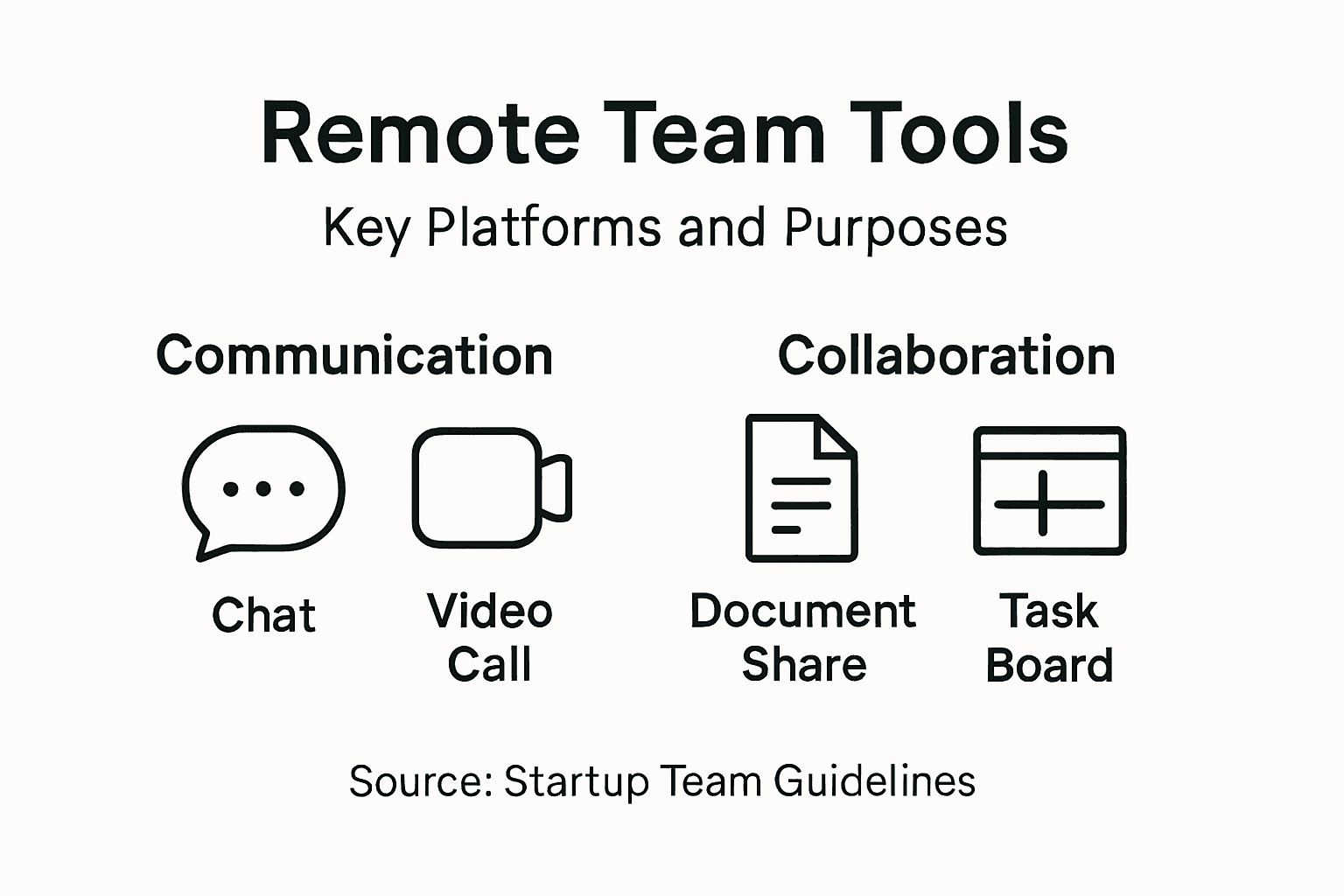
Collaborative online learning research highlights the importance of selecting tools that support multiple communication modes. Start by identifying a core set of tools that cover synchronous and asynchronous communication needs. This typically includes a primary messaging platform for quick conversations, a video conferencing tool for face to face meetings, a project management system for tracking work progress, and a cloud based document sharing platform. Consider tools that offer integrations and can work together smoothly. Prioritize platforms with robust security features, intuitive interfaces, and flexible access across different devices and operating systems.
Establish clear guidelines for how and when to use each communication tool. Virtual team collaboration strategies emphasize the importance of creating communication protocols that prevent tool overload and ensure efficient information flow. Create a communication matrix that outlines expected response times, preferred communication channels for different types of interactions, and best practices for digital collaboration. Provide training sessions to help team members understand the nuanced use of each tool and encourage consistent adoption across the organization.
Pro tip: Conduct a quarterly review of your communication tools to assess their effectiveness and gather team feedback on potential improvements or alternative solutions.
Here’s how core remote work communication tools compare in terms of utility and benefits:
| Tool Type | Primary Purpose | Business Impact |
|---|---|---|
| Messaging Platform | Quick, day-to-day exchanges | Enhances team responsiveness |
| Video Conferencing | Virtual face-to-face talks | Strengthens team cohesion |
| Project Management | Track tasks and deadlines | Improves workflow visibility |
| Cloud Documents | Share and edit files | Facilitates real-time collaboration |
Step 4: Establish accountability systems and processes
Establishing robust accountability systems is critical for maintaining productivity and performance in remote teams. Your objective is to create a transparent framework that enables clear tracking of individual and collective progress while fostering a culture of trust and continuous improvement.
Organizational accountability research emphasizes the importance of developing comprehensive performance measurement strategies. Start by defining clear key performance indicators (KPIs) for each team member that align with broader organizational goals. These should be specific, measurable, achievable, relevant, and time bound. Implement a digital dashboard or project management system that allows real time tracking of individual and team objectives. Conduct regular check ins weekly or biweekly to review progress, discuss challenges, and provide constructive feedback. Ensure these performance metrics are not just about quantitative outputs but also include qualitative assessments of collaboration, problem solving, and team contribution.
Performance reporting guidance recommends creating a transparent evaluation process that balances objective metrics with holistic team performance assessment. Develop a comprehensive performance review system that includes self assessment, peer feedback, and manager evaluation. Use a 360 degree feedback approach that provides multiple perspectives on an individual’s contributions. Create a culture that views accountability as a tool for growth and development rather than a punitive measure. Regularly communicate how individual performance connects to team and organizational success.
Pro tip: Design a recognition program that publicly acknowledges and rewards team members who consistently demonstrate exceptional accountability and contribute significantly to team goals.
Step 5: Monitor performance and optimize team dynamics
Monitoring team performance and optimizing dynamics is a nuanced process that goes beyond simple metrics and requires a holistic understanding of team interactions. Your primary goal is to create an adaptive environment that supports continuous improvement and maintains high team morale in a remote setting.
Team science collaboration research emphasizes the critical importance of understanding underlying team dynamics. Implement a multifaceted monitoring approach that combines quantitative performance tracking with qualitative assessments of team interactions. Use regular one on one meetings, team retrospectives, and anonymous feedback surveys to gather comprehensive insights into individual and collective performance. Pay attention to subtle indicators of team health such as communication patterns, collaborative problem solving, and interpersonal trust levels. Develop a system that allows for early identification of potential friction points or emerging challenges before they escalate.
Virtual team performance analysis suggests creating a dynamic feedback loop that enables continuous adaptation. Establish quarterly team health assessments that go beyond traditional performance reviews. These should include collaborative workshops where team members can openly discuss challenges, share insights, and collectively develop strategies for improvement. Create mechanisms for cross functional learning where team members can share skills, rotate through different project roles, and develop a more comprehensive understanding of team objectives.
Pro tip: Rotate team leadership responsibilities periodically to provide different perspectives and prevent potential stagnation in team dynamics.
Below is a summary of performance monitoring methods for remote teams:
| Method | Focus Area | Example Benefit |
|---|---|---|
| One-on-One Meetings | Individual engagement | Strengthens manager-employee rapport |
| Team Retrospectives | Group process review | Supports continuous team improvement |
| Anonymous Feedback | Honest team insights | Identifies hidden team challenges |
| Quarterly Assessments | Overall team health | Informs strategic adjustments |
Accelerate Your Remote Team Success with Expert Guidance and Community Support
Building a remote team for startup success requires not only clear roles and accountability but also a supportive environment where communication and collaboration thrive. If you are facing challenges in defining remote work policies, selecting the right team members, or maintaining strong team dynamics, you are not alone. Many entrepreneurs struggle to balance flexibility with structure while keeping their teams engaged and aligned.
At Nomad Excel, we specialize in helping founders and remote teams overcome these hurdles through immersive Entrepreneurship Bootcamps and tailored Business programs. Our programs combine actionable frameworks, mentorship from experienced entrepreneurs, and a vibrant community to sharpen your team’s strategy and execution. Whether you want to refine your hiring process, implement efficient communication tools, or establish robust accountability systems, Nomad Excel offers the tools and support you need to thrive.
Take the next step in turning your remote team into a high-performing and cohesive unit. Explore how Nomad Excel’s hands-on bootcamps and retreats can accelerate your startup’s growth and unlock the full potential of your distributed workforce today at https://nomadexcel.co.
Frequently Asked Questions
How do I define clear roles for my remote team?
Defining clear roles for your remote team involves creating detailed descriptions that outline specific expectations and responsibilities for each member. Start by identifying core functions and how they contribute to team objectives, then communicate these clearly to all members to ensure alignment.
What are essential elements of a remote work policy document?
A successful remote work policy document should cover key operational elements such as work hours, communication protocols, technology requirements, and performance metrics. Create this document to serve as a framework that helps guide team members in understanding their responsibilities and expected deliverables.
How can I select the right team members for my remote startup?
To select the right team members, develop a comprehensive candidate profile that focuses on relevant skills and compatibility with remote work culture. Utilize multiple assessment stages, such as skills tests and team interaction sessions, to determine how potential hires align with your team dynamics.
What tools should I implement for effective team communication and collaboration?
Choose communication and collaboration tools that support both synchronous and asynchronous needs, such as messaging platforms for quick communication and project management systems for tracking tasks. Establish clear guidelines for each tool to enhance collaboration and prevent information overload.
How can I monitor performance and optimize team dynamics effectively?
To monitor performance and optimize team dynamics, implement a multifaceted approach that combines quantitative metrics with qualitative insights. Conduct regular check-ins, team retrospectives, and anonymized feedback surveys to identify challenges and foster a culture of continuous improvement within your team.
Comments are closed.