
Benefits of having a business mentor for startups in 2026
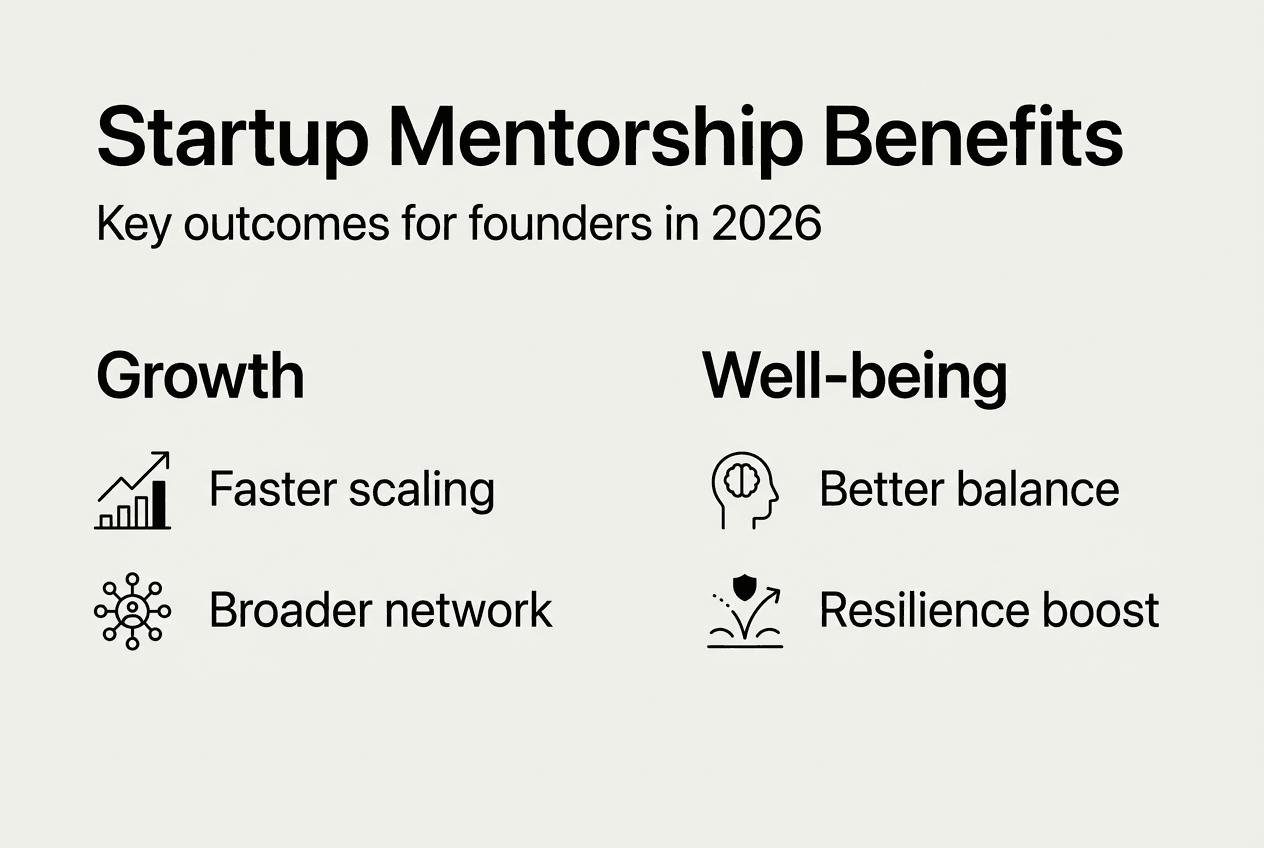
Most aspiring entrepreneurs believe success comes from grinding alone, but mentoring significantly boosts growth and well-being for early-stage founders. Recent studies reveal that 72% of leaders report improved work-life balance through professional mentoring, while businesses experience measurable revenue gains. This article unpacks the key benefits of business mentors, backed by 2026 research and expert insights. You’ll discover how mentorship accelerates growth, enhances entrepreneurial skills, improves mental health, and learn practical strategies for choosing and maximizing the right mentor relationship to transform your startup journey.
Table of Contents
- How Business Mentors Accelerate Growth And Skill Development
- Boosting Entrepreneurial Well-Being And Productivity Through Mentorship
- The Importance Of Effective Mentor-Mentee Matching And Potential Drawbacks
- How To Apply Mentorship Benefits: Choosing And Maximizing Your Business Mentor
- Explore Immersive Entrepreneurial Mentorship With Nomad Excel
- Frequently Asked Questions About Business Mentors
Key takeaways
| Point | Details |
|---|---|
| Growth acceleration | Mentors transfer knowledge, expand networks, and build resilience for early-stage entrepreneurs through hands-on guidance. |
| Well-being boost | Mentoring reduces stress and improves confidence, with 72% of leaders reporting better work-life balance and mental health. |
| Matching matters | Effective mentor-mentee pairing drives innovation, while poor matches can lead to disengagement and wasted resources. |
| Revenue impact | Businesses with professional mentoring see 65% revenue increases and 63% headcount growth on average. |
| Practical application | Choose mentors with active business experience, set clear expectations, and evaluate success holistically beyond just revenue. |
How business mentors accelerate growth and skill development
Business mentors provide the foundation for startup success by delivering targeted skills, knowledge transfer, and network expansion that early-stage entrepreneurs need most. Mentors accelerate growth through knowledge transfer, helping you navigate challenges with proven strategies rather than costly trial and error. They share battle-tested frameworks for validating ideas, refining offers, and building scalable systems that work in real markets.
The immersive learning aspect matters enormously. Working with mentors who are active operators, not just theorists, gives you hands-on insights into what actually moves the needle in business. These experienced entrepreneurs share current market realities, introduce you to valuable connections, and help you develop the resilience needed to push through inevitable setbacks. Their networks become your networks, opening doors to customers, partners, investors, and talent that would otherwise take years to access.
Key growth factors mentors influence include:
- Knowledge transfer of practical business skills and frameworks
- Network expansion connecting you to opportunities and resources
- Resilience building through shared experiences and encouragement
- Decision-making improvement with seasoned perspectives
- Confidence development from validation and constructive feedback
Pro Tip: Prioritize mentors with active business experience over academic experts. Operators who are currently building or have recently exited companies understand today’s challenges and can provide actionable guidance that applies to your specific growth stage.
“The relationship between mentoring and organizational performance in small and medium enterprises is significant and positive. Mentors serve as instrumental resources for knowledge acquisition, skill development, and strategic network building that directly impact business outcomes.”
This mentorship program guide approach ensures you’re learning from people who’ve walked the path, not just studied it. Different types of mentorship programs offer varying levels of immersion, from one-on-one coaching to cohort-based bootcamps where you learn alongside peers. The most effective programs combine direct mentor access with community support, creating an environment where growth happens through both instruction and collaboration.
Boosting entrepreneurial well-being and productivity through mentorship
The psychological benefits of mentorship often matter more than tactical business advice for long-term success. Entrepreneurship is mentally demanding, and mentoring programs enhance well-being by providing emotional support, reducing isolation, and boosting self-efficacy. When you have someone who believes in your vision and helps you navigate doubt, you’re far more likely to persist through difficult periods that sink most startups.

Mentors improve critical psychological factors that drive entrepreneurial performance. They help manage stress by normalizing challenges you face, share strategies for maintaining motivation during slow periods, and validate your decisions when self-doubt creeps in. This psychological support translates directly into better business outcomes because you make clearer decisions, take more calculated risks, and maintain the energy needed for sustained execution.
Positive mental health outcomes from consistent mentoring include:
- Reduced stress and anxiety about business decisions
- Increased confidence in your entrepreneurial capabilities
- Better emotional regulation during setbacks
- Stronger sense of purpose and direction
- Improved work-life integration and boundaries
The data backs this up powerfully. Research shows that 72% of leaders report improved work-life balance and better mental health through professional mentoring. Even more striking, businesses with mentoring support see 65% revenue increases and 63% headcount growth compared to those without. These aren’t small improvements, they represent transformational shifts in both personal well-being and business performance.
The most effective mentoring takes an integrative approach, combining instrumental support like business advice with psychological support for your mental health and motivation. This dual focus addresses both the tactical challenges of building a business and the emotional resilience required to sustain the journey. Understanding why mentorship programs work helps you seek out relationships that provide both types of support rather than just technical guidance.
When you feel supported psychologically, you show up differently in your business. You’re more creative in problem-solving, more willing to experiment with new approaches, and better at building relationships with customers and team members. This comprehensive mentorship approach creates a positive feedback loop where improved well-being drives better business decisions, which in turn reinforces your confidence and motivation.
The importance of effective mentor-mentee matching and potential drawbacks
Not all mentoring relationships deliver equal value, and matching quality determines whether you’ll experience breakthrough growth or wasted time. Surprisingly, knowledge incongruence boosts innovation when mentors have different expertise than mentees. This mismatch forces you to explain your business more clearly, consider alternative perspectives, and integrate diverse knowledge that sparks creative solutions. The friction of bridging different knowledge bases actually accelerates learning.
Gender matching also matters significantly for certain entrepreneurs. Research demonstrates that female entrepreneurs see 32% sales increases and 31% profit gains when matched with female mentors who understand their specific challenges and opportunities. This suggests that shared identity and experience can unlock unique benefits, though knowledge diversity remains valuable regardless of demographic factors.
| Aspect | Effective Matching | Poor Matching |
|---|---|---|
| Learning outcomes | Knowledge incongruence drives innovation and customer involvement | Mentor lacks relevant experience or communication fails |
| Business impact | 32% sales and 31% profit increase for well-matched pairs | Stagnation or decline from misaligned advice |
| Relationship quality | Trust, engagement, and sustained commitment | Disengagement, frustration, and early termination |
| Cost-benefit | High ROI through accelerated growth and well-being | Wasted time and resources with minimal gains |
You also need to understand the potential drawbacks before committing to a mentoring relationship. High costs represent a significant barrier, especially for early-stage entrepreneurs with limited budgets. Quality varies dramatically between mentors, and there’s no certification guaranteeing someone will be effective despite impressive credentials. Some mentors inadvertently erode your autonomy by pushing their preferred approaches rather than helping you develop your own judgment.
Misaligned expectations create another common pitfall. If you expect tactical execution help but your mentor focuses on high-level strategy, frustration builds on both sides. Poor matching leads to disengagement where meetings feel obligatory rather than energizing, and the relationship fizzles without delivering meaningful value. These drawbacks and challenges aren’t reasons to avoid mentorship, but they highlight why thoughtful selection matters.
Pro Tip: Set clear expectations during your first conversation. Discuss communication frequency, preferred feedback style, specific areas where you need support, and how you’ll measure progress together. This upfront alignment prevents most common mentorship failures.
Comparing different startup mentorship programs helps you identify which matching approaches work best for your situation. Some programs use algorithmic matching based on industry and experience, while others facilitate organic connections through cohort-based learning. Understanding the full spectrum of mentorship benefits and risks lets you make informed decisions about where to invest your time and resources.
How to apply mentorship benefits: choosing and maximizing your business mentor
Selecting the right mentor requires strategic thinking about your current growth stage, specific challenges, and learning style. Start by identifying your biggest gaps, whether that’s marketing expertise, operational systems, fundraising knowledge, or leadership development. The best mentor for you has successfully navigated similar challenges recently enough that their advice remains relevant to today’s market conditions.
Follow these steps to find and engage with the right business mentor:
- Define your specific goals and the type of support you need most right now
- Research potential mentors through your network, industry events, and structured programs
- Reach out with a concise, personalized message explaining why their experience aligns with your needs
- Propose a trial period to ensure mutual fit before committing long-term
- Prepare thoroughly for each session with specific questions and progress updates
- Implement advice quickly and report back on results to maintain engagement
- Express gratitude and look for ways to add value to the relationship
Look for these essential qualities when evaluating potential business mentors:
- Active or recent business experience in your industry or adjacent markets
- Strong communication skills and willingness to provide direct feedback
- Valuable network connections they’re willing to share generously
- Alignment with your values and approach to business building
- Track record of helping other entrepreneurs achieve measurable results
- Availability and commitment to regular engagement over time
Pro Tip: Evaluate mentorship success holistically, not just through revenue metrics. Consider improvements in your decision-making confidence, network quality, resilience during challenges, and clarity about your business direction. These factors often predict long-term success better than short-term financial gains.
The holistic approach to mentorship recognizes that benefits extend beyond immediate business outcomes. Your mentor relationship should enhance your overall entrepreneurial capabilities, not just solve today’s problems. This means embracing knowledge incongruence that challenges your assumptions, measuring impact across multiple dimensions, and participating in broader entrepreneurial ecosystems that amplify mentorship benefits through community and policy support.
Scaling mentorship impact happens when you move beyond one-on-one relationships to engage with structured programs and communities. The mentorship process in formal programs typically includes cohort learning where you gain insights from multiple mentors and peers simultaneously. This multiplier effect accelerates growth faster than any single relationship could achieve. Combining mentorship with proven business growth strategies creates a comprehensive approach to building a successful startup in 2026.
Explore immersive entrepreneurial mentorship with Nomad Excel
Nomad Excel offers immersive entrepreneurship bootcamps designed specifically for aspiring and early-stage entrepreneurs who want to experience effective mentorship while building real business momentum. Our programs combine direct guidance from experienced operators with hands-on execution and a powerful community of peers who challenge and support your growth. You’ll work alongside other driven founders in structured sprints that turn mentorship insights into tangible business results.
Our online entrepreneurship bootcamp delivers:
- Expert mentors who are active entrepreneurs, not just advisors
- Hands-on learning through daily execution and accountability
- Valuable networking with peers and industry connections
- Accelerated growth through proven frameworks and community support
This comprehensive mentorship approach ensures you gain both the tactical skills and psychological resilience needed for long-term success. Explore how Nomad Excel can help you turn mentorship benefits into measurable business growth.
Frequently asked questions about business mentors
What is a business mentor and why do I need one?
A business mentor is an experienced entrepreneur who guides you through startup challenges by sharing knowledge, connections, and emotional support. You need one because mentorship accelerates growth through proven strategies, reduces costly mistakes, and provides the resilience boost required to persist through difficult periods that sink most early-stage businesses.
How do I find the right business mentor for my startup?
Start by identifying your specific gaps and growth stage needs, then research potential mentors through your network, industry events, and structured programs. Look for active operators with relevant recent experience, strong communication skills, and alignment with your values. Propose a trial period to ensure mutual fit before committing long-term, and prepare thoroughly for each interaction to demonstrate your commitment.
What are the typical benefits entrepreneurs gain from mentorship?
Entrepreneurs typically gain accelerated business growth through knowledge transfer and network expansion, improved mental health with 72% reporting better work-life balance, and enhanced decision-making confidence. Financial benefits include 65% revenue increases and 63% headcount growth on average. You’ll also develop greater resilience, clearer strategic direction, and access to opportunities that would otherwise take years to discover independently.
Are there any risks or challenges to expect when working with a mentor?
Yes, potential challenges include high costs for quality mentoring, significant variability in mentor effectiveness despite credentials, and risk of eroded autonomy if mentors push their approaches too strongly. Misaligned expectations between mentor and mentee often lead to frustration and disengagement. Poor matching can waste time and resources without delivering meaningful value, which is why upfront clarity about goals and communication preferences matters enormously.
How can I maximize the impact of my mentoring relationship?
Maximize impact by setting clear expectations early, preparing specific questions for each session, and implementing advice quickly with progress reports. Evaluate success holistically across decision-making confidence, network quality, and resilience, not just revenue. Engage with broader entrepreneurial ecosystems through programs and communities to amplify benefits beyond your one-on-one relationship. This mentorship guide offers detailed strategies for getting the most from your mentor relationship.
Comments are closed.