
Explaining Business Networking Retreats for Entrepreneurs
TL;DR:
- Business networking retreats are focused, multi-day events designed to deepen relationships and foster strategic collaborations beyond traditional conferences. They feature curated small groups, intentional locations, and goal-oriented agendas that promote trust, decision-making, and behavioral change within 60 to 90 days. Proper preparation, active engagement, and disciplined follow-up maximize their measurable impact on personal and business growth.
A business networking retreat is a structured, multi-day gathering where professionals and entrepreneurs leave their daily environment to build meaningful relationships, share strategic insights, and accelerate growth together. Unlike a standard conference or a team-building day, these events combine focused work sessions with informal social time, creating conditions where real trust forms and real decisions get made. Explaining business networking retreats accurately means understanding what separates them from every other professional event on the calendar. The format is gaining serious traction, with elite communities like Outcove leading a broader shift away from mega-conferences toward intimate, curated offsites.
What are business networking retreats and how are they structured?
Business networking retreats are purpose-built professional events that run for two to five days, typically in locations chosen to shift participants out of their normal mental patterns. Corporate retreats typically range from 2 to 5 days, with effectiveness measured by organizational changes 60 to 90 days after the event. That timeline matters because it means the real return on a retreat is not measured in smiles at the closing dinner. It shows up weeks later in new partnerships, changed strategies, and decisions that actually get implemented.
The group size is one of the most defining structural features. Smaller, curated groups in boutique settings enable trust-building through shared activities like hiking and meals rather than formal sessions. A room of 15 to 30 people creates a fundamentally different social dynamic than a ballroom of 500. Participants remember each other’s names, follow up on conversations from the night before, and engage in the kind of honest dialogue that simply does not happen in a crowd.
A well-designed agenda typically includes:
- Decision blocks: Structured sessions where participants work through specific business challenges and leave with documented commitments, not just discussion notes
- Strategic roundtables: Small-group conversations on shared topics like growth, hiring, or market positioning
- Informal networking time: Shared meals, evening activities, and unstructured downtime that allow relationships to develop naturally
- Solo reflection periods: Time for participants to process insights and set personal priorities before returning to work
Location is not a cosmetic choice. Nature and secluded spaces inspire creative and strategic thinking better than windowless city conference rooms. A mountain lodge, a coastal villa, or a historic town in Europe changes how people think, speak, and connect. Nomadexcel builds this principle directly into its retreat design, selecting environments that complement the work being done inside the room.
Pro Tip: When evaluating a retreat’s structure, look for a balance of roughly 60% facilitated sessions and 40% unstructured time. The informal hours are where the most durable relationships form.

What benefits do professionals and entrepreneurs gain?
The benefits of networking retreats extend well beyond the event itself, and they operate on two distinct levels: personal growth and business outcomes. Intimate, focused retreat environments enable honest dialogue on strategy and shared challenges, leading to deeper trust and stronger partnerships. That depth of connection is the core advantage over traditional business networking events, where surface-level introductions rarely convert into meaningful collaboration.
Here are the primary gains professionals and entrepreneurs consistently report:
- Trust-based relationships: Spending two to four days with the same group of people, sharing meals and working through real problems, builds the kind of rapport that a 30-minute mixer cannot replicate.
- Strategic partnerships: Proximity and shared context accelerate collaboration. Participants leave with specific agreements, introductions, and co-created plans rather than a stack of business cards.
- Fresh perspective on their own business: Hearing how peers in different industries tackle similar challenges reframes problems and surfaces solutions that internal teams miss.
- Behavioral change: Retreats produce decisions and commitments that change how organizations operate within 60 to 90 days post-event. This is the metric that separates high-ROI offsites from feel-good gatherings.
- Renewed motivation: Stepping away from daily operations and spending time with driven, like-minded people restores energy and clarity in ways that a weekend alone rarely achieves.
“The most valuable thing I took home wasn’t a contact or a contract. It was a completely different way of thinking about my pricing model, which came out of a dinner conversation on night two.”
That kind of outcome is not accidental. It is the product of deliberate design, curated participants, and an environment that encourages candor. The importance of networking at this depth cannot be replicated through LinkedIn messages or virtual calls alone.
How do networking retreats differ from other professional events?
Understanding what business retreats are also requires understanding what they are not. The distinctions matter practically because they determine which format is right for your specific goals.
| Format | Duration | Group size | Primary focus | ROI measure |
|---|---|---|---|---|
| Business networking retreat | 2 to 5 days | 15 to 40 people | Relationship depth and strategic collaboration | Behavioral change and partnerships within 90 days |
| Corporate team-building retreat | 1 to 3 days | Full team | Internal cohesion and morale | Employee engagement scores |
| Large conference (e.g., TED, SXSW) | 3 to 5 days | Hundreds to thousands | Broad exposure and content consumption | Leads and brand visibility |
| Networking mixer or happy hour | 2 to 4 hours | 20 to 200 people | First introductions | Business cards and follow-up rate |
| Leadership training retreat | 2 to 4 days | Senior team | Skill development and alignment | Competency assessments |
The critical distinction is intent and depth. The shift from fun-first retreats to high-ROI offsites reflects a demand for documented decisions, behavioral agreements, and live collaboration rather than generic team-building sessions. This trend is reshaping what professionals expect when they commit time and budget to an offsite event.
Corporate retreats focus inward, on the existing team. Networking retreats focus outward, on building new relationships and expanding strategic reach. A leadership training retreat develops specific skills within a defined group. A networking retreat creates the conditions for unexpected, high-value connections across industries and disciplines. Each format serves a legitimate purpose, but conflating them leads to misaligned expectations and wasted investment.
How to maximize your outcomes from a networking retreat
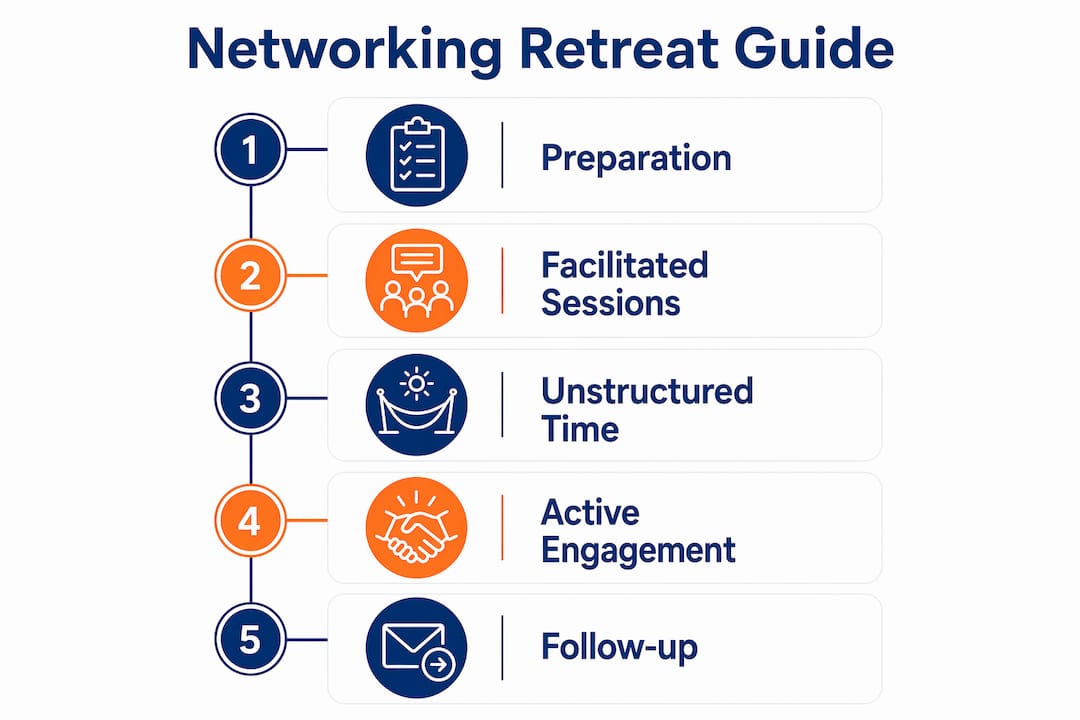
Preparation determines roughly half of what you get from any retreat experience. Showing up without clear goals is the single most common reason professionals leave these events feeling inspired but unable to point to concrete results.
Before the retreat:
- Set two or three specific goals. These might be finding a potential co-founder, getting feedback on a pricing strategy, or identifying a new market. Vague intentions produce vague outcomes.
- Research other participants. Most well-run retreats share an attendee list in advance. Review it, identify five to eight people you want to connect with, and prepare one specific question or topic for each.
- Clear your schedule for the week after. Follow-up is where retreat value either compounds or evaporates. Block time for calls, emails, and implementing what you learned.
During the retreat, active engagement during sessions and social time is what separates participants who leave with transformative outcomes from those who leave with good memories. Contribute to discussions, ask direct questions, and resist the temptation to stay in your comfort zone by only talking to people you already know.
After the retreat, the work continues. Repeated interactions over several days help relationships deepen beyond surface introductions, but those relationships require maintenance. Send specific follow-up messages within 48 hours, reference a conversation you had, and propose a concrete next step. Generic “great to meet you” emails are forgotten within a week.
Pro Tip: Keep a running note on your phone during the retreat. Capture names, conversation highlights, and any commitments you make. Reviewing it the morning after each day keeps your follow-up sharp and specific.
Key takeaways
Business networking retreats deliver measurable personal and professional growth when they are designed around depth, curated participants, and documented outcomes rather than entertainment alone.
| Point | Details |
|---|---|
| Retreats run 2 to 5 days | Effectiveness is measured by organizational and behavioral changes 60 to 90 days after the event. |
| Small groups drive deeper connection | Curated groups of 15 to 40 people enable trust and honest strategic dialogue that large conferences cannot replicate. |
| Location shapes outcomes | Natural or secluded venues promote creative thinking and shift participants out of routine mental patterns. |
| Preparation multiplies ROI | Setting specific goals and researching participants before arrival determines the quality of connections made. |
| Follow-up converts value | Relationships formed at retreats compound only when maintained with specific, timely outreach after the event. |
Why I think most professionals underestimate what a retreat can do
I have watched the professional events industry shift significantly over the past several years, and the clearest trend is this: the professionals getting the most value from their time are not the ones attending the biggest conferences. They are the ones choosing smaller, more intentional gatherings where the room itself is the product.
What strikes me most about well-designed networking retreats is how they compress relationship-building timelines. A connection that might take 18 months to develop through occasional LinkedIn interactions can reach genuine trust and mutual commitment within 72 hours when you share meals, work through real problems together, and spend evenings in honest conversation. That compression is not magic. It is the result of deliberate environment design and curated participant selection.
The mistake I see most often is professionals attending retreats with a passive mindset, expecting the event to deliver value without active participation. The format rewards the prepared and the present. Those who arrive with clear intentions, engage authentically, and follow up with discipline consistently report outcomes that justify the investment many times over.
I also think the company retreat model is evolving in a direction that blends internal team alignment with external networking, and that hybrid approach is where the most interesting outcomes are emerging. The entrepreneurs I respect most are not just sending their teams on retreats. They are attending curated peer retreats themselves, treating them as a core part of their growth strategy rather than a discretionary line item.
If you are considering your first retreat, approach it with the same rigor you would apply to any significant business investment. Define what success looks like before you arrive, and measure it honestly 90 days later.
— Amichai
Grow faster with Nomadexcel’s immersive retreats and bootcamps
Nomadexcel designs retreats and bootcamps specifically for entrepreneurs and teams who want more than inspiration. Every program combines expert mentorship, peer networking, and structured execution to produce real business outcomes. The Gran Canaria Entrepreneurial Mindset Retreat and the Kotor AI Focus Retreat are built around the principles covered in this article: curated groups, purposeful locations, and agendas designed around documented decisions rather than passive learning. For entrepreneurs who want a structured path to growth, the online entrepreneurship bootcamp offers the same community and execution focus in a flexible format. Every Nomadexcel program is designed to deliver measurable progress, not just a memorable experience.
FAQ
What is a business networking retreat?
A business networking retreat is a structured, multi-day event where professionals and entrepreneurs gather outside their normal work environment to build relationships, share strategic insights, and collaborate on business challenges. It differs from conferences by prioritizing depth of connection over breadth of exposure.
How long does a typical business networking retreat last?
Most business networking retreats run between two and five days, with the most effective formats balancing facilitated work sessions with unstructured social time. Organizational impact is typically measured 60 to 90 days after the event.
How do networking retreats differ from team-building retreats?
Networking retreats focus on building new external relationships and strategic partnerships across organizations, while team-building retreats focus on strengthening cohesion within an existing team. The participant mix, agenda design, and success metrics are fundamentally different for each format.
What should I prepare before attending a networking retreat?
Set two to three specific goals, research the attendee list in advance, and block follow-up time in your calendar for the week after the event. Preparation is the primary factor separating participants who leave with concrete outcomes from those who leave with only general inspiration.
Are business networking retreats worth the investment?
Yes, when chosen carefully and approached with clear intentions. The return shows up in new partnerships, strategic clarity, and behavioral changes that compound over the 90 days following the event, making them one of the higher-ROI formats available for professional development.
Comments are closed.