
What Is a Company Retreat: Transforming Team Collaboration
Every HR manager knows that stepping away from daily office routines can spark new energy and ideas within a team. For mid-sized tech companies, planning a retreat is more than just an escape from the usual—it is a chance to build true collaboration and inspire entrepreneurial thinking. With a well-structured company retreat, you can create a supportive space for innovation, strengthen cross-team connections, and lay the groundwork for lasting organizational success. Intentional team gatherings transform how people connect and work together.
Table of Contents
- Defining A Company Retreat And Its Purpose
- Formats And Types Of Company Retreats
- How Company Retreats Foster Team Growth
- Key Elements For Successful Retreat Planning
- Risks, Costs, And Common Mistakes
Key Takeaways
| Point | Details |
|---|---|
| Company retreats enhance team cohesion | Strategic offsite events foster collaboration and deeper interpersonal understanding among team members. |
| Diverse formats cater to various needs | Choosing the right retreat format, such as off-site or virtual, can maximize engagement and meet specific team goals. |
| Effective planning is crucial | Establishing clear objectives and a balanced agenda can transform a retreat into a meaningful experience. |
| Financial and logistical considerations are essential | Managing costs and addressing common risks can lead to a successful and impactful retreat outcome. |
Defining a Company Retreat and Its Purpose
A company retreat is a strategic offsite event where entire teams temporarily step away from their regular work environment to focus on collaboration, strategic planning, and team building. Specialized meetings allow groups to step back from daily operational pressures and engage in deeper, more meaningful interactions.
The primary purposes of a company retreat extend far beyond simple team bonding. These intentional gatherings serve multiple critical organizational objectives:
- Foster team cohesion and interpersonal understanding
- Develop strategic alignment across departments
- Generate innovative solutions to complex challenges
- Create opportunities for cross-functional communication
- Recharge team motivation and collective energy
Strategic retreats differ significantly from standard meetings or team-building events. Unique event formats bring teams together in secluded locations designed to remove typical workplace distractions and stimulate creative thinking. By intentionally shifting the physical environment, companies can unlock new dimensions of team potential.
Most successful company retreats share common characteristics: they are structured yet flexible, professional yet engaging, and focused on both immediate business needs and long-term team development. The goal is not just to discuss work, but to fundamentally enhance how teams communicate, collaborate, and conceptualize organizational challenges.
Pro tip: Design your company retreat with clear objectives and a balanced agenda that mixes serious strategic work with opportunities for genuine human connection.
Formats and Types of Company Retreats
Company retreats come in diverse formats, each designed to address specific organizational objectives and team dynamics. Corporate retreats vary widely with strategic approaches tailored to different team needs and goals.
The primary types of company retreats include:
- Off-site Retreats: Conducted in locations away from the regular workplace
- On-site Retreats: Hosted at company headquarters or primary facilities
- Virtual Retreats: Fully digital gatherings for distributed teams
- Hybrid Retreats: Combining in-person and virtual participation
- Adventure-based Retreats: Focused on outdoor team-building experiences
Structured retreat formats are typically organized around specific objectives. Corporate retreats can be designed to achieve multiple goals simultaneously, such as team building, strategic planning, skill development, and innovation generation.
Each retreat type offers unique benefits. Off-site retreats provide complete immersion and minimal distractions, while virtual formats enable global team connectivity. Adventure-based retreats can dramatically improve team dynamics through shared challenging experiences, and hybrid models offer flexibility for teams with diverse working arrangements.
Here’s a comparison of company retreat formats based on logistics, team impact, and ideal use:
| Retreat Format | Logistics Required | Impact on Team | Best For |
|---|---|---|---|
| Off-site | High travel coordination | Deep team bonding | Large, collocated teams |
| On-site | Minimal arrangements | Moderate collaboration | Efficient planning |
| Virtual | Digital tools only | Global connection | Remote, distributed teams |
| Hybrid | Mixed (digital & onsite) | Flexible participation | Diverse, hybrid workplaces |
| Adventure-based | Special planning needed | Strong trust-building | Teams needing challenge |
Pro tip: Select a retreat format that aligns closely with your team’s specific communication styles, geographical distribution, and primary organizational objectives.
How Company Retreats Foster Team Growth
Company retreats are powerful vehicles for transforming team dynamics and organizational potential. Corporate retreats help teams develop by creating intentional spaces for professional growth, communication enhancement, and strategic alignment.
The key mechanisms through which retreats foster team growth include:
- Breaking down hierarchical barriers
- Encouraging vulnerability and authentic communication
- Developing shared understanding of team goals
- Creating opportunities for cross-functional learning
- Generating collective problem-solving experiences
Interpersonal connection becomes the foundation for transformative team development. Retreats provide unique environments where team members can interact beyond traditional work contexts, enabling deeper understanding of individual strengths, communication styles, and collaborative potential.
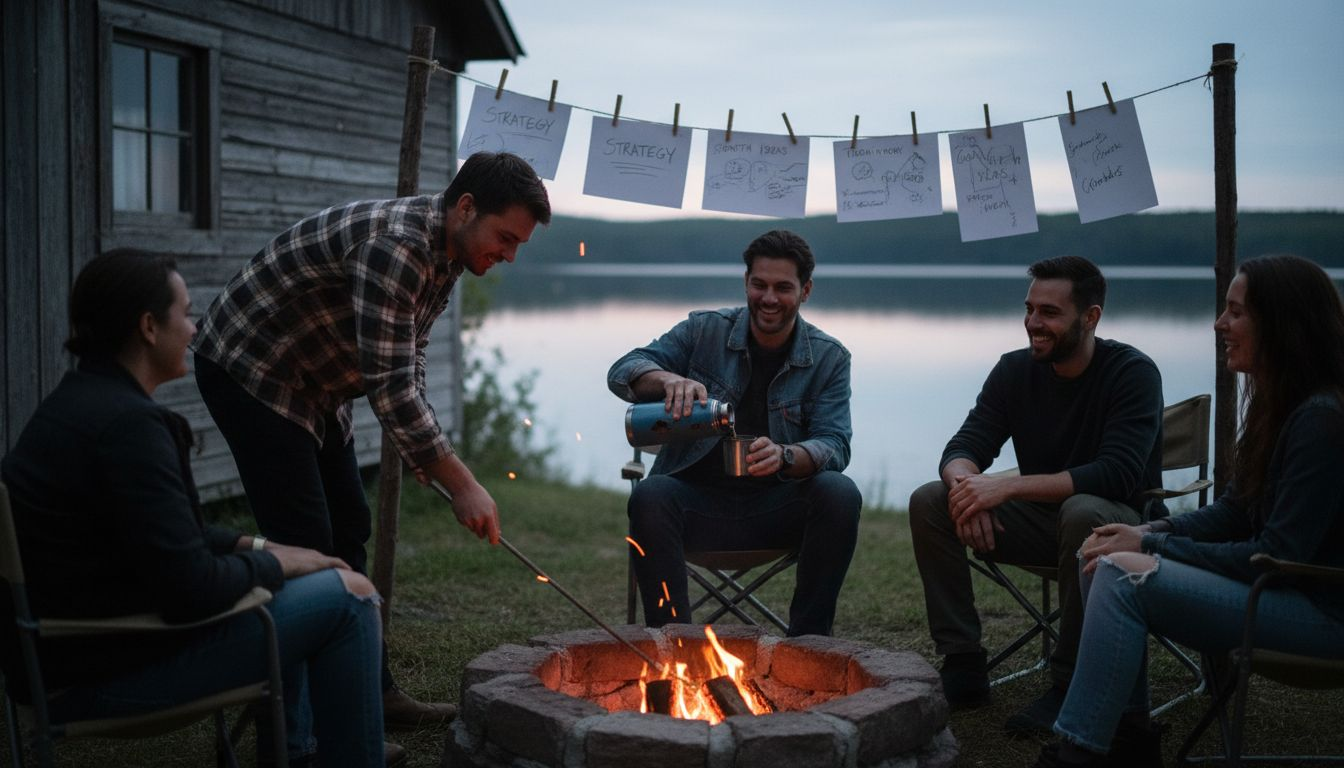
Strategic retreats go beyond simple team-building activities. They create structured opportunities for skill development, collective reflection, and alignment of individual efforts towards broader organizational objectives. By removing typical workplace distractions and hierarchical constraints, these experiences allow teams to explore innovative approaches, challenge existing assumptions, and develop more cohesive, adaptable working relationships.
Pro tip: Design retreat activities that balance structured learning with organic interaction, ensuring participants can both develop professional skills and build genuine interpersonal connections.
Key Elements for Successful Retreat Planning
Planning a company retreat requires meticulous attention to strategic details that transform an ordinary gathering into a transformative team experience. Successful retreat planning demands carefully constructed frameworks that address both organizational objectives and team dynamics.
Key elements for effective retreat planning include:
- Establishing clear, measurable objectives
- Selecting an appropriate location and environment
- Designing a balanced and engaging agenda
- Ensuring inclusive participation
- Creating mechanisms for post-retreat accountability
- Allocating sufficient time for both structured and unstructured interactions
Strategic preparation is the cornerstone of a meaningful retreat. Organizational leaders must invest time in understanding their team’s specific needs, communication patterns, and current challenges. This deep contextual awareness allows for the development of a retreat experience that goes beyond superficial team building and addresses genuine developmental opportunities.
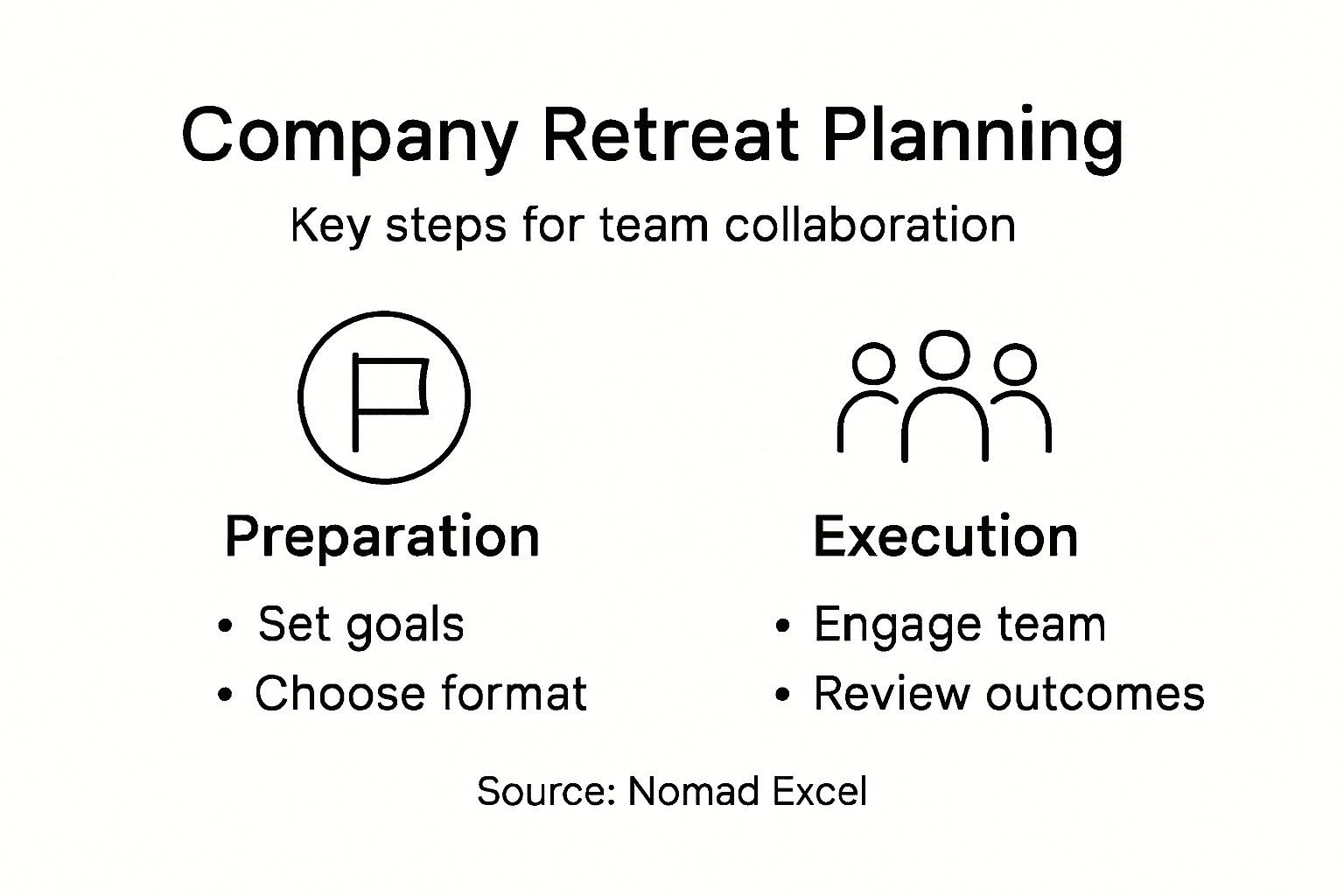
The most impactful retreats maintain a delicate balance between professional development and personal connection. They create spaces where team members can simultaneously learn new skills, challenge existing assumptions, and build deeper interpersonal relationships. By thoughtfully integrating structured workshops, collaborative problem-solving sessions, and organic interaction opportunities, retreats can become powerful catalysts for organizational transformation.
Pro tip: Conduct a pre-retreat survey to gather team input and customize the experience, ensuring maximum engagement and relevance.
Risks, Costs, and Common Mistakes
Company retreats represent significant organizational investments that require careful financial and strategic considerations. Company retreats can be costly with expenses spanning transportation, accommodation, meals, and specialized activities.
The primary risks and potential pitfalls include:
- Excessive financial expenditure without clear returns
- Insufficient planning leading to low participant engagement
- Misalignment between retreat objectives and organizational goals
- Poor logistical coordination
- Inadequate follow-up mechanisms
- Neglecting individual team member preferences and needs
Financial management remains a critical challenge for retreat planning. Organizations must carefully balance budget constraints with meaningful team development opportunities. Logistical challenges can diminish retreat effectiveness, making precise budgeting and strategic resource allocation essential for success.
Navigating these challenges requires a proactive, comprehensive approach. Leaders must develop nuanced strategies that prioritize participant experience while maintaining fiscal responsibility. This involves creating detailed cost projections, establishing clear metrics for retreat success, and building flexibility into planning to accommodate unexpected variables.
Below is a summary of common retreat risks and how to mitigate them:
| Risk | Impact on Retreat | Mitigation Strategy |
|---|---|---|
| Budget overruns | Reduced ROI | Set strict spending limits |
| Poor agenda design | Low engagement | Align with team needs |
| Logistical errors | Participant frustration | Use detailed checklists |
| Lack of follow-up | Lost momentum | Assign post-retreat actions |
| Ignoring team diversity | Missed opportunities | Gather input from all members |
Pro tip: Develop a comprehensive retreat budget with contingency funds and conduct a thorough cost-benefit analysis before finalizing your retreat plans.
Elevate Your Company Retreat Into a Transformative Team Experience
The article highlights the challenges many organizations face when planning company retreats such as aligning team goals, fostering authentic communication, and balancing strategic work with genuine connection. If your team struggles with breaking down barriers, enhancing collaboration, or returning from retreats without clear next steps, these pain points can limit the retreat’s real impact. Concepts like strategic alignment, balancing structured learning with unstructured interaction, and selecting the right retreat format are critical but often overlooked.
At Nomad Excel, we specialize in designing and facilitating fully custom company retreats that tackle these exact challenges head-on. Our retreats focus on strengthening relationships, developing entrepreneurial leadership, and creating lasting clarity through immersive workshops and expertly guided facilitation. These retreats not only recharge your team’s motivation but also build the trust and communication necessary for sustainable growth. Discover how our retreat solutions blend structured strategy with authentic connection at Nomad Excel and explore how tailored experiences can transform your team by visiting our Company Retreats and Bootcamps.
Looking to move beyond the ordinary? Let us help you unlock your team’s full potential with an impactful retreat crafted to your unique needs. Take the first step today and bring the power of clarity, execution, and community to your next company retreat by contacting us through Nomad Excel.
Frequently Asked Questions
What is the primary purpose of a company retreat?
A company retreat serves to foster team cohesion, improve strategic alignment, generate innovative solutions, enhance cross-functional communication, and recharge team motivation.
How do company retreats differ from regular meetings?
Company retreats are designed to remove distractions and engage teams in deeper interactions, focusing on collaboration and strategic planning rather than routine operational discussions.
What are some common types of company retreats?
Common types of company retreats include off-site retreats, on-site retreats, virtual retreats, hybrid retreats, and adventure-based retreats, each serving different team objectives and dynamics.
What key elements should be considered when planning a successful retreat?
Effective retreat planning should include clear objectives, an appropriate location, a balanced agenda, inclusive participation, accountability mechanisms, and time for both structured and unstructured interactions.
Recommended
- Gran Canaria 1-Week Entrepreneurial Mindset Business Retreat
- Playa Venao 1 Week Personal Skills & Team Building Retreat
- Team Building for Startups: Driving Growth Together
- How to Foster Innovation for Team Growth and Success
- Benefits of Corporate Retreats for Team Success – Winelands Function – For Every Occasion, Your Celebration
Comments are closed.