
How to Build Business Community for Entrepreneurs
Most american entrepreneurs never realize that over 80 percent of thriving business communities owe their success to a clearly defined purpose and a focused audience. Without this foundation, it becomes nearly impossible to foster real connection or meaningful growth. Setting up an entrepreneurial community with intention gives every member a reason to show up, participate, and support one another. This guide reveals how clarity at each step shapes an environment where entrepreneurs feel seen, valued, and inspired to collaborate.
Table of Contents
- Step 1: Define Your Community Purpose And Audience
- Step 2: Create Engagement Opportunities And Shared Values
- Step 3: Select The Right Platforms And Collaboration Tools
- Step 4: Facilitate Meaningful Interactions And Support
- Step 5: Measure Engagement And Strengthen Community Bonds
Quick Summary
| Key Point | Explanation |
|---|---|
| 1. Define Your Community’s Purpose | Establish a clear mission to guide decisions and connections within the community. |
| 2. Create Meaningful Engagement Strategies | Design structured opportunities for collaboration that foster trust and knowledge sharing. |
| 3. Choose Effective Communication Tools | Select platforms that enhance interaction and support the community’s growth needs. |
| 4. Facilitate Valuable Interactions | Implement programs that help members collaborate and develop entrepreneurial skills. |
| 5. Measure Engagement Effectively | Track both quantitative and qualitative metrics to understand community dynamics and evolution. |
Step 1: Define Your Community Purpose and Audience
Building a thriving business community starts with crystal-clear clarity about your mission and the specific entrepreneurs you aim to serve. Think of this foundational step as creating a strategic roadmap that will guide every future decision and interaction within your community.
To define your community’s purpose, start by understanding the core problem you want to solve for entrepreneurs. Are you creating a support network for digital nomads launching tech startups? A collaborative space for service-based freelancers to share strategies? Or a growth-focused community for early-stage founders seeking accountability? Your purpose needs to be specific, actionable, and deeply resonant with your target audience.
When mapping out your audience, go beyond basic demographics. Consider their professional challenges, growth aspirations, skill levels, and psychological needs. An entrepreneurial community intentionally acts to cultivate and support specific types of entrepreneurs, so your targeting must be precise. Create detailed audience personas that capture not just who they are, but what motivates them to seek connection and support.
Pro Tip: Your community’s purpose should be so clear that any potential member can immediately understand the value and imagine themselves thriving within it.
Once you’ve defined your community’s purpose and audience, you’ll be ready to design targeted engagement strategies that transform your vision into a vibrant, supportive entrepreneurial ecosystem.
Step 2: Create Engagement Opportunities and Shared Values
Engagement is the lifeblood of any successful entrepreneurial community. Your goal in this step is to design meaningful interactions that transform individual connections into a powerful collaborative ecosystem where entrepreneurs can genuinely support and elevate each other.

Entrepreneurs within a community initiate, manage, and promote commercial or social ventures, so your engagement strategies must provide real value. Consider creating structured opportunities like monthly mastermind sessions, skill exchange workshops, peer feedback circles, and virtual networking events. These platforms should allow members to share challenges, exchange knowledge, and build trust through substantive interactions.
The key is developing shared value that goes beyond transactional networking. Design experiences that align with your community’s core mission and help members achieve tangible professional growth. This might include accountability groups, collaborative project platforms, mentorship matching programs, or specialized topic channels that address specific entrepreneurial needs.
Pro Tip: Create engagement mechanisms that make participation feel both purposeful and enjoyable. The most successful communities make members feel they are gaining as much as they are giving.
With robust engagement opportunities and clear shared values, you are setting the foundation for a dynamic entrepreneurial community where members feel genuinely connected and motivated to contribute.
Step 3: Select the Right Platforms and Collaboration Tools
Choosing the right digital infrastructure is critical for building a thriving entrepreneurial community. Your platforms and tools will serve as the nervous system that connects members, facilitates communication, and supports collaborative work.
The principles of open collaboration for innovation are now found in many different ventures, which means you have an incredible range of tools to support your community’s unique needs. Consider platforms that offer multiple interaction modes like video conferencing, async messaging, project management, and resource sharing. Look for tools that provide robust communication channels, easy file sharing, seamless integration, and the flexibility to grow with your community.
A strategic community framework helps firms create approaches that describe how they can gain influence and connection, so approach your platform selection methodically. Evaluate tools based on specific criteria such as user experience, scalability, privacy features, and alignment with your community’s technical comfort level. Popular options might include Slack for messaging, Zoom for meetings, Notion for collaborative documentation, and Discord for more casual interactions.
Pro Tip: Always prioritize user experience. The best platform is the one your members will actually use consistently and enthusiastically.
With the right collaboration tools in place, you are creating a digital home where entrepreneurs can connect, learn, and grow together seamlessly.
Step 4: Facilitate Meaningful Interactions and Support
Creating a vibrant entrepreneurial community requires more than just connecting people. You need to intentionally design an environment that transforms individual interactions into powerful collaborative experiences that drive genuine growth and mutual success.
The recognition of business opportunities is the first stage in the entrepreneurial process, which means your community should focus on creating structures that help members identify and develop potential ventures. Design facilitation strategies that go beyond simple networking. Implement structured programs like peer mentorship circles, idea validation workshops, quarterly goal setting sessions, and targeted feedback mechanisms that help entrepreneurs turn insights into actionable strategies.
Software firms participate in ecosystems to extend value creation beyond their individual boundaries, and your community should operate on similar principles. Create multiple layers of support that address different entrepreneurial needs. This might include expert led masterclasses, member skill exchange programs, collaborative problem solving groups, and curated resources that provide practical guidance across various business challenges.
Pro Tip: The most powerful communities create a sense of psychological safety where members feel comfortable sharing vulnerabilities, seeking help, and offering genuine support.
By thoughtfully facilitating meaningful interactions, you transform your community from a passive network into an active ecosystem of mutual growth and collective entrepreneurial success.
Step 5: Measure Engagement and Strengthen Community Bonds
Measuring the health and impact of your entrepreneurial community is crucial for continuous improvement and sustained growth. Your measurement strategy will help you understand what truly resonates with members and identify opportunities to deepen connections.
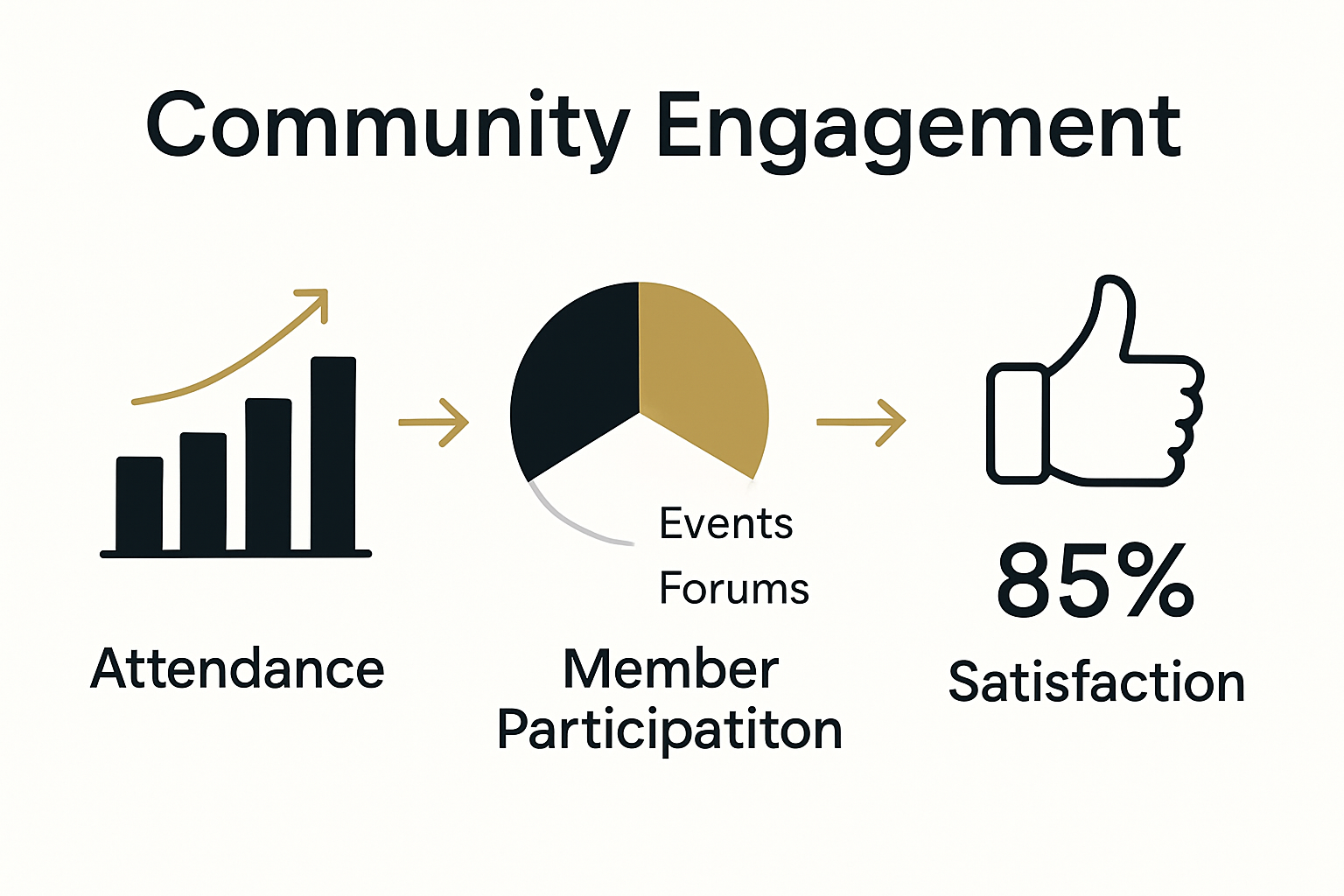
Community-based entrepreneurship is an important instrument for realizing potential among isolated communities, which means your engagement metrics should go beyond surface level numbers. Track both quantitative and qualitative indicators such as member participation rates, interaction frequency, skill exchanges completed, collaborative projects launched, and qualitative feedback through surveys and direct conversations. Look for metrics that demonstrate genuine value creation and personal growth among community members.
While small and medium enterprises represent a significant portion of business ecosystems, successful communities create meaningful connections that transcend traditional business metrics. Develop a holistic measurement approach that captures not just professional achievements but also personal transformations. Implement regular check-ins, anonymous feedback channels, and retrospective sessions that allow members to share their authentic experiences and suggest improvements.
Pro Tip: The most powerful engagement metrics reveal not just what members are doing, but how they are feeling and growing within the community.
By thoughtfully measuring and responding to community dynamics, you create a responsive ecosystem that continuously evolves to meet the changing needs of its entrepreneurs.
Build Your Entrepreneurial Community with Expert Guidance and Real Connections
Creating a thriving business community requires clarity, engagement, and the right support to turn individual connections into collaborative success. If you are seeking to define your community’s purpose, foster purposeful interactions, and sustain meaningful growth as highlighted in the article, Nomad Excel offers immersive opportunities to help you achieve exactly that. Through our expert-led entrepreneurship bootcamps and transformative company retreats, we focus on clarity, execution, and community, ensuring you gain actionable strategies and a network that fuels lasting success.
Explore practical steps and real stories in our Entrepreneurship Archives and discover how our programs create dynamic ecosystems of support. Don’t wait to experience the power of community that drives both personal and business growth. Visit Nomad Excel now to start your journey and build a business community that delivers results and inspires ongoing collaboration.
Frequently Asked Questions
How can I define the purpose of my entrepreneurial community?
Defining your community’s purpose starts by identifying the specific problem you want to solve for entrepreneurs. Consider hosting a brainstorming session to clarify your mission, focusing on the distinct needs and aspirations of your target audience.
What are effective engagement strategies for my entrepreneurial community?
Engagement strategies can include hosting monthly networking events, skill-sharing workshops, or mastermind groups. Schedule at least one structured opportunity each month to foster collaboration and connection among members.
What tools should I use to facilitate communication within my community?
Choose platforms that support diverse communication styles, such as video conferencing and messaging. For example, use a project management tool to keep projects organized and on track, ensuring all members can easily access shared resources.
How do I create a supportive environment for my community members?
Design activities that encourage vulnerability and authentic sharing, such as peer mentorship sessions or feedback circles. Aim to implement structured programs that promote trust and open dialogue among members, helping them feel safe to seek support.
What metrics should I track to measure community engagement?
Track both qualitative and quantitative metrics, like participation rates and member feedback. For a comprehensive view, conduct regular check-ins or surveys to understand how well the community meets members’ needs and contributes to their growth.
How can I strengthen community bonds over time?
Strengthen bonds by facilitating continuous meaningful interactions through workshops, collaboration projects, or accountability groups. Implement regular social events or activities that allow members to connect on a personal level, fostering deeper relationships.
Recommended
- Networking for Entrepreneurs: Complete Guide to Success
- What Is Entrepreneurial Community? Complete Breakdown – Nomad Excel – Your Entrepreneurial Adventure Starts Here
- Role of Networking in Entrepreneurship: Essential Guide – Nomad Excel – Your Entrepreneurial Adventure Starts Here
- The Essential Guide to Frameworks for Business Building
Comments are closed.