
Growth Mindset: 5 Evidence Backed Steps for Learners and Educators
A growth mindset is the belief that abilities, skills, and intelligence can develop through effort, effective strategies, feedback, and practice. It is not a promise of unlimited improvement or a shortcut to better grades. Its real value lies in how it reshapes a person’s approach to learning itself, making struggle feel useful rather than threatening.
TL;DR:
- Growth mindset interventions show only a very small effect on achievement unless they are supported by a classroom or work environment that rewards learning behaviors.
- Brief online lessons can improve outcomes mostly for lower-achieving students when paired with a supportive context, rather than by belief alone.
- Building a growth mindset requires specific practices like reframing setbacks, asking for strategy-focused feedback, and tracking efforts rather than relying on generic affirmations.
- Praise should connect effort to strategies and observable results, as effort alone tends to create a false growth mindset with minimal impact.
- Success depends on environments that combine mindset practices with structured feedback, deliberate practice, and mentorship, not just individual affirmations.
Table of Contents
- How a growth mindset changes the way you respond to challenge
- Growth mindset versus fixed mindset: what actually differs
- What the research actually shows, and where it falls short
- How to build a growth mindset step by step
- Practical tips for educators and trainers
- Why “praise the effort” alone backfires
- Where mindset practice meets structured learning
- FAQ
- Sources
How a growth mindset changes the way you respond to challenge
A mindset is a meaning system: a set of beliefs that quietly shapes what goals you set and how you act on them. When someone believes ability is fixed, they tend to chase performance goals that protect their image. When someone believes ability can grow, they shift toward mastery goals that prioritize learning itself, even when that means looking clumsy along the way.
This shift changes concrete behavior. According to the MIT Teaching + Learning Lab, people with a growth orientation treat difficulty as information rather than a verdict. They choose challenges that stretch their current skill instead of avoiding anything risky. They ask for specific feedback rather than generic reassurance, and they test different strategies when the first approach falls short.
The practical difference shows up in small moments: a student who reworks a failed proof instead of copying the answer, or a new hire who asks a manager exactly which part of a pitch fell flat. Neither is naturally more talented. Both are simply running a different internal script when things get hard.
Growth mindset versus fixed mindset: what actually differs
The contrast is easiest to see side by side, even though real people rarely sit at one extreme.
- Effort: A fixed mindset treats effort as a sign of weak ability; a growth mindset treats effort as the mechanism of improvement.
- Goals: Fixed thinking favors performance goals that protect image; growth thinking favors mastery goals built around learning something new.
- Response to failure: Fixed thinking reads failure as a verdict on identity; growth thinking reads it as data about what to adjust next.
- Feedback: Fixed thinking seeks praise or avoids feedback altogether; growth thinking actively seeks specific, strategy-focused feedback.
A student who says “I’m just not a math person” is speaking fixed mindset. A workplace version sounds like “I haven’t found the right approach to this pitch yet.” One important nuance: mindsets are domain specific. A confident public speaker can still hold a fixed mindset about numbers, which is why blanket labels rarely capture the whole picture, something we unpack further in our guide to fixed and growth mindset differences.
What the research actually shows, and where it falls short
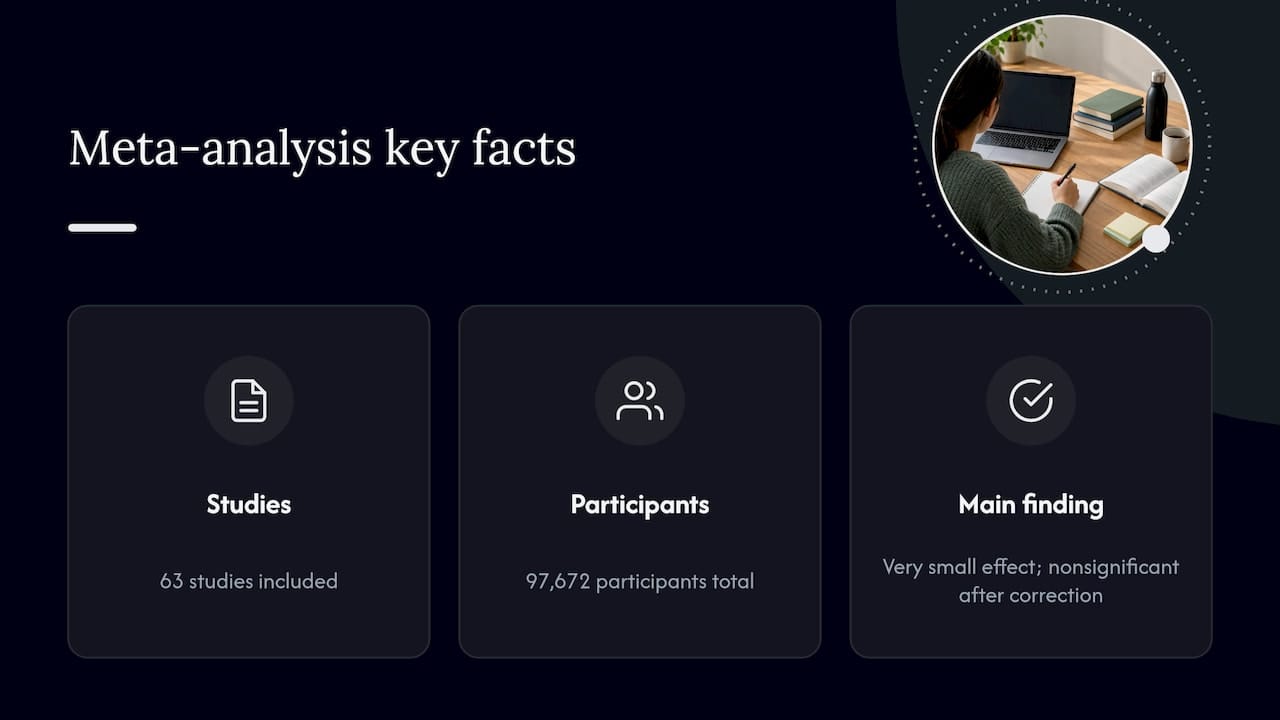
The honest picture is more modest than the popular version. A 2023 systematic review and meta-analysis covering 63 studies and 97,672 participants found a very small overall effect of mindset interventions on achievement, one that became statistically nonsignificant once the researchers corrected for publication bias.
A large national experiment found that brief online mindset lessons, just two 25-minute modules paired with written reflection exercises, improved outcomes mainly for lower-achieving students and when the surrounding school context supported the message. That detail matters: the belief alone rarely moves outcomes. It needs a classroom, workplace, or program that rewards the learning behavior the belief is supposed to produce.
A 2025 OECD synthesis frames this as mindset interacting with context: the same belief produces different results depending on teachers, peers, and the design of the work itself. The practical takeaway is straightforward. Mindset work pairs best with strong instruction and real feedback, not as a replacement for either.
How to build a growth mindset step by step
Building this belief is less about affirmations and more about repeated, specific practice. These steps follow the pattern researchers and educators point to again and again.
- Reframe setbacks with “not yet.” Replace “I can’t do this” with “I can’t do this yet,” then name one concrete next step.
- Run short revision cycles. Treat a first draft, pitch, or solution as a starting point, and schedule a deliberate second pass based on specific feedback.
- Ask for strategy-level feedback. Instead of “Was that good?” ask “Which part of my approach should I change next time?”
- Practice deliberately, not just often. Pick one weak point, drill it with intention, and track what changes between attempts.
- Use reflection prompts after effort, not just after results. Ask: “What strategy did I try? What did I learn about it? What would I try differently?”
A simple feedback script helps this stick: describe the strategy used, note the progress made, and name one next step. For example, “You organized your argument by evidence strength, that’s why the second paragraph landed better. Next, tighten your opening claim.”
Pro Tip: Track strategies, not just outcomes. A small notebook listing “what I tried” next to “what happened” turns scattered effort into a pattern you can actually improve.
These habits mirror the deliberate, structured practice described in language acquisition research, where consistent, targeted repetition outperforms vague immersion. The same logic applies to business skills, writing, or any craft built through iteration. Our own breakdown of building a growth mindset for entrepreneurial work walks through how this looks in practice over several weeks.
Practical tips for educators and trainers
Classrooms and workshops either reinforce this belief or quietly undercut it, depending on small design choices.
- Model process language out loud. Narrate your own strategy choices, including the ones that did not work, so learners see thinking as a visible skill.
- Design iterative assignments. Build in checkpoints and revision opportunities instead of single-shot grading, with clear success criteria stated up front.
- Teach specific learning strategies. Spaced practice, retrieval questions, and structured outlining all give learners something concrete to apply, not just a mindset to adopt.
- Normalize help-seeking. Treat questions and requests for feedback as a sign of engagement, not a gap to hide.
- Avoid empty effort praise. Replace “Great effort!” with feedback that names the specific strategy that worked.
According to Stanford Teaching Commons, being transparent about why these practices exist, rather than applying them silently, helps learners internalize the reasoning instead of just following instructions.
Why “praise the effort” alone backfires
The most common misapplication of this idea is what researchers call a false growth mindset: praising effort regardless of outcome, with no attention to strategy. Carol Dweck, whose work founded this field, has warned that the public message was often flattened into simply telling people to try harder, which misses the actual mechanism entirely.
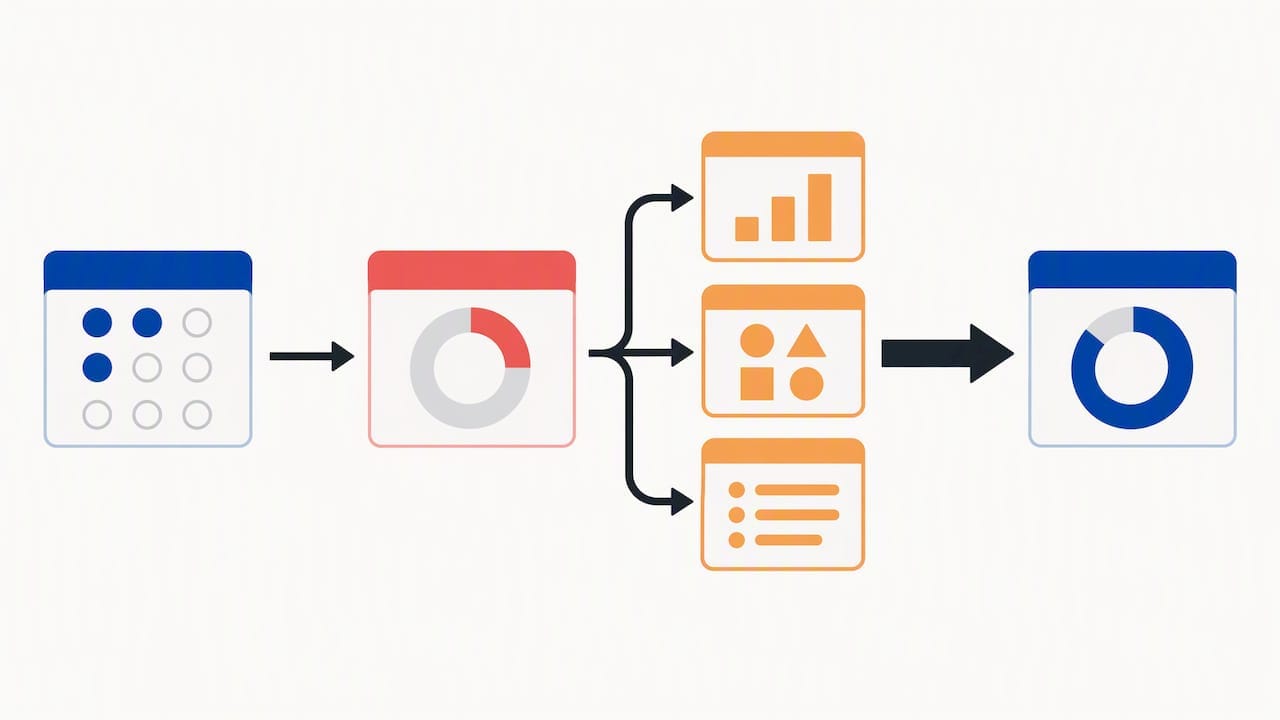
The fix is specificity. Swap “You worked so hard!” for “Switching to an outline before writing is what made this clearer.” The feedback has to connect effort to a strategy and a visible result, or it teaches nothing. It is also worth remembering that mindset is domain specific: someone who approaches writing with openness may still freeze at public speaking, so blanket encouragement rarely transfers evenly across skills, a pattern we explore in our examples of growth mindset language.
Where mindset practice meets structured learning
What strikes us most in this research is how closely real growth mindset practice resembles structured cohort learning: short cycles of attempt, specific feedback, and revision, repeated often enough to become habit. Belief alone rarely moves someone forward. It needs mentorship, deadlines, and people willing to name exactly what to fix next, which is a harder environment to build alone than it sounds.
— Amichai
FAQ
How do you explain growth mindset?
A growth mindset is the belief that abilities can improve through effort, strategy, and feedback rather than staying fixed from birth. In practice, this means treating setbacks as useful information and actively seeking ways to adjust your approach instead of avoiding difficulty.
What are examples of growth mindset?
Examples include reworking a failed draft after specific feedback, asking a mentor which exact strategy to change rather than whether something was “good,” and treating a skill gap as “not yet” solved instead of permanently missing. These behaviors show up across students, employees, and entrepreneurs alike.
Is growth mindset the same as positive thinking?
No, growth mindset is specifically about believing abilities can develop through effort and strategy, not about general optimism. A person can hold a growth mindset while being realistic or even critical about current performance, as long as they focus on what to change next.
Does praising effort build a growth mindset?
Praising effort alone, without naming a strategy or specific progress, tends to fall flat and can create what researchers call a false growth mindset. Feedback works better when it names the exact approach that led to improvement.
Can structured programs help build a growth mindset?
Structured, mentorship-based programs that build in feedback and revision cycles, like our entrepreneurship bootcamps, give people repeated practice applying growth mindset habits in real situations rather than just learning the concept. This kind of structured repetition is where the belief tends to take hold.
Sources
- Growth mindset (CTE Alliant)
- Growth mindset (MIT Teaching + Learning Lab)
- National experiment on growth mindset interventions (PMC article)
- 2023 systematic review / meta-analysis on mindset interventions (PubMed)
- Mindsets, attitudes and learning (OECD, 2025)
Comments are closed.