
Why Continuous Learning Matters in Business
Continuous learning matters in business because the skills behind your income expire faster than most people plan for, and the businesses that keep learning adapt, innovate and keep their best people while others fall behind. For a freelancer, a founder or a remote professional, learning is not a perk. It is the way you keep your offer relevant, your decisions sharp and your options open. The most reliable way to make it stick is to learn by doing, with mentors and peers, in short cycles that end in real work. That is the idea behind how we run our programs at Nomad Excel.
TL;DR
- BCG says the half-life of skills is under five years, and under three for digital skills, so yesterday’s training does not carry you far.
- Learning culture shows up in results: a Cornell report argues it is the biggest single driver of business impact, through innovation, agility, market share and growth.
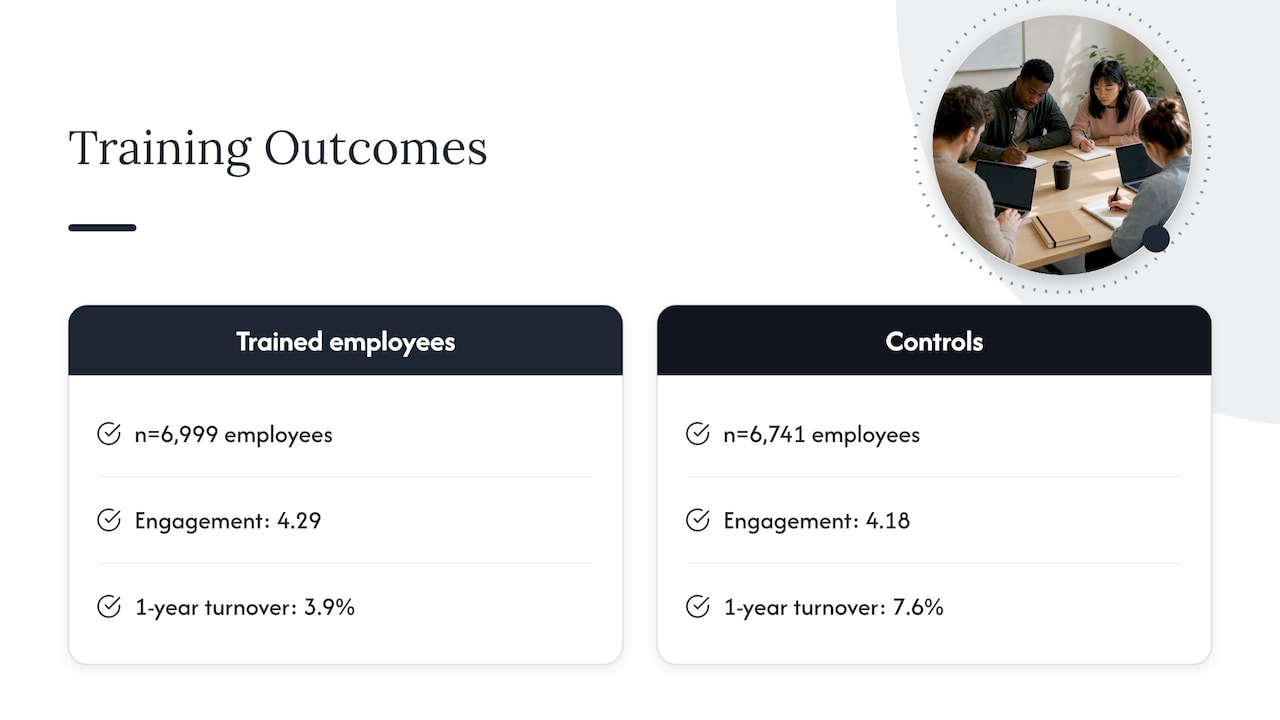
- Trained people stay: in a 2025 study of nearly 7,000 employees, one-year turnover was 3.9% for trained staff versus 7.6% for controls.
- You do not need a big budget. A weekly learning habit, 15 to 30 minutes of sharing and one learning-rich task a month is a workable start.
- Learning sticks best when it is applied right away, with accountability and a community around it.
Table of Contents
- The shelf life of business skills is shrinking
- What continuous learning actually does for a business
- What should you keep learning?
- How to build learning into the working week
- Learning works best when it ends in action
- For teams: learning together compounds
- Choose a format that fits where you are
- A simple plan for the next 30 days
- FAQ
- Sources
The shelf life of business skills is shrinking
Most of us learned our trade once and then spent years using it. That model is breaking down. BCG’s research on organizational learning puts the half-life of skills at fewer than five years, and fewer than three for digital skills. A half-life here means the point at which half of what you know has lost its value in the market.
For a small business owner, that has a concrete meaning. The ad platform you mastered, the way you found clients, the software you used to deliver work: each one is a depreciating asset. The same BCG authors argue the goal is no longer to accumulate knowledge, because learned information becomes outdated so quickly. What matters is building the capacity to keep acquiring new skills.
Martin Reeves and Kevin Whitaker of BCG make a related point in their work on the rate of learning: competitive advantage increasingly comes from learning and adapting faster than competitors do. If you are a team of one or five, that is good news. Speed of learning is something a small, focused business can win on, because you can change direction in a week rather than a fiscal year.
What continuous learning actually does for a business
It helps to separate the claims. Continuous learning is credited with four practical effects, and each has evidence behind it.
It makes you adapt faster
Lighthouse Research & Advisory’s 2024 study of more than 1,100 employers and 1,000 learners found that employees who receive effective training are 86% more likely to be adaptable to change. MIT Sloan researchers Wendy Tan and Joo-Seng Tan describe why: learning agility compounds. Each time you adapt, you get better at handling ambiguity and change, which turns adaptability into a competitive advantage.
It feeds innovation and growth
A Cornell University report by Luo and He argues that the strength of an organization’s learning culture is the single biggest driver of business impact, delivering innovation, learning agility, market share and growth. The same report cites a Society for Human Resource Management study finding that only about 1 in 10 companies has a true learning culture. The gap is wide, which means a business that closes it stands out.
IMD’s research on corporate learning describes a three-stage cycle: acquire knowledge, apply it, share it. It lists five enablers: diversity, psychological safety, autonomy, experimentation and reward, with speed as the key component at each stage. For a small team, that reads as a simple loop: learn something, try it on a real project, tell the others what happened.
It keeps people engaged and loyal
A 2025 peer-reviewed study at UT MD Anderson compared 6,999 trained employees with 6,741 controls. Self-reported engagement was 4.29 for trainees against 4.18 for controls, and one-year turnover was 3.9% against 7.6%. Lighthouse’s 2024 findings point the same way: employees receiving effective training are five times more likely to stay with their organization, and employees who feel supported in building skills are 2.5 times more likely to find purpose in their work. If you want to see how this research is gathered, studies on skills development collect further evidence on training, engagement and retention.
This matters even if you employ nobody. Freelancers and solo founders lose momentum and motivation when they stop growing. Learning is how you stay interested in your own business.
It improves performance
Lighthouse also reports that organizations with a culture of continuous learning are 50% more likely to see increased productivity and innovation. Deloitte’s 2016 human capital survey found that 84% of executives rate learning as important or very important, and that nearly every CEO and chief human resources officer said their company was not developing skills fast enough. Wanting to learn is common. Doing it consistently is rare.
What should you keep learning?
Not everything deserves your time. BCG advises equipping people at all levels with future-critical knowledge, skills and behaviors, and prioritizing digital skills first, given how quickly they age. For a remote professional or early-stage founder, a practical shortlist looks like this:
- Digital and AI skills. Tools that automate research, content, analysis and operations are changing what one person can deliver. Structured options such as blended learning programs show how a mix of live and online study can keep skills current.
- Offer and market skills. Validating an idea, refining what you sell, pricing and positioning. These decide whether your work gets paid for.
- Systems and execution. Building processes that let the business run without you doing everything by hand.
- Leadership and communication. Even a team of two needs shared direction and honest feedback.
MIT Sloan’s research, based on interviews with 24 career switchers and a survey of 340 professionals, names four elements of learning agility: linking purpose to learning, creating a learning-rich environment, asking meta-learning questions and nurturing a learning team. Meta-learning questions are the ones that ask how you learn best: what worked last time, what you would skip, what you should practice first.
How to build learning into the working week
The common failure is treating learning as an event: a course, a conference, a burst of motivation that fades. Deloitte’s authors note that high-performing companies treat learning as a continuous process and a company-wide responsibility, not an episodic HR event. Here is a routine built from the research that works for a solo operator or a small team.
- Make learning a weekly priority. MIT Sloan suggests each person learn something useful for current work every week: a book, a new AI tool, a talk. Put it in the calendar.
- Share what you learned. Set aside 15 to 30 minutes in a regular meeting for everyone to share. If you work alone, write it down or tell a peer. Teaching locks in the lesson.
- Apply it within days. BCG’s advice on the forgetting curve is to make lessons relevant, digestible and part of the daily rhythm of work, reinforced by coaching and nudges. Attach each lesson to a live project.
- Get feedback monthly. Give and receive feedback on a regular cadence, so learning has a mirror.
- Assign learning-rich tasks. Automating a business process, for example, forces you to learn a tool while saving time.
- Make it safe to fail. IMD identifies psychological safety, a culture that tolerates failure as part of learning, as a core enabler. Small experiments that can be dropped cheaply teach more than perfect plans.
If you manage others, your own attitude counts. Harvard Business School research by Raffaella Sadun and colleagues found that middle managers who were enthusiastic about training lifted opt-in participation by 45% at a carmaker, 55% at a restaurant chain and 59% at a retailer. Their teams also showed far less absenteeism under demand shocks. People copy the learning habits of the person who leads them.
A note on the 70-20-10 model
You may meet the 70-20-10 rule, which says about 70% of learning comes from experience at work, 20% from other people and 10% from formal study. It is a useful reminder that most growth happens on the job. CEDMA’s analysis notes that the ratios lack empirical support and that it works best as a loose guide rather than a prescription. Use it as a prompt to mix experience, people and structured input, not as a formula to hit.
Learning works best when it ends in action
The research keeps returning to the same three ingredients: structure, application and people. The CIPD’s evidence review found that 98% of learning and development practitioners wish to build a positive learning culture, but only 36% feel they have achieved one. The gap between intention and practice is where most businesses stall. The CIPD also suggests thinking of learning culture as a tangible environment, with concrete practices at the organization, team and individual levels.
For independent professionals the environment is the hard part. Remote and freelance work removes the colleagues, the manager and the shared calendar that quietly pushed you to grow. You have to rebuild that environment on purpose: a cohort, a mentor, a deadline and people who ask what you shipped this week.
That is the reasoning behind the format of our bootcamps. Our programs run for one to four weeks and combine step-by-step business frameworks, direct mentorship from experienced entrepreneurs, marketers and operators, daily accountability and structured sprints. The community continues after the program ends. If you want to know how short, focused work cycles drive results, our guides on how to run business sprints and why to join an entrepreneurship bootcamp walk through the approach.
For teams: learning together compounds
If you lead a remote or hybrid team, learning is also a way to build trust and shared direction. The Truist Leadership Institute analyzed a national panel of 1,200 employees and found that commitment to growth, satisfaction, managerial support and organizational support lifted engagement, retention and purpose outcomes by 10% to 24%.
Teams that rarely meet in person benefit from learning together in one place and one block of time. We design company retreats end to end, from workshops and facilitation to logistics and local experiences, around goals such as alignment, entrepreneurial thinking and leadership. Our pages on what a company retreat is and on remote team engagement ideas show how teams use that time. If innovation is your focus, the guide to the innovation mindset is a good companion.
Our perspective
We built Nomad Excel on a simple observation: people rarely change how they work by reading about it. They change when they are in a room, or a live call, with other founders, a clear sprint goal and someone experienced asking what they will do by Friday.
That is why our bootcamps pair intensive hands-on learning with ongoing mentorship and a community that stays with you afterward. Frameworks for validating ideas, refining offers and building scalable systems matter, but the daily accountability and the peers who challenge you are what turn them into revenue-driving habits.
The same thinking shapes our company retreats. When a team learns together, away from the inbox, it comes back with shared direction, stronger trust and renewed focus. We think continuous learning is the most dependable way for a freelancer, a founder or a team to build independence, and we design every program to make the next step obvious.
Amichai
Choose a format that fits where you are
The right entry point depends on how much time you can commit and what you want to change. Here are the programs we offer, with their published prices.
| Program | Format | Price |
|---|---|---|
| 5-Day Online AI Bootcamp | Online, five days | €300 one-off |
| Online Business Bootcamp | Online | €500 one-off |
| Entrepreneurship Sprint Bootcamp, Idea Space, Lisbon | In person, Lisbon | €1,350 one-off |
| Entrepreneurship Sprint Bootcamp, Second Home, Lisbon | In person, Lisbon | €1,500 one-off |
| Entrepreneurship Bootcamps in Playa Venao (Panama, 2 weeks), Pipa (Brazil, 10 days) and Agaete (Canary Islands, 1 week) | In person | €400 registration fee each |
If you want to start with the skills shifting fastest, the 5-Day Online AI Bootcamp is a compact way to begin. If you are ready to build or scale a business with mentors and a cohort around you, the in-person bootcamps combine learning with the daily accountability the research points to. Browse everything on the Nomad Excel homepage. Companies can ask us to design a tailored retreat, an Innovation Sprint, an AI Focus Retreat or another format listed on our site.
A simple plan for the next 30 days
You do not have to overhaul your life to start. Try this:
- Week 1: Pick one skill that would change your income or workload most, such as a digital tool, a sales method or a pricing approach. Block two hours.
- Week 2: Apply it to a real client or product task. Write down what worked.
- Week 3: Share it with a peer or your team in 15 to 30 minutes. Ask for feedback.
- Week 4: Decide what to keep, what to drop and what to learn next. Repeat.
Small, repeated cycles beat occasional big efforts. The compounding effect MIT Sloan describes comes from repetition, not from one intense month.
FAQ
Why is continuous learning important in the workplace?
Skills age quickly, so staying current protects both performance and employability. BCG puts the half-life of skills at under five years. Lighthouse’s 2024 study also links effective training to adaptability and to employees staying longer.
How much time should I spend on learning each week?
Research-backed routines are modest. MIT Sloan suggests one useful learning item per person each week and 15 to 30 minutes in regular meetings to share it. Consistency matters more than the size of any single session.
What is the 70-20-10 rule?
It is a model attributed to McCall, Eichinger and Lombardo from the 1980s. It says 70% of learning comes from workplace experience, 20% from others and 10% from formal learning. Treat the numbers as a rough guide, since analysts note they lack empirical backing.
Does continuous learning matter if I work alone?
Yes. As a freelancer or solo founder, your skills are your product, and they depreciate like any other asset. Building in a routine, a peer group and mentorship replaces the learning environment a larger company provides automatically.
How do bootcamps support continuous learning?
A good bootcamp compresses frameworks, mentorship and practice into a short, focused period. Our bootcamps add daily accountability, structured sprints and a peer community that continues after the program ends.
Sources
- Organizational Learning Creates Competitive Advantage, BCG (2021)
- Competing on the Rate of Learning, BCG (2018)
- Fostering a culture of learning, Deloitte Insights (2016)
- How Can Organizations Instill a Continuous Learning Culture, Cornell University (2019)
- Corporate learning, IMD
- How to Develop Continuous Learners, MIT Sloan Management Review (2024)
- Making Training Stick, UT MD Anderson (2025)
- The Secret Ingredient for Effective Training, Harvard Business School (2025)
- How Learning and Skill Development Affect Business Agility, Lighthouse Research & Advisory (2024)
- 2024 Learning Trends, Lighthouse Research & Advisory
- Creating a Learning and Development Culture, Truist Leadership Institute (2024)
- Creating learning cultures: assessing the evidence, CIPD (2020)
- Continuous Learning, CEDMA (2016)