
For Marketers & Students: Youth Market Development, Nomadexcel Pilot
Marketing to younger customers is a market development strategy: you take a product or service that already exists and introduce it to a demographic segment you have not seriously targeted before. It can drift toward market penetration when the segment already buys from you, or toward product development when the offer itself changes to fit them. Either way, the first job for a marketing team is testing whether that segment actually fits the existing offer before committing budget.
TL;DR:
- Targeting younger customers through existing products is classified as market development, not product change or market penetration.
- Confirm the audience is new, the product unchanged, and distribution stable before labeling an initiative as market development.
- Successful youth marketing relies on social platforms, creator partnerships, flexible payment options, and a focus on discovery-to-checkout processes within social apps.
- Common mistakes include selecting creators based only on follower count, ignoring price sensitivity, and skipping small-scale tests prior to large campaigns.
- Running a 30 to 60 day pilot with one platform, one audience, and one clear KPI is the fastest way to validate fit and avoid wasted spend.
Table of Contents
- Marketing to Younger Customers Is What Type of Growth Strategy? The Ansoff Primer
- Why Targeting Younger Customers Counts as Market Development
- When It’s Actually Market Penetration or Product Development
- The Tactical Playbook for Reaching Gen Z and Millennials
- Common Pitfalls and How to Avoid Them
- How Nomadexcel Applies Market Development to Younger Learners
- One Recommended First Step
- Where Nomadexcel Fits If You Want Hands-On Help
- Sources
Marketing to Younger Customers Is What Type of Growth Strategy? The Ansoff Primer
Igor Ansoff built his growth matrix in 1957, and it still frames most strategy courses because it forces a clean choice: are you changing the product, the market, or both? The Ansoff matrix splits growth into four quadrants, and knowing which one you’re in changes everything about budget, risk tolerance, and how you measure success.
- Market penetration: sell more of an existing product to your existing market, usually through pricing, promotions, or sharper messaging.
- Market development: take an existing product into a market you have not reached, whether that’s a new region, channel, or demographic.
- Product development: build a new product or feature set for the customers you already serve.
- Diversification: launch a new product for a new market, the riskiest quadrant because you’re guessing on two variables at once.
Targeting a younger cohort with a product you already sell lands squarely in the second box. The product stays the same. The audience does not.
Why Targeting Younger Customers Counts as Market Development
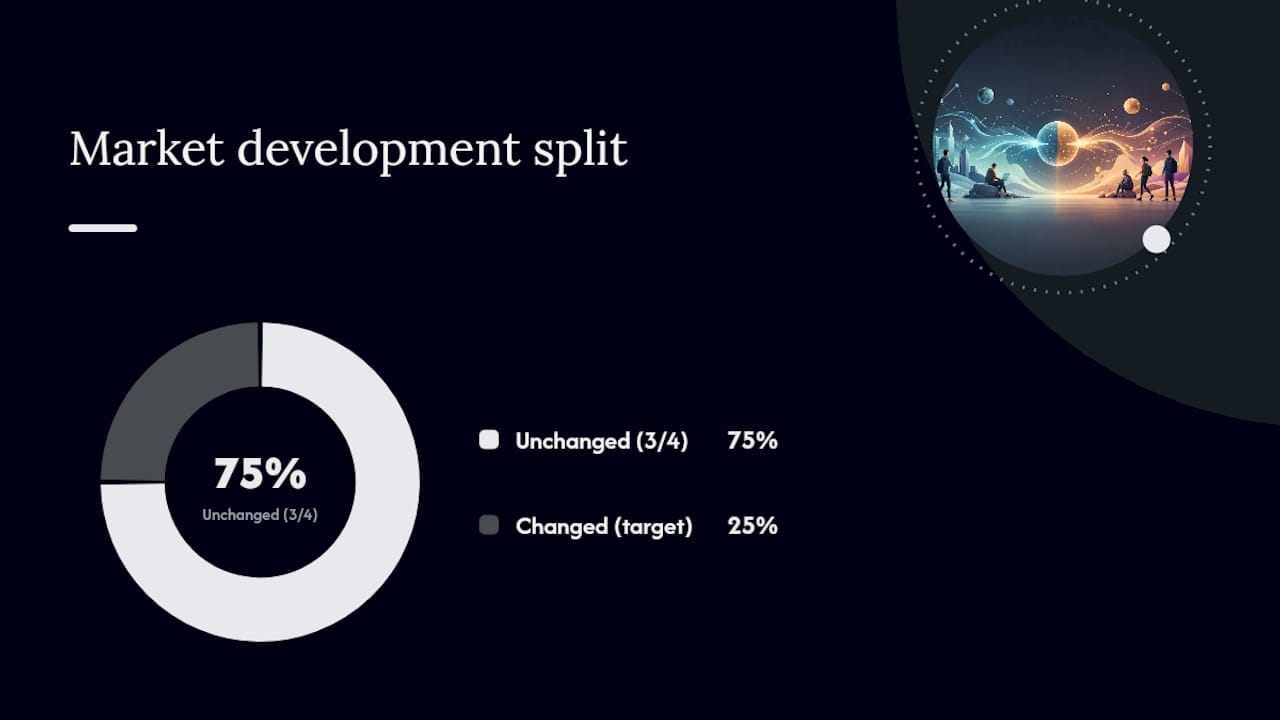
The logic is simple once you isolate the variable that’s actually changing. If your product, pricing structure, and distribution stay untouched but you shift acquisition spend, creative, and channel mix toward an 18 to 34 age bracket you previously ignored, you have not changed what you sell. You have changed who you’re selling it to, and that’s the textbook definition Ansoff’s growth matrix assigns to market development.
Run three quick checks before you label an initiative:
- Did the product change? If no, you’re not in product development territory.
- Did distribution change? If you’re still selling through the same channels, that variable is stable too.
- Is the target segment materially different? A genuinely new age cohort, income bracket, or life stage answers yes.
Three no-change, one-change pattern is the signature of market development. It also carries real weight commercially: purchases for younger consumers function as identity signals, not just transactions, so the segment you’re entering often behaves nothing like your existing base even when the product doesn’t change at all, according to research on how Gen Z and millennials build identity through purchases.
When It’s Actually Market Penetration or Product Development
Overlap happens constantly, and mislabeling the strategy leads teams to measure the wrong things. If your youth-focused campaign targets people who were already buying from you (say, a brand skewing 25 to 34 pushing harder into that exact range), you’re doing market penetration, not development. If you build a new SKU, a stripped-down pricing tier, or a mobile-only product specifically because younger buyers wanted something different, that’s product development wearing a youth-marketing costume.
Run this three-step check before you commit a budget line:
- Confirm the audience is new. If they already show up in your customer data, it’s penetration.
- Confirm the product is unchanged. If you added features or a new tier, it’s product development.
- Confirm distribution is stable. A new channel built specifically for a new segment can blur the line further.
The Tactical Playbook for Reaching Gen Z and Millennials
Once you’ve confirmed you’re running a market development play, the tactics that actually move younger cohorts look different from what worked for their parents’ generation. Gen Z discovers products through creators first, brands second, and social platforms function as search engines for that group. Prioritize TikTok, Instagram, and YouTube alongside social commerce checkouts and connected TV where budget allows, since Gen Z behavior in 2026 favors creator-led, social-first discovery over polished brand advertising.
Millennials behave differently but overlap on one point: they punish anything that smells like a bait-and-switch. This cohort spreads attention across YouTube, Instagram, and CTV, and responds to transparent pricing and flexible payment structures more than flashy creative. Both cohorts respond to buy-now-pay-later options, mobile-first checkout, and product discovery led by creators rather than banner ads.
Statistic Callout: Gen Z’s 2026 purchase behavior is shaped heavily by unpolished, creator-led content, which means brands that reduce friction between discovery and purchase on social platforms consistently outperform brands still routing traffic to a traditional landing page, per eMarketer’s Gen Z research.
Effective campaigns for both cohorts lean on user-generated content, sustained (not one-off) creator partnerships, and omnichannel consistency, a pattern Shopify’s millennial marketing guide documents across dozens of brand case studies.
- Build a discovery-to-checkout path that never leaves the social app.
- Choose creators for long-term partnerships, not single sponsored posts.
- Test buy-now-pay-later and installment options where your margin allows.
- Track engagement quality (saves, shares, comments) alongside raw reach.
Pro Tip: Run your first youth-focused campaign as a 30 to 60 day pilot with a single creator partnership and one platform. You’ll learn more from one well-measured test than from spreading thin budget across five channels at once.
Common Pitfalls and How to Avoid Them
Most market development failures aimed at younger customers trace back to the same three mistakes. Brands hire a creator for reach without checking whether that creator’s audience genuinely matches the product, which produces impressions but no conversions. Others port over adult pricing models without acknowledging that younger buyers are more price-sensitive and expect flexible payment options up front. And a surprising number skip small tests entirely, launching a six-figure campaign before confirming the segment even wants the product.
- Vet creators for genuine audience overlap, not follower count alone.
- Offer transparent pricing and installment options before you scale spend.
- Run a cross-platform test at low budget before committing to one channel.
- Track cohort-specific CAC and conversion rate, not blended averages.
Pro Tip: Segment your analytics by age cohort from day one. Blended metrics hide whether the new segment is actually converting or whether your existing customers are just clicking on louder ads.
How Nomadexcel Applies Market Development to Younger Learners
Nomadexcel runs the same experiment it teaches. Bringing an existing bootcamp curriculum to younger, first-time founders means tailored outreach, creator partnerships, and cohort-based pricing rather than a rebuilt program. The product (structured mentorship, execution sprints, community) stays intact; what shifts is who hears about it and how. A pilot cohort focused on a younger age bracket, measured on engagement and long-term participation rather than signups alone, is exactly how growth strategies get validated before scaling.

One Recommended First Step
If you take one thing from this: marketing to younger customers is market development, and the fastest way to confirm fit is a 30 to 60 day pilot with one defined audience, one channel, and one KPI, ideally cohort conversion rate. Success looks like a measurable lift in that single number, not a vague sense that engagement felt good.
— Amichai
Where Nomadexcel Fits If You Want Hands-On Help
Reading about market development is one thing. Running the test, watching it fail in week two, and adjusting before you burn the rest of your budget is another. Nomadexcel’s Online Entrepreneurship Bootcamp exists for exactly that gap: a structured environment where you design a segment test, get direct feedback from mentors who’ve run these experiments before, and iterate inside a cohort of founders doing the same thing in parallel. If you’d rather build the creator and social-commerce skills first, GetVoucher’s social media marketing course is a solid standalone option. But if you want the whole test-learn-scale loop compressed into weeks instead of a solo trial-and-error stretch, start with the bootcamp and bring your youth-segment hypothesis on day one.
Sources
- The Ansoff matrix: a powerful tool for business strategy and growth
- FAQ on Gen Z: How marketers can reach this generation in 2026
- How to market to millennials: The complete guide | Shopify