
The Role of Mentorship Networks in Career Growth
TL;DR:
- Mentorship networks, consisting of diverse relationships, significantly outperform single mentors in career growth and access. They provide multiple perspectives, accelerate skill development, and offer strategic sponsorship, especially in remote environments. Building deliberate, structured networks with clear goals and ongoing review unlocks substantial professional advantages.
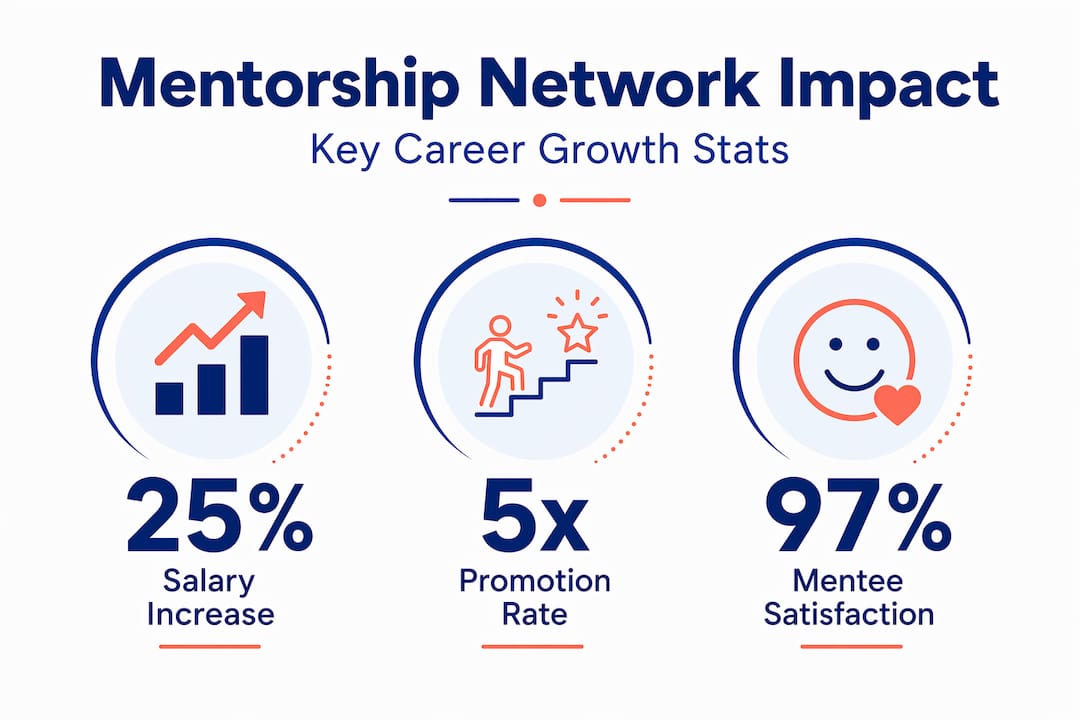
Most people picture mentorship as a single experienced person guiding someone younger across a coffee table. That image is comfortable, but it’s also limiting. The role of mentorship networks goes far beyond that one-on-one dynamic, and the gap between what most professionals think mentorship offers and what a well-built network actually delivers is wider than you might expect. For aspiring entrepreneurs and remote professionals in 2026, that gap represents either a missed opportunity or a real competitive edge. Research shows mentored individuals are promoted five times more often than their non-mentored peers. A single mentor helps. A network of them changes the trajectory of your career.
Table of Contents
- Key takeaways
- The role of mentorship networks explained
- Why the benefits of mentorship networks are hard to ignore
- How to build your own mentorship network
- Mentorship networks in remote and hybrid environments
- What makes successful mentorship programs work
- My take on what mentorship networks actually do
- Grow faster with Nomadexcel’s mentorship-driven programs
- FAQ
Key takeaways
| Point | Details |
|---|---|
| Networks beat single mentors | Multiple mentors provide diverse expertise, expanded networks, and broader strategic guidance than one advisor can. |
| Structure drives results | Mentor circles and formal programs consistently outperform informal, passive mentoring relationships. |
| Remote pros need deliberate effort | Digital mentoring tools and virtual mentor circles can fully replace in-person mentoring when used intentionally. |
| Reciprocity fuels the relationship | The strongest mentorship networks grow when both parties contribute value, not when one person just receives advice. |
| Programs accelerate entrepreneurial growth | Structured bootcamps that embed mentorship networks give founders measurable advantages in confidence, skills, and investor access. |
The role of mentorship networks explained
Most conversations about mentorship stop at “find a mentor.” That’s a starting point, not a strategy. A mentorship network is a web of relationships that gives you access to multiple perspectives, different industry experiences, and varied skill sets, all working in your favor simultaneously.
Think of it this way: a single mentor can tell you how they solved a problem in their context. A mentorship network gives you five different solutions, three of which you hadn’t considered, and at least one person who knows someone who can open a door you didn’t know existed.
There are several formats this takes in practice:
- One-on-one mentoring: The traditional model. Deep, personal, trust-heavy. Best for long-term guidance on a specific area of growth.
- Group mentoring: One experienced mentor works with a small cohort. Useful for shared learning and peer accountability.
- Mentor circles: Typically organized in triads or small groups of mixed experience levels. Research shows mentor circles yield 3.7 times the knowledge transfer intensity of traditional networking events.
- Multi-mentor models: You deliberately cultivate different mentors for different domains. One for strategy, one for technical skill, one for industry connections.
| Format | Best for | Key advantage |
|---|---|---|
| One-on-one | Deep personal guidance | Trust, accountability, longevity |
| Group mentoring | Cohort-based learning | Shared experience, peer feedback |
| Mentor circles | Equitable access to senior leaders | High knowledge transfer, democratized access |
| Multi-mentor model | Entrepreneurs and remote pros | Diverse expertise, broad network coverage |
The shift to structured mentor circles is particularly significant because it democratizes access. Informal mentoring often mirrors existing networks, which means the same people get the same advantages. Structured programs break that pattern.

Why the benefits of mentorship networks are hard to ignore
The data on mentorship in professional development is striking, and it goes well beyond vague claims about “growth” or “confidence.”
Mentored employees receive salary increases at a rate of 25% compared to just 5% for those without mentors. That’s not a marginal difference. It’s a structural one. When you understand how mentorship works, the reason becomes clear: mentors don’t just advise, they advocate. They open conversations, make introductions, and lend their credibility to your name.
For entrepreneurs specifically, the stakes are even higher. Mentored startup founders are more than three times more likely to become top performers. A mentor who has already raised a round of funding, navigated a product pivot, or survived a cash flow crisis doesn’t just share wisdom. They provide social proof and timing cues that unlock investor access and help you avoid costly mistakes.
Here is what mentorship networks specifically make possible:
- Faster career advancement through sponsorship endorsements and direct recommendations from multiple advocates.
- Expanded professional networks where each mentor in your circle connects you to an entirely new cluster of relationships.
- Accelerated skill development because you can go to the right person for the right skill, rather than asking one generalist for everything.
- Stronger confidence and strategic clarity from having multiple experienced voices confirm or challenge your decisions.
- More equitable access to opportunities. Employees in structured mentor circles are 1.8 times more likely to receive sponsor endorsements than those relying on informal networks.
Pro Tip: Don’t limit your mentorship network to people in your industry. A mentor from a different field often spots assumptions you’ve normalized and challenges them in ways industry insiders won’t.
It’s also worth noting that 97% of mentees find their mentors valuable for professional growth. That near-universal satisfaction rate tells you something important. The challenge isn’t whether mentorship works. It’s whether you’ve built enough of it into your professional life.
How to build your own mentorship network
Knowing that mentorship networks work is one thing. Actually building one requires a different kind of thinking. Most people wait to be mentored. The professionals who grow fastest are the ones who architect their own network, deliberately and with clear intention.
Here’s a practical approach that works for entrepreneurs and remote professionals:
Map your gaps first. Before reaching out to anyone, identify where you most need perspective. Is it sales strategy, product development, fundraising, personal brand, mental resilience? Your gaps define who you need.
Aim for diversity of expertise, not diversity of titles. A panel of five CEOs gives you a lot less than one CEO, one operator, one technical founder, one sales expert, and one investor. Different lenses produce different insights.
Start with value, not requests. Effective mentorship networks thrive when mentees seek genuine connection and add value rather than approaching relationships transactionally. Share something useful, engage with their work, or offer a skill you have before you ask for their time.
Use structured platforms and programs. Digital tools like LinkedIn mentoring features, MentorCruise, and bootcamp communities create structured matching that informal networking can’t replicate. Explore different mentorship formats to find what fits your current stage.
Set clear expectations early. Define cadence, communication style, and what you’re working toward. Vague mentorship relationships fade. Specific ones compound.
Review and rotate. Your business stage changes. Your mentorship network should too. A mentor who was perfect when you were validating your idea may be less relevant when you’re scaling a team. Audit your network every six months.
Pro Tip: Treat every mentor relationship as a two-way exchange. Ask your mentors what they’re working on. Offer to share your perspective, your data, or your network. The relationships that last are the ones where both people genuinely gain something.
The multi-mentor approach is especially powerful for startups because it compounds access. Each mentor brings their own cluster of investors, partners, and operators, effectively multiplying your reach without you having to build every relationship from scratch.
Mentorship networks in remote and hybrid environments
Remote work removes a lot of the informal mentorship that used to happen by default. The hallway conversation, the shoulder tap, the overheard pitch debrief, those micro-moments of learning don’t exist when your team is distributed across four time zones. This makes the deliberate construction of a mentorship network more critical, not less.
Remote work normalization has increased reliance on mentor circles for cultural cohesion and skills development. Remote entrepreneurs and professionals are turning to structured virtual communities to fill the gap that proximity once filled naturally.
Here is what works for building mentorship networks in remote settings:
- Virtual mentor circles organized on platforms like Slack, Circle, or Notion can replicate the structured intimacy of in-person triads. The key is consistent scheduling and clear facilitation.
- Recorded sessions create an asynchronous knowledge base. One conversation with a mentor becomes a resource your entire network can learn from.
- Digital-first community programs like the Nomadexcel bootcamp embed mentorship into their structure, so you’re not building from zero. You arrive in a room full of peers and mentors already organized around shared goals.
- Trust-building rituals matter more remotely. Regular check-ins, shared wins, and honest vulnerability signals create the psychological safety that makes mentorship actually useful.
- Combating isolation is an underrated function of mentorship networks for remote professionals. Loneliness affects decision-making and confidence. A mentor who checks in consistently becomes a stabilizing presence in an environment that can otherwise feel untethered.
The goal isn’t to replicate in-person mentorship digitally. It’s to build something that works on its own terms, with the tools and rhythms that remote life actually allows.
What makes successful mentorship programs work
Not all mentorship programs are created equal. Understanding what separates effective ones from well-intentioned but forgettable ones helps you choose better and design better.
Programs with clear goals and adequate training consistently outperform informal, passive relationships. The distinction matters. A program that matches you with a mentor but provides no structure, no goal-setting framework, and no accountability mechanism will likely fade within three months.
Here is a side-by-side look at what separates high-impact programs from low-impact ones:
| Feature | Effective programs | Informal networks |
|---|---|---|
| Goal setting | Structured and reviewed regularly | Vague or absent |
| Mentor training | Required and ongoing | None |
| Accountability | Built-in check-ins and milestones | Relies on individual motivation |
| Knowledge transfer | High intensity, often group-based | Variable, dependent on chemistry |
| Equity of access | Democratized through structure | Mirrors existing social networks |
The mentor circles model addresses several of the most common pitfalls at once. By organizing in small groups with mixed seniority, they reduce the pressure on any single mentor, increase the diversity of perspectives shared, and create peer accountability alongside senior guidance. That combination is what produces measurable outcomes.
If you’re evaluating programs, look for explicit outcomes, defined timelines, and mentor selection criteria. Vague promises of “connection and growth” are a warning sign. Specific frameworks and structured accountability are what actually move the needle. You can explore Nomadexcel’s mentorship program structure to see what intentional design looks like in practice.
My take on what mentorship networks actually do
I’ll be honest. When I first got serious about mentorship, I was looking for one person who had all the answers. I found a few good advisors, took their guidance seriously, and made progress. But the real acceleration didn’t come from any single relationship. It came from building a small constellation of mentors who each saw different parts of my situation.
What I’ve learned is that mentorship is a strategic tool that sharpens thinking and unlocks potential in both directions. The mentors who changed my trajectory weren’t the most famous or the most accomplished. They were the ones who asked the questions I wasn’t asking myself.
I’ve also seen too many entrepreneurs treat mentorship as a one-time download. They get advice, apply it once, and move on. The professionals who grow fastest treat their mentorship network the way great athletes treat their coaching staff. Different coaches for different skills. Constant feedback. Continuous adjustment.
The discomfort of building a network from scratch is real. Reaching out feels awkward. Maintaining relationships takes energy. But I’ve never met someone who built a deliberate mentorship network and regretted it. The compounding effect on your confidence, your decisions, and your access to opportunity is worth every uncomfortable first message.
Embrace the iteration. Build the network before you desperately need it.
— Amichai
Grow faster with Nomadexcel’s mentorship-driven programs
If you’re ready to stop relying on chance encounters and start building a mentorship network with intention, Nomadexcel’s programs are designed exactly for that. The online entrepreneurship bootcamp places you inside a curated community of founders, mentors, and operators who are all focused on real business outcomes, not just theory. You get direct access to experienced guides across marketing, business development, and execution, along with a peer network that stays active long after the program ends. Whether you’re launching your first venture or scaling a remote operation, the combination of structured mentorship, community accountability, and practical frameworks creates the kind of growth that’s very difficult to replicate alone. Explore what joining a bootcamp can do for your trajectory.
FAQ
What is a mentorship network?
A mentorship network is a group of mentor relationships that together provide diverse expertise, expanded professional connections, and multi-layered support. Unlike a single mentor, a network gives you access to different perspectives simultaneously.
How does mentorship affect careers and salaries?
Mentored employees are promoted five times more often and receive salary increases at 25% compared to 5% for non-mentored peers. The impact compounds over time through sponsorships, introductions, and strategic advocacy.
What are mentor circles and why do they matter?
Mentor circles are small, structured groups of mixed seniority that meet regularly to share knowledge and provide mutual support. They deliver 3.7 times the knowledge transfer of traditional networking events and democratize access to senior leaders.
How can remote professionals build a mentorship network?
Remote professionals can build mentorship networks through virtual mentor circles, digital community platforms, and structured bootcamp programs. Consistent scheduling, honest communication, and deliberate outreach replace the informal proximity that office environments once provided naturally.
What makes a mentorship program effective?
Effective programs combine clear goal setting, mentor training, structured accountability, and built-in check-ins. Programs with these features consistently outperform informal, passive mentoring relationships in measurable career outcomes.
Comments are closed.