
Freelance networking guide: Build connections that grow your business
TL;DR:
- Freelancers succeed through strategic networking, focusing on building genuine relationships rather than volume.
- Consistent, scheduled outreach and follow-up enhance trust, referrals, and long-term client flow.
- Combining online engagement with in-person connections maximizes credibility and accelerates growth.
Most freelancers don’t struggle to find clients because they lack talent. They struggle because they rely on skill alone, hoping great work will speak for itself. The reality is that 85% of jobs are filled through networking, and referred candidates get hired 55% faster than those who apply cold. Networking is not a nice-to-have for freelancers; it is the engine behind consistent client flow, referrals, and long-term business growth. This guide walks you through a practical, step-by-step approach to building a networking routine that actually works.
Table of Contents
- Start with your existing network
- Build consistent networking habits
- Digital optimization: LinkedIn and online communities
- Local events, outreach strategies, and follow-ups
- Referral strategy and introvert-friendly networking
- Why quality beats quantity in freelance networking
- Accelerate your networking with Nomad Excel
- Frequently asked questions
Key Takeaways
| Point | Details |
|---|---|
| Start warm | Reach out to your current contacts first to unlock referrals and immediate opportunities. |
| Consistency is crucial | Create weekly routines for networking to ensure steady relationship growth and top-of-mind presence. |
| Optimize digital presence | Use LinkedIn and online forums to showcase your expertise and attract clients. |
| Trust builds face-to-face | In-person events and follow-ups generate deeper trust and faster results than digital alone. |
| Referrals and quality matter | Request referrals and focus on quality connections, particularly if you are an introvert. |
Start with your existing network
Now that you understand why networking matters, let’s begin with the easiest step: tapping into your current connections. Your warm network, the people who already know, like, and trust you, is your single most valuable asset when launching a freelance business. These are past clients, former colleagues, professors, classmates, and even friends who work in adjacent industries.
Referrals from known networks are the primary source of new clients for most freelancers, which means your first outreach should always be inward before it goes outward. The conversion rate on a warm introduction is dramatically higher than any cold email you could send, and the trust is already built in.
Here are the quick wins you can unlock just by reconnecting with existing contacts:
- Referrals to active clients who need your exact skill set right now
- Testimonials and LinkedIn recommendations that build your social proof
- Introductions to new networks you would not have access to otherwise
- Collaborative project opportunities where two freelancers combine services
- Insight into industry trends from people already working inside companies you want to target
When it comes to outreach style, not all channels are equal. Here is a quick comparison to help you choose the right approach:
| Outreach channel | Best for | Response rate | Personalization level |
|---|---|---|---|
| Detailed reconnection, proposals | Moderate | High | |
| LinkedIn message | Professional reconnection, referrals | High | Medium |
| Phone or video call | Warm relationships, urgent asks | Very high | Very high |
| Social media comment | Staying visible, light touch | Low | Low |
Pro Tip: Keep your reconnection messages short, specific, and personal. Reference something real, like a project you worked on together or a recent achievement of theirs. A message that takes 30 seconds to read will always outperform a lengthy pitch.
Understanding the full range of networking strategies explained can help you choose the right tactics for your particular situation and industry.
Build consistent networking habits
After leveraging your current contacts, the real difference comes from making networking second nature. Most freelancers network in bursts, reaching out frantically when work dries up and going quiet when projects pile up. This feast-or-famine cycle is exactly what consistent habits are designed to prevent.
Setting aside weekly time for engagement, follow-ups, and attending events is what separates freelancers who always have leads from those who are always chasing them. When networking becomes a scheduled activity rather than a reactive one, you stay top-of-mind with your network continuously, not just when you need something.
Here is a practical five-step routine you can implement starting this week:
- Monday: Review your CRM or contact list. Identify two to three people you have not spoken to in 30 or more days and flag them for outreach.
- Tuesday or Wednesday: Send personalized messages. Reach out with a genuine check-in, a relevant article, or a congratulations on a recent milestone.
- Thursday: Engage on LinkedIn. Comment thoughtfully on posts from target clients or industry peers. Aim for five to ten meaningful interactions.
- Friday: Follow up on any open conversations. If someone expressed interest earlier in the week, circle back with a clear next step or a helpful resource.
- Weekend or ongoing: Attend one event per month. Whether virtual or in-person, consistent event attendance keeps your network growing beyond your current circle.
Here is how a structured weekly networking schedule compares to ad-hoc networking:
| Approach | Time invested per week | Leads generated per quarter | Relationship depth |
|---|---|---|---|
| Structured weekly routine | 3 to 5 hours | 8 to 15 warm leads | High |
| Ad-hoc networking | 1 to 10 hours (unpredictable) | 2 to 5 warm leads | Low to medium |
| No networking | 0 hours | 0 to 1 leads | None |
You can also explore networking examples for entrepreneurs to see how other founders structure their outreach routines for maximum efficiency.
Pro Tip: Block 30 to 60 minutes on your calendar every Tuesday and Thursday specifically for networking tasks. Treat it like a client meeting. If it is not scheduled, it will not happen.
For freelancers who want a more detailed system, a structured networking workflow for founders can give you a repeatable process that scales as your business grows.
Digital optimization: LinkedIn and online communities
With habits in place, digital platforms offer scalable ways to connect and be discovered. LinkedIn is the most powerful professional platform available to freelancers, but most profiles are set up like resumes rather than client-attraction tools.
Optimizing your LinkedIn profile for client attraction means focusing on outcomes rather than job titles. Your headline should speak to the result you deliver, not just your role. Your About section should read like a conversation with a potential client, addressing their pain points and showing how you solve them.
Here is what a high-performing LinkedIn presence looks like for freelancers:
- Post case studies two to three times per week showing before-and-after results from real client projects
- Use the Featured section to pin your best portfolio pieces, testimonials, or a lead magnet like a free guide
- Engage with target clients’ content by leaving substantive comments that demonstrate your expertise
- Join and contribute to LinkedIn groups in your niche to increase visibility beyond your immediate connections
- Send personalized connection requests with a brief, specific reason for connecting rather than the default message
Referred candidates are hired 55% faster than non-referred ones, which means every piece of content you publish and every comment you leave is an opportunity to become the person someone thinks of when a colleague asks, “Do you know a good designer, writer, or developer?”
Beyond LinkedIn, online communities are underutilized goldmines for freelancers. Slack groups, Reddit communities, Discord servers, and niche forums like Indie Hackers or Superpath (for content writers) allow you to build reputation through consistent, helpful participation. The key is to give value first, answer questions, share resources, and offer genuine feedback before you ever mention your services.

Pro Tip: Set up Google Alerts or use a tool like Feedly to track trending topics in your target industry. Share timely insights in your communities and on LinkedIn to position yourself as someone who is always plugged in and relevant.
If you are working toward landing international clients, digital platforms are especially powerful because they remove geographic barriers entirely. Pair that with startup networking tips tailored for location-independent professionals and you have a scalable system that works around the clock.
Local events, outreach strategies, and follow-ups
Online efforts are powerful, but nothing builds trust quite like meeting in person. Face-to-face interactions create a depth of connection that digital communication simply cannot replicate, and that trust translates directly into referrals and long-term client relationships.
“Face-to-face networking builds stronger trust and results in significantly higher close rates than purely digital interactions, making in-person events a vital component of any serious freelancer’s growth strategy.”
Attending local events, joining business groups like BNI or local meetups, volunteering at industry conferences, and even hosting your own small gatherings are all proven ways to build community connections that generate real business. The act of showing up consistently in a local professional community makes you memorable in a way that a LinkedIn profile never quite can.
Here is a step-by-step follow-up workflow to use after every event or meeting:
- Within 24 hours: Send a personalized message referencing something specific from your conversation. Avoid generic “great to meet you” messages; mention a detail that shows you were genuinely present.
- Within 48 hours: Connect on LinkedIn with a note that reminds them of the context in which you met.
- One week later: Share a relevant article, resource, or introduction that adds value to something they mentioned.
- One month later: Check in with a brief update or question. Keep it casual and genuine, not salesy.
- Ongoing: Add them to your monthly outreach rotation and engage with their content regularly.
Following up within 24 to 48 hours with personalized messages that offer value is what separates people who collect business cards from those who build real relationships. Most people follow up once and then disappear. You will stand out simply by staying consistent.
Pro Tip: Bring physical business cards to in-person events even in 2026. They signal professionalism and give people something tangible to remember you by. Practice a 30-second introduction that clearly explains who you help and what outcome you deliver.
For a curated list of events worth attending, explore the best freelancer events to find gatherings that match your niche and goals.
Referral strategy and introvert-friendly networking
Consistent follow-up and relationship-building naturally lead to referrals and empower even shy freelancers to grow their client base without ever feeling like they are selling. Referrals are the highest-quality leads you will ever receive, and the good news is that asking for them does not have to feel awkward.
Asking for referrals directly after a successful project is the most effective approach. The timing matters enormously. When a client has just expressed satisfaction with your work, they are in the perfect mindset to think of others who might benefit from your services.
Here are practical referral tactics with timing guidelines:
- Right after project completion: “I’m so glad this worked out well. If you know anyone else who could use help with [specific service], I’d love an introduction.”
- Provide a referral blurb: Make it easy by giving clients a short, ready-to-use description of what you do and who you help best.
- Send a referral email template: Draft a simple intro email they can forward to a contact with minimal effort on their part.
- Offer reciprocal referrals: If you work with other freelancers, build a mutual referral network where you send business to each other.
- Follow up at 90 days: Reconnect with past clients every quarter with a check-in that naturally opens the door to referral conversations.
For introverts, the conventional networking advice about working the room at large events can feel draining and counterproductive. The good news is that introverts can build thriving freelance businesses by leaning into their natural strengths: deep focus, thoughtful communication, and the ability to build genuine one-on-one connections.
Introvert-friendly strategies include participating actively in online forums and communities, using content marketing to attract inbound leads, and conducting targeted one-on-one outreach to former colleagues rather than attending large mixers. Quality over quantity is not just a preference for introverts; it is a genuinely more effective long-term strategy for everyone.
Pro Tip: If you are an introvert, start a blog, newsletter, or podcast in your niche. Content marketing creates a steady stream of inbound interest from people who already resonate with your thinking, making every subsequent conversation warmer and easier.
For more inspiration, the networking tips for bootcamp entrepreneurs and the full entrepreneur networking guide offer frameworks that work equally well for introverts and extroverts alike.
Why quality beats quantity in freelance networking
Having covered the steps, let’s reflect on what truly sets successful freelancers apart. The most common mistake freelancers make is treating networking like a numbers game, collecting connections, attending every event, and blasting outreach messages in the hope that volume will compensate for depth. It rarely does.
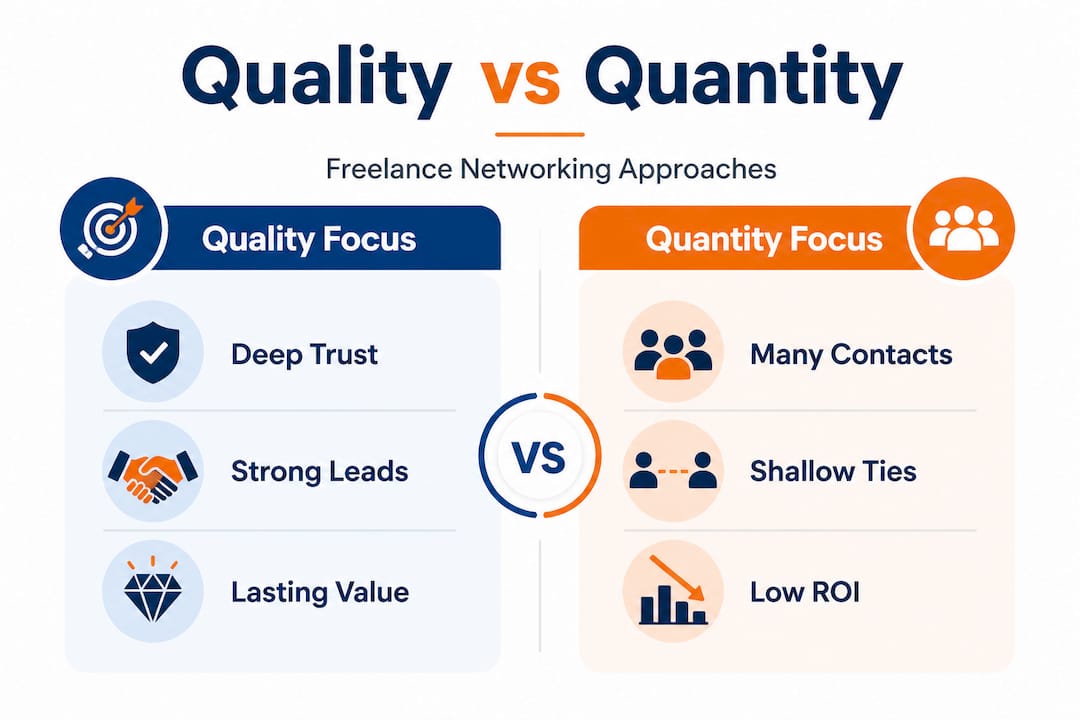
Experience shows that a handful of strong, reciprocal relationships will generate more consistent leads than hundreds of shallow ones. A single well-connected mentor or satisfied client who actively refers you can be worth more than an entire LinkedIn network of people who barely remember your name. This is not just intuition; in-person networking builds trust at rates that digital interaction cannot match, with nearly 100% of professionals preferring in-person meetings for building long-term relationships, compared to roughly 40% close rates for digital-only connections.
That said, the most effective freelancers use a hybrid approach. Online platforms scale your reach globally and keep you visible between in-person touchpoints. Face-to-face interactions deepen trust and accelerate decision-making. Neither alone is as powerful as both working together.
For introverts, this is genuinely good news. Leveraging strengths in deep work and content creation for inbound leads, combined with small, targeted interactions rather than large events, is not a compromise strategy. It is often a superior one. The freelancers who build the most sustainable businesses are not always the most outgoing; they are the most intentional.
The real shift happens when you stop thinking of networking as something you do to get clients and start thinking of it as a practice of building genuine professional relationships. When you approach every conversation with curiosity and a desire to add value, opportunities follow naturally. That mindset, more than any tactic or platform, is what makes networking sustainable over the long term. If you are still in the early stages, revisiting the fundamentals of launching a freelance business alongside these networking strategies can help you build both your skills and your connections in parallel.
Accelerate your networking with Nomad Excel
Ready to put these networking strategies into action? Nomad Excel’s online entrepreneurship bootcamp is designed for exactly this moment in your journey. Rather than networking in isolation, you will build real relationships with a curated community of driven entrepreneurs, guided by experienced mentors who have navigated the same challenges you are facing. Our programs combine structured business-building frameworks with genuine community, so you leave not just with strategies but with an active network that continues to support your growth. Explore why joining an entrepreneurship bootcamp accelerates results, or take a closer look at our program to find the right fit for where you are right now.
Frequently asked questions
What is the first step in networking for freelancers?
Start with existing contacts like past colleagues and clients before expanding to new networks, since warm referrals convert at a significantly higher rate than cold outreach.
How often should freelancers network?
Weekly dedicated time blocks for networking tasks, including outreach, follow-ups, and event attendance, are the most reliable way to build consistent relationships and maintain a steady pipeline of leads.
How can introverts network effectively as freelancers?
Introverts thrive by focusing on quality over quantity through content marketing, targeted one-on-one outreach, and online community participation rather than large in-person events.
Why is follow-up important in networking?
Following up within 24 to 48 hours with a personalized, value-driven message demonstrates professionalism and keeps the relationship warm before it fades from memory.
Does in-person networking really work better than online?
Face-to-face networking builds stronger trust and results in faster hiring decisions, making it a critical complement to digital networking rather than an optional extra.
Comments are closed.