
Leadership Development Guide for Building High-Impact Teams
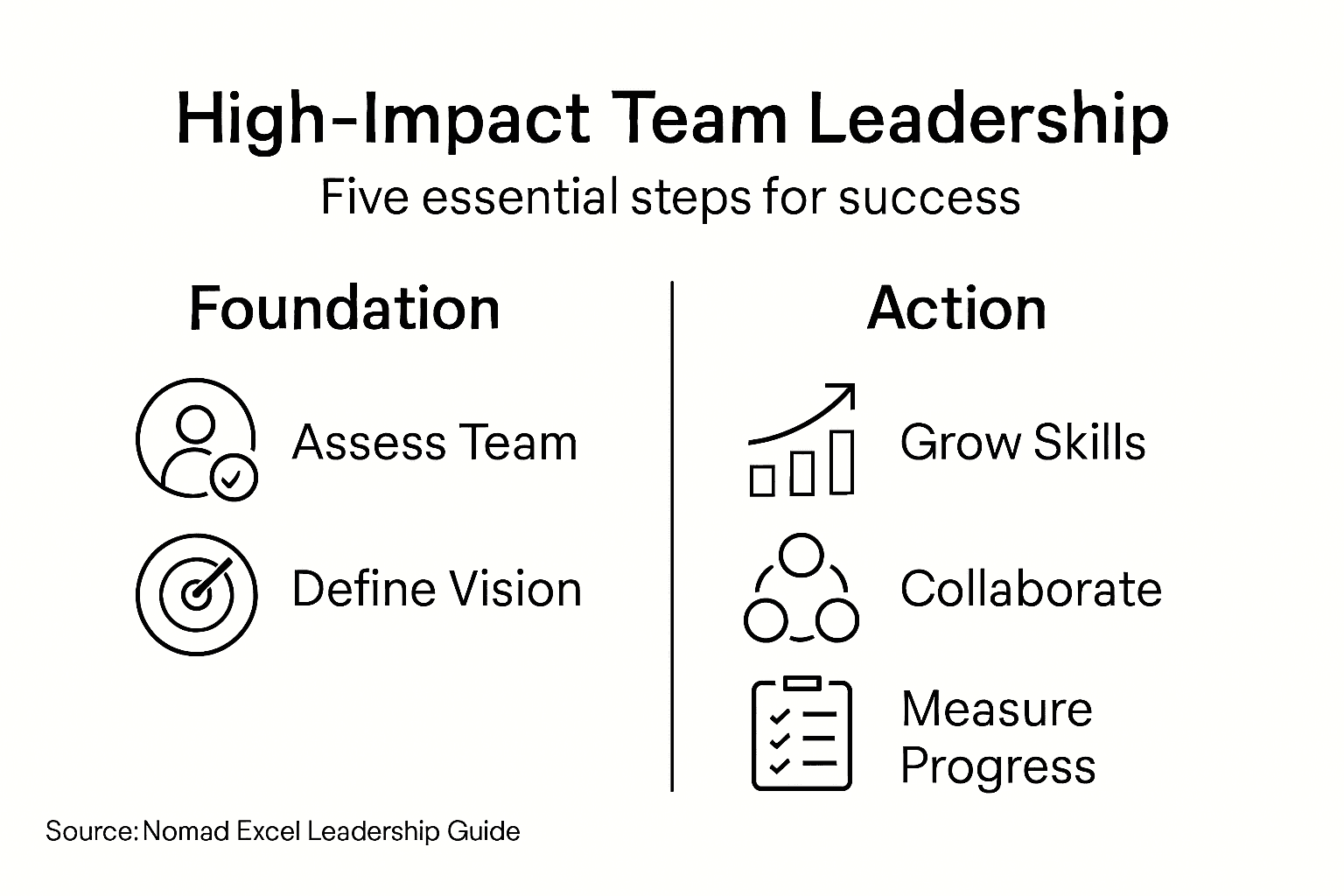
Building a strong, unified team often feels like navigating a complex puzzle for startup founders from countries around the world. Leadership development is more than intuition; it calls for a strategic plan backed by comprehensive assessment. By focusing on evidence-based leadership assessment tools, you can identify strengths, spot growth areas, and align your team’s vision with long-term goals. This guide offers practical steps that will help you create a leadership roadmap, foster collaboration, and drive sustainable business growth.
Table of Contents
- Step 1: Assess Current Leadership Strengths and Gaps
- Step 2: Define Core Values and Vision for Growth
- Step 3: Cultivate Essential Leadership Skills With Action
- Step 4: Implement Team Collaboration Frameworks
- Step 5: Measure Results and Adapt Strategies
Quick Summary
| Key Point | Explanation |
|---|---|
| 1. Assess Leadership Strengths and Gaps | Evaluate your leadership team’s skills to identify development areas and create a roadmap for growth. |
| 2. Define Core Values and Vision | Establish a clear vision to unify and inspire the team, aligning with shared goals and organizational identity. |
| 3. Cultivate Essential Leadership Skills | Engage in continuous personal development to actively enhance key leadership abilities through targeted practices. |
| 4. Implement Team Collaboration Frameworks | Design structured systems for communication and accountability, fostering trust and collective performance. |
| 5. Measure Results and Adapt Strategies | Develop robust evaluation methods to track performance, ensuring strategies are continuously refined for improvement. |
Step 1: Assess Current Leadership Strengths and Gaps
Understanding your leadership team’s current capabilities is the critical first step in building a high-impact, dynamic organization. This process involves systematically evaluating your team’s existing skills, identifying potential development areas, and creating a strategic roadmap for leadership growth.
To effectively assess leadership strengths and gaps, leverage a comprehensive, multi-dimensional approach. Evidence-based leadership assessment tools can help you conduct a thorough evaluation across several key dimensions:
- Performance metrics: Analyze past team results and individual achievements
- Behavioral competencies: Evaluate communication, decision-making, and interpersonal skills
- Potential indicators: Identify leadership qualities and growth capabilities
- Organizational alignment: Assess how leadership styles match company goals
The goal isn’t just identifying weaknesses – it’s creating a nuanced understanding of your leadership ecosystem. Professional assessment methodologies can provide data-driven insights that go beyond traditional performance reviews. These tools help uncover hidden talents, potential blind spots, and strategic development opportunities.
The most successful leadership development starts with honest, comprehensive self-assessment.
Collect data through multiple channels to ensure a holistic view:
- Conduct structured leadership interviews
- Use standardized assessment frameworks
- Gather 360-degree feedback from team members
- Analyze individual and team performance metrics
- Compare current capabilities against future organizational needs
By taking a systematic, data-informed approach, you’ll create a clear blueprint for targeted leadership development that aligns with your team’s unique dynamics and strategic objectives.
Use this table to quickly reference common assessment methods and their unique benefits:
| Assessment Method | Benefit | Typical Use Case |
|---|---|---|
| 360-Degree Feedback | Multi-perspective insights | Identify hidden strengths |
| Structured Interviews | In-depth analysis of traits | Explore leadership style |
| Performance Metrics | Objective benchmarking | Track progress over time |
| Standardized Tools | Consistent measurement | Compare across teams |
Pro tip: Consider engaging an external leadership consultant to provide an unbiased, expert perspective on your team’s strengths and potential growth areas.
Step 2: Define Core Values and Vision for Growth
Establishing a clear and compelling vision is the fundamental blueprint that transforms a good team into a great organization. This step involves creating a strategic framework that not only articulates your team’s purpose but also inspires and aligns everyone toward shared goals.

Begin by developing strategic organizational standards that reflect your team’s unique identity and aspirations. This process requires deep reflection and collaborative input from key stakeholders across different levels of your organization.
Key elements to consider when defining your core values and vision include:
- Authenticity: Ensure values genuinely reflect your team’s true beliefs
- Clarity: Use precise, understandable language
- Inspiration: Create a vision that motivates and energizes
- Adaptability: Allow room for growth and evolution
- Measurability: Include concrete indicators of success
A powerful vision transforms individual efforts into a unified, strategic movement.
The process of defining your organizational vision involves several critical steps:
- Conduct collaborative brainstorming sessions
- Gather input from team members at all levels
- Draft initial value statements
- Validate proposed values through team feedback
- Refine and finalize your vision document
Collaborative vision development helps create a sense of ownership and commitment. By involving team members in this process, you’re not just creating a document – you’re building a shared narrative that will guide your organization’s future.
Pro tip: Review and update your vision annually to ensure it remains relevant and aligned with your team’s evolving strategic objectives.
Step 3: Cultivate Essential Leadership Skills With Action
Transforming theoretical leadership knowledge into practical skills requires intentional, focused effort and a commitment to continuous personal development. This step is about moving beyond passive learning and actively engaging in targeted practices that build your leadership capabilities.
Emerging leaders can develop critical skills through strategic and deliberate approaches that challenge your current capabilities and expand your leadership potential. The journey of skill cultivation involves understanding your strengths, identifying growth areas, and implementing targeted development strategies.
Key leadership skills to prioritize and develop include:
- Emotional Intelligence: Understand and manage your own and others’ emotions
- Strategic Communication: Develop clear, compelling communication techniques
- Adaptive Thinking: Learn to navigate complex and changing environments
- Decision-Making: Build confidence in making challenging organizational choices
- Team Collaboration: Create environments that foster trust and collective achievement
Leadership is not a destination – it’s a continuous journey of growth and self-improvement.
To effectively cultivate these skills, implement a structured development approach:
- Conduct a thorough self-assessment of current leadership capabilities
- Create a personalized skill development plan
- Seek mentorship and regular feedback
- Practice skills through real-world leadership opportunities
- Reflect and adjust your approach continuously
Practical leadership skill development requires a combination of theoretical understanding and consistent, intentional practice. By embracing a growth mindset and committing to ongoing learning, you can transform your leadership potential into tangible organizational impact.
Pro tip: Dedicate at least one hour per week to deliberate practice of a specific leadership skill, tracking your progress and insights in a personal development journal.
Step 4: Implement Team Collaboration Frameworks
Successful team collaboration requires more than good intentions – it demands a structured, intentional approach that transforms individual efforts into cohesive organizational performance. This step focuses on designing and implementing robust frameworks that create seamless communication and alignment across your team.
Collaborative governance strategies provide the foundation for building effective team interactions. Understanding the intricate dynamics of team collaboration involves creating systems that facilitate trust, communication, and shared accountability.
Key components of effective collaboration frameworks include:
- Clear Communication Protocols: Establish standardized communication channels
- Shared Goal Alignment: Create transparent, measurable team objectives
- Role Definition: Clarify individual responsibilities and interdependencies
- Performance Tracking: Implement mechanisms for continuous feedback
- Trust-Building Mechanisms: Design processes that encourage mutual respect
Collaboration is not about eliminating individual strengths, but amplifying collective potential.
To implement a robust collaboration framework, follow these strategic steps:
- Conduct a comprehensive team assessment
- Design customized communication infrastructure
- Develop shared performance metrics
- Create cross-functional interaction opportunities
- Establish regular review and adaptation processes
Collaborative framework development requires ongoing commitment and flexibility. By treating collaboration as a dynamic, evolving system, you can create an environment where team members feel empowered, connected, and motivated to achieve collective excellence.
Pro tip: Schedule quarterly team alignment workshops to continuously refine and evolve your collaboration framework, ensuring it remains responsive to changing organizational needs.
Step 5: Measure Results and Adapt Strategies
Transforming leadership development from theoretical concept to tangible organizational impact requires a systematic approach to measuring outcomes and continuously refining your strategies. This critical step involves creating robust evaluation mechanisms that provide meaningful insights into your team’s performance and growth potential.
Evidence-based performance assessment enables leaders to move beyond intuition and develop data-driven approaches to team development. By implementing structured measurement techniques, you can transform raw performance data into actionable intelligence that drives meaningful organizational improvement.
Key metrics to track and evaluate include:
- Performance Indicators: Quantitative measures of team and individual achievements
- Skill Progression: Tracking development of leadership competencies
- Behavioral Changes: Observing shifts in team dynamics and interaction patterns
- Strategic Alignment: Measuring how closely team actions match organizational goals
- Innovation Metrics: Assessing team’s capacity for creative problem-solving
Measurement is not about judgment – it’s about understanding and continuous improvement.
Implement a systematic evaluation process through these steps:
- Establish clear, measurable performance benchmarks
- Develop comprehensive data collection methods
- Conduct regular performance reviews
- Analyze data for meaningful insights
- Design targeted intervention strategies
Continuous improvement frameworks like the Plan-Do-Check-Act cycle provide powerful tools for ongoing strategy refinement. By treating measurement as a dynamic, iterative process, you create a learning environment where strategies evolve in real-time.
Pro tip: Create a standardized dashboard that visualizes key performance metrics, making complex data immediately accessible and actionable for your leadership team.
Here’s a summary of how each step contributes to effective leadership development:
| Step | Main Focus | Key Outcome |
|---|---|---|
| Assess Strengths and Gaps | Evaluate current leadership capabilities | Clear development roadmap |
| Define Core Values and Vision | Establish shared purpose and direction | Unified team motivation |
| Cultivate Leadership Skills | Apply skills through real experiences | Improved team performance |
| Implement Collaboration Frameworks | Design structures for effective teamwork | Enhanced communication and trust |
| Measure Results and Adapt | Track progress and adjust strategies | Sustained leadership growth |
Accelerate Your Leadership Journey with Nomad Excel
Building high-impact teams starts with clear leadership growth strategies that move beyond theory into action. This guide highlights the importance of assessing leadership strengths, defining core values, cultivating essential skills, and fostering effective collaboration. If you are ready to overcome the common challenges of aligning your team, improving communication, and driving consistent performance, Nomad Excel offers tailored solutions that transform these goals into measurable results.
Discover how our Entrepreneurship Archives provide entrepreneurs and early-stage founders with step-by-step frameworks and mentorship focused on real-world execution and leadership development. For organizations seeking deeper alignment and stronger trust, our custom Program Archives feature immersive company retreats designed to build entrepreneurial thinking and team cohesion.
Take the next step today and turn your leadership vision into action. Visit Nomad Excel to explore how our immersive bootcamps and retreats empower you to build clearer strategies, foster collaboration, and sustain growth within your teams.
Frequently Asked Questions
How can I assess my leadership team’s strengths and gaps?
To assess your leadership team’s strengths and gaps, utilize a comprehensive evaluation process that includes performance metrics, behavioral competencies, and 360-degree feedback. Collect data through structured interviews and standardized assessment tools to gain a holistic view of current capabilities and identify areas for growth.
What steps should I follow to define my team’s core values and vision?
Begin by conducting collaborative brainstorming sessions with stakeholders to gather input on the team’s identity and aspirations. Draft initial value statements, validate them through team feedback, and refine the vision document to ensure it resonates and inspires your organization.
Which leadership skills should I prioritize for development?
Focus on essential leadership skills such as Emotional Intelligence, Strategic Communication, and Decision-Making. Create a personalized skill development plan and actively practice these skills in real-world situations to ensure meaningful improvement.
How do I implement effective team collaboration frameworks?
To implement effective collaboration frameworks, establish clear communication protocols, define roles and responsibilities, and align team goals. Regularly review these frameworks to ensure they meet the evolving needs of your organization and facilitate seamless teamwork.
What metrics should I track to measure leadership development outcomes?
Track key performance indicators such as team achievements, skill progression, and behavioral changes to measure leadership development outcomes. Implement regular reviews and analyze data to gain insights, allowing you to design targeted intervention strategies for continuous improvement.
How can I foster a culture of continuous leadership growth?
Foster a culture of continuous leadership growth by encouraging regular feedback and creating a structured approach for skill development. Schedule quarterly assessments and workshops to refine strategies, ensuring that leadership practices adapt in response to both individual and organizational needs.
Comments are closed.