
Networking for Founders Workflow: Build Strong Business Connections
More than 65 percent of American founders believe their success depends on building the right business relationships, yet many struggle to define clear networking objectives at global bootcamps. Every entrepreneur faces the challenge of turning chance encounters into long-term collaborations that drive real growth. This guide uncovers actionable steps to help you set meaningful networking goals, connect with high-value contacts, and transform your bootcamp experience into a foundation for lasting professional community.
Table of Contents
- Step 1: Define Networking Objectives For Founder Growth
- Step 2: Prepare Personalized Outreach And Value Propositions
- Step 3: Engage Strategically During Bootcamp Experiences
- Step 4: Follow Up And Deepen Key Relationships
- Step 5: Verify Network Quality And Leverage For Business Growth
Quick Summary
| Key Point | Explanation |
|---|---|
| 1. Define Networking Goals Clearly | Establish measurable objectives to enhance focus and maximize the effectiveness of networking efforts for entrepreneurial growth. |
| 2. Personalize Outreach Efforts | Tailor communication to demonstrate genuine understanding, showcasing unique value that resonates with potential connections. |
| 3. Engage Actively During Bootcamps | Maximize opportunities by preparing thoroughly and participating interactively to build deeper relationships and gain insights. |
| 4. Implement Strategic Follow-Up | Send tailored follow-up messages promptly to reinforce connections and propose collaboration that aligns with shared interests. |
| 5. Assess Network Quality Regularly | Evaluate connections based on their professional relevance and engagement to maintain a valuable network that supports business growth. |
Step 1: Define networking objectives for founder growth
Successful networking requires strategic planning and intentional goal setting. Founders must approach relationship building with clear, measurable objectives that directly support their entrepreneurial journey and business growth.
Starting with precise networking goals helps entrepreneurs focus their efforts and maximize relationship potential. Understanding the strategic importance of networking means identifying specific outcomes like mentorship connections, potential funding sources, collaborative partnerships, or industry knowledge expansion. These objectives will guide your networking approach and help you target the right events, platforms, and professional communities.
To define effective networking objectives, start by conducting a comprehensive self assessment. Evaluate your current business needs such as technical skill gaps, market expansion opportunities, or strategic resource requirements. Map out specific networking goals that address these needs for instance seeking introductions to potential investors if fundraising is a priority or connecting with industry experts who can provide targeted mentorship. Prioritize quality interactions over quantity by selecting networking opportunities that align closely with your specific business development stage and strategic vision.
Pro tip: Create a detailed networking scorecard with measurable goals like number of meaningful connections, potential collaboration opportunities, or specific skills learned to track your networking effectiveness and maintain accountability.
Here’s a summary of networking objectives and their potential outcomes for founders:
| Networking Objective | Example Outcome | Business Impact |
|---|---|---|
| Find mentorship | Gain expert guidance | Faster skill development |
| Seek funding connections | Meet potential investors | Increased capital access |
| Build collaborative ties | Form strategic partnerships | Broader market reach |
| Expand industry knowledge | Access latest industry trends | Informed decision making |
| Fill technical gaps | Connect with specialists | Enhanced product quality |
Step 2: Prepare personalized outreach and value propositions
Personalized outreach represents a critical strategy for founders seeking meaningful professional connections that can transform their entrepreneurial trajectory. By crafting targeted messages that demonstrate genuine understanding and value, you increase the likelihood of engaging potential contacts and creating lasting professional relationships.
Personalized outreach involves deep research and strategic communication that goes beyond generic networking approaches. Founders must invest time in understanding their target contacts background, professional challenges, and potential intersections with their own business objectives. This means thoroughly examining potential connections LinkedIn profiles, recent publications, company updates, and professional achievements to create messaging that speaks directly to their specific context and needs.
To develop compelling value propositions, break down your outreach strategy into structured steps. Begin by segmenting your target contacts into specific categories based on relevance to your business goals. For each segment, develop a nuanced understanding of their potential pain points and how your startup uniquely addresses those challenges. Craft messages that are concise, authentic, and demonstrate clear value rather than using generic templated language. Show that you have done meaningful research by referencing specific details about their work or recent achievements that connect to your proposed collaboration.
Pro tip: Create a personalized outreach template spreadsheet with columns for contact name, research insights, tailored value proposition, and follow-up strategy to ensure systematic and thoughtful networking approaches.
Step 3: Engage strategically during bootcamp experiences
Bootcamp experiences represent transformative opportunities for founders to accelerate their entrepreneurial growth through intensive learning and strategic networking. Your goal is to maximize every interaction, workshop, and mentorship opportunity to create meaningful connections and tangible business insights.

Bootcamps serve as foundational programs that help early-stage founders move from concept to validated business models through structured community support and mentorship. Strategic engagement requires a proactive approach that goes beyond passive participation. This means actively preparing for each session, asking insightful questions, volunteering for group activities, and positioning yourself as an engaged learner committed to extracting maximum value from the experience.
To engage effectively, develop a strategic mindset before arriving at the bootcamp. Research the background of mentors and fellow participants, prepare specific questions related to your business challenges, and identify potential collaboration opportunities. During sessions, focus on active listening, take comprehensive notes, and seek out opportunities for one-on-one interactions with mentors and peers. Be willing to share your own experiences and challenges while remaining open to constructive feedback and alternative perspectives that can refine your entrepreneurial strategy.
Pro tip: Create a bootcamp engagement tracking sheet to document key insights, contact information for potential collaborators, and specific action items to implement after each session to ensure you convert learning into tangible business progress.
Step 4: Follow up and deepen key relationships
Successful networking extends far beyond initial interactions during bootcamp experiences. The real value emerges through thoughtful and strategic follow-up that transforms brief connections into meaningful professional relationships with long-term potential.
Effective relationship deepening requires a deliberate and personalized approach to communication. Within one week of meeting a potential contact, send a tailored follow-up message that references specific details from your initial conversation. This demonstrates genuine interest and helps differentiate you from generic networkers who send templated communications. Build a systematic follow-up strategy that includes personalized emails, LinkedIn connection requests, and potential collaboration suggestions that align with the mutual interests you discovered during your initial interaction.
Craft your follow-up communications with precision and authenticity. Reference specific insights or discussions from your bootcamp interactions, share relevant resources that might interest the contact, and propose concrete next steps such as a brief virtual coffee meeting or collaborative exploration of potential synergies. Maintain a balance between professional enthusiasm and respectful boundaries, recognizing that meaningful relationships develop through consistent, value-driven interactions that prioritize mutual benefit over immediate personal gain.
Pro tip: Create a relationship tracking system with columns for contact name, interaction details, follow-up date, and potential collaboration opportunities to ensure no valuable connection falls through the cracks.
Step 5: Verify network quality and leverage for business growth
Successful entrepreneurs understand that not all professional connections are created equal. Your network represents a strategic asset that requires continuous evaluation and intentional cultivation to drive meaningful business growth.
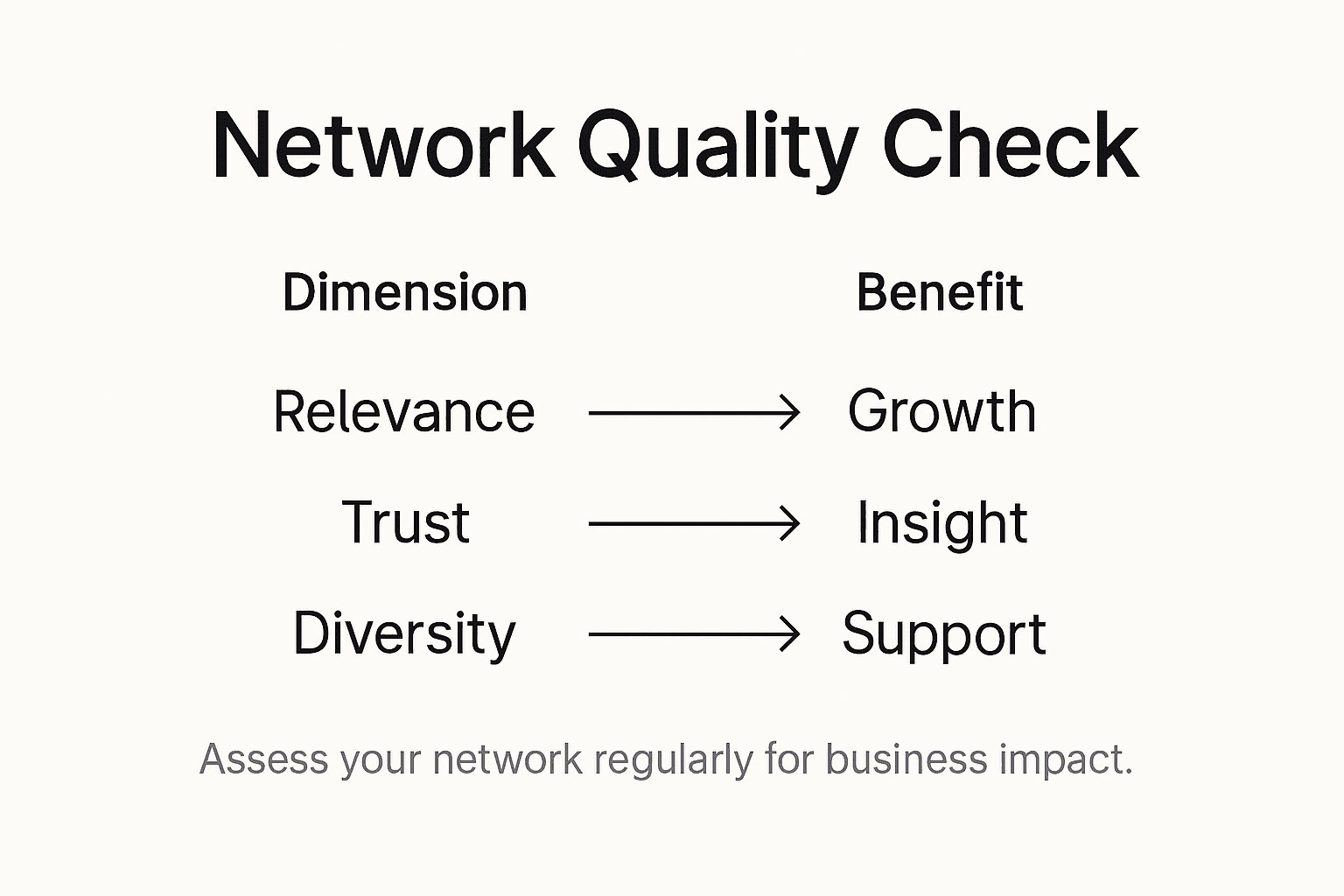
High-quality networks provide entrepreneurs with critical knowledge, resources, and trust-based connections that support venture development. Network verification involves systematically assessing each connection’s potential value through multiple dimensions: professional relevance, demonstrated expertise, willingness to engage reciprocally, and alignment with your strategic business objectives. This means moving beyond superficial contact accumulation and focusing on building a curated ecosystem of relationships that can actively contribute to your entrepreneurial journey.
Develop a rigorous network assessment framework that evaluates connections across key dimensions. Consider factors such as the diversity of perspectives, potential for collaborative opportunities, demonstrated track record of supporting other entrepreneurs, and tangible resources each contact might introduce. Regularly audit your network by scheduling quarterly reviews where you categorize connections based on their actual contribution to your business growth. Prioritize relationships that demonstrate consistent engagement, mutual respect, and a genuine interest in supporting each other professional development. Create a scoring system that helps you identify high potential contacts who consistently provide meaningful insights, introductions, or opportunities that advance your business objectives.
Pro tip: Implement a connection scoring spreadsheet with weighted criteria for relationship quality, tracking metrics like referral frequency, response rate, and tangible business outcomes to systematically optimize your professional network.
Comparing approaches for evaluating network quality:
| Evaluation Dimension | Description | Value for Founders |
|---|---|---|
| Professional Relevance | Alignment with business needs | Focused support and insights |
| Diversity of Network | Variety of backgrounds and sectors | Greater innovation potential |
| Engagement Frequency | Consistency of interactions | Maintains relationship value |
| Tangible Outcomes | Measurable business benefits | Validates connection utility |
Accelerate Your Networking Success with Nomad Excel
Building strong business connections is essential for founders who want to move beyond startup challenges and create a powerful, growth-oriented network. If you are struggling to define clear networking objectives, craft personalized outreach, or deepen relationships for meaningful business impact this is your opportunity to engage with a community and mentorship system designed just for you. Our approach matches the strategic focus on goal setting and relationship quality that are critical to founder growth.
Join one of Nomad Excel’s immersive Entrepreneurship Bootcamps where you will experience structured learning, hands-on mentorship, and a curated peer network. These programs empower you to transform networking concepts into effective actions and build lasting connections that accelerate your startup’s success. Visit Nomad Excel now and take the first step toward refining your entrepreneurial journey with expert guidance and a supportive community. Discover inspiring stories and practical strategies in our Inspiration Archives to fuel your motivation and prepare you to thrive.
Frequently Asked Questions
How can I define effective networking objectives for my startup?
To define effective networking objectives, start by assessing your current business needs, such as funding or mentorship. Map out specific goals that directly address these needs and prioritize quality interactions over quantity by choosing networking opportunities that align with your business stage.
What should I include in my personalized outreach messages?
Your personalized outreach messages should include insights from your research about the recipient’s background and their potential challenges. Craft concise and authentic messages that highlight how your startup can provide value, referencing specific details that connect to their work or achievements.
How can I maximize my engagement during bootcamp experiences?
Maximize your engagement during bootcamp experiences by actively participating in discussions, asking thoughtful questions, and connecting with both mentors and peers. Prepare in advance by researching backgrounds and identifying collaboration opportunities, and aim to document insights and contacts throughout the event.
What should I do after meeting someone during a networking event?
After meeting someone at a networking event, follow up within one week with a tailored message that references specific details from your conversation. Propose concrete next steps, such as a virtual coffee meeting or collaborating on a project, to deepen the relationship further.
How can I effectively assess the quality of my professional network?
To assess the quality of your professional network, evaluate connections based on dimensions like relevance to your business needs and engagement frequency. Schedule quarterly reviews to categorize and score your connections, helping you prioritize relationships that consistently add value to your entrepreneurial journey.
What metrics should I track to optimize my networking efforts?
Track metrics such as the frequency of meaningful interactions, referral rates, and tangible business outcomes from your network connections. By implementing a scoring system, you can systematically evaluate and enhance the quality of your professional relationships over time.
Comments are closed.