
Mentorship Program Guide for Entrepreneur Growth Success
Most american entrepreneurs struggle to find mentorship that makes a real difference in their journey. Building a business is rarely a solo mission, and studies show that founders with mentorship experience up to two times faster growth than those going it alone. This guide shares practical steps for ambitious entrepreneurs who want to level up their mentorship programs with clarity, structure, and measurable progress, turning community support into strategic business acceleration.
Table of Contents
- Step 1: Assess Needs And Define Mentorship Objectives
- Step 2: Design Mentor-Mentee Matching Framework
- Step 3: Establish Structured Engagement Processes
- Step 4: Implement Feedback And Improvement Mechanisms
- Step 5: Verify Mentorship Outcomes And Celebrate Achievements
Quick Summary
| Key Insight | Explanation |
|---|---|
| 1. Conduct a thorough self-assessment | Evaluate your business strengths and weaknesses to define mentorship needs accurately. |
| 2. Set clear mentorship objectives | Create specific, measurable goals to guide your mentorship process effectively. |
| 3. Develop a comprehensive matching framework | Foster compatibility between mentors and mentees through detailed profiling and evaluations. |
| 4. Establish structured engagement processes | Design regular, intentional interactions to ensure consistent progress and value. |
| 5. Implement feedback mechanisms | Use surveys and review sessions to continuously refine and improve the mentorship experience. |
Step 1: Assess needs and define mentorship objectives
Effective mentorship starts with understanding your precise growth requirements and establishing clear, measurable objectives that align with your entrepreneurial vision. This critical first step involves performing a comprehensive self evaluation and strategic planning to set the foundation for a transformative mentorship experience.
Begin by conducting an honest assessment of your current business capabilities and skill gaps. Systematic approaches to needs assessment recommend creating a detailed inventory of your strengths, weaknesses, and specific areas where targeted guidance could accelerate your entrepreneurial journey. This might include technical skills like financial modeling, strategic competencies such as market positioning, or leadership capabilities around team building and organizational design.
To define your mentorship objectives, translate your skills assessment into concrete, actionable goals. These should be specific, measurable outcomes that a mentor can help you achieve. For example, instead of a vague goal like “grow my business,” articulate precise targets such as “increase monthly recurring revenue by 25% within six months” or “develop a scalable customer acquisition strategy for my tech startup.” Your objectives should be ambitious yet realistic, providing a clear roadmap for your mentor to understand exactly how they can support your professional growth.
Pro tip: Create a one page “mentorship vision document” that clearly outlines your current business state, desired outcomes, and specific metrics you want to improve, making it easier for potential mentors to assess their compatibility with your goals.
Step 2: Design mentor-mentee matching framework
Creating an effective mentor-mentee matching framework requires a strategic approach that goes beyond simple networking. The goal is to develop a systematic process that connects entrepreneurs with mentors who can provide targeted, meaningful guidance tailored to specific business needs and growth objectives.

A theoretical framework for mentor-protégé matchmaking suggests developing a comprehensive matching strategy that considers multiple dimensions of compatibility. This involves creating a detailed assessment process that evaluates not just professional credentials, but also personal working styles, communication preferences, industry experience, and specific entrepreneurial challenges. Start by developing a robust profiling system for both mentors and mentees that captures nuanced information beyond standard resume details. Consider factors like leadership style, communication approach, strategic thinking patterns, and specific industry expertise.
The matching process should incorporate a multi stage evaluation that includes initial questionnaires, compatibility assessments, and potential trial mentoring sessions. Prioritize creating opportunities for preliminary interactions that allow both mentors and mentees to assess mutual fit before committing to a long term relationship. This approach helps ensure more organic, genuine connections that have a higher likelihood of producing meaningful professional development and business growth.
Pro tip: Design a matching questionnaire with weighted scoring across key compatibility dimensions, allowing for more precise mentor-mentee alignment and increasing the probability of successful mentorship outcomes.
Step 3: Establish structured engagement processes
Designing a robust mentorship program requires creating clear, intentional engagement processes that provide consistent support and meaningful interaction between mentors and mentees. The goal is to develop a framework that transforms occasional conversations into strategic, transformative professional development experiences.
A longitudinal study on mentorship program impact highlights the critical importance of structured interactions in driving measurable entrepreneurial outcomes. Implement a comprehensive engagement model that includes regular one-on-one sessions, group workshops, and strategic networking opportunities. Develop a standardized meeting schedule with clear expectations for frequency, duration, and communication methods. Typical structures might include monthly deep dive sessions, quarterly goal review meetings, and periodic group mentoring workshops that allow cross-pollination of ideas and experiences.
Beyond scheduling, create a comprehensive tracking and accountability system that monitors progress, captures insights, and ensures continuous value generation. This involves developing detailed session templates, progress tracking tools, and feedback mechanisms that allow both mentors and mentees to evaluate the relationship’s effectiveness. Implement digital platforms or structured documentation processes that enable transparent communication, goal tracking, and performance assessment. The key is building flexibility into your engagement framework while maintaining enough structure to drive meaningful professional growth.
Compare engagement process features found in advanced mentorship programs:
| Feature | Standard Program | Structured Program | Transformative Potential |
|---|---|---|---|
| Meeting Frequency | Irregular | Fixed monthly/quarterly | Enables skill progression |
| Interaction Format | Informal discussions | Formal sessions/workshops | Supports real-world application |
| Progress Tracking | Limited documentation | Digital tracking tools | Ensures measurable growth |
| Accountability | Mentor-led only | Joint mentor-mentee | Clarifies expectations |
Pro tip: Create a mentorship relationship charter that outlines expected communication protocols, confidentiality agreements, and mutual commitment standards to establish clear boundaries and expectations from the start.
Step 4: Implement feedback and improvement mechanisms
Designing a comprehensive feedback system is critical for continuously refining and enhancing your mentorship program. The objective is to create a dynamic, responsive framework that allows for ongoing evaluation, learning, and strategic adaptation of the mentoring experience.
Research on evaluating mentoring programs emphasizes the importance of developing robust feedback loops that capture both quantitative and qualitative insights. Implement a multi-dimensional assessment approach that includes structured surveys, one-on-one interviews, performance metrics, and periodic review sessions. Design evaluation tools that measure not just surface level satisfaction, but deep learning outcomes, skill development progress, and the tangible business impact experienced by participants. This might involve creating detailed questionnaires that probe the specific value generated through mentor-mentee interactions, tracking key performance indicators, and establishing clear benchmarks for success.
Beyond data collection, focus on creating a culture of transparent and constructive feedback. Establish regular review cycles where both mentors and mentees can openly discuss program strengths, identify improvement opportunities, and collaboratively develop strategies for enhancement. Develop a systematic approach to analyzing feedback data, with clear protocols for translating insights into actionable program modifications. This iterative process ensures your mentorship program remains adaptive, relevant, and consistently aligned with the evolving needs of entrepreneurs.
Pro tip: Implement a confidential feedback mechanism that allows participants to share candid insights without fear of professional repercussions, ensuring you capture genuinely transformative improvement suggestions.
Step 5: Verify mentorship outcomes and celebrate achievements
Tracking and validating the impact of your mentorship program is crucial for demonstrating its value and motivating continued participation. This step transforms your mentorship experience from a passive interaction into a purposeful journey of measurable professional growth.
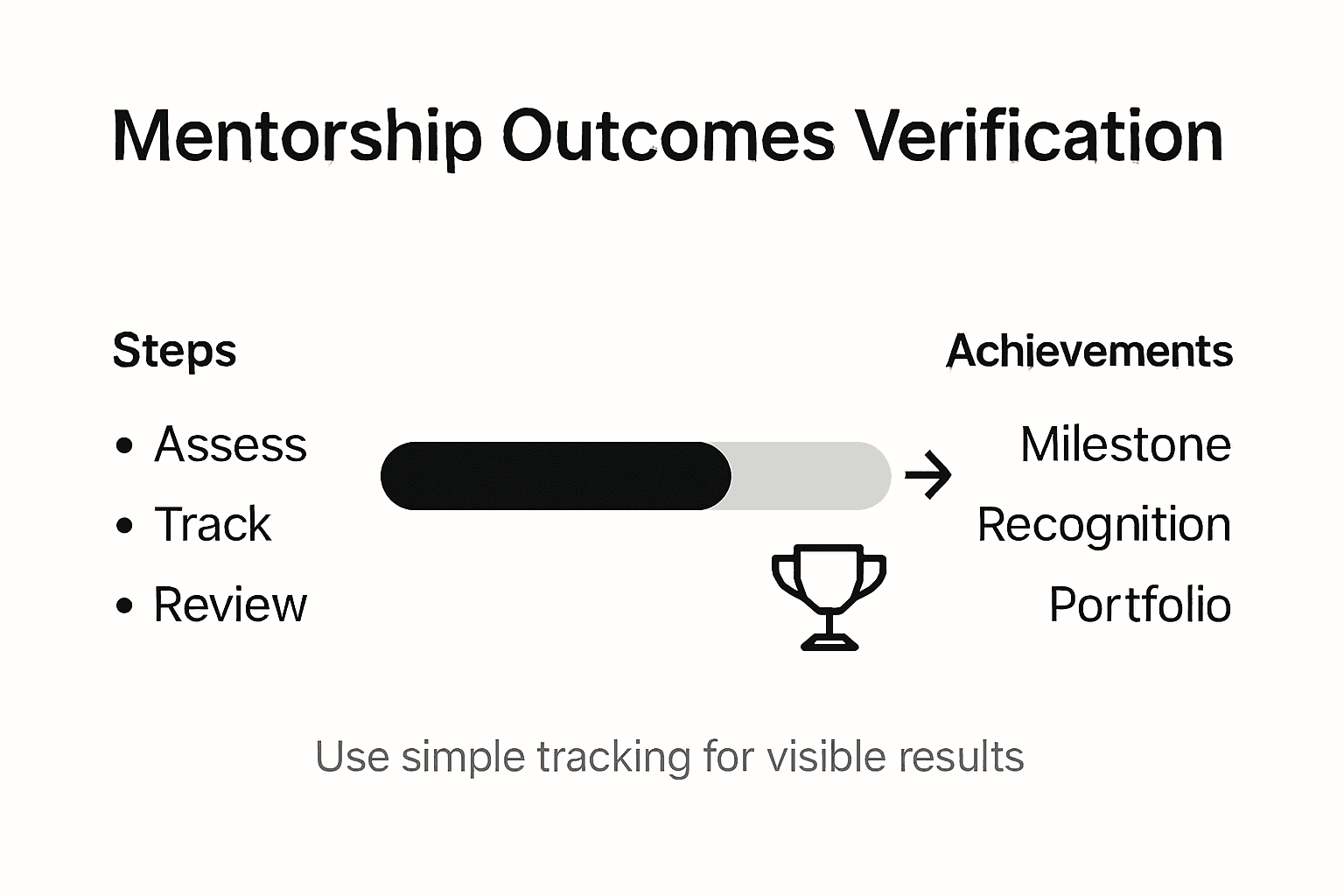
Global mentorship project research provides comprehensive insights into systematically verifying mentorship outcomes through multifaceted assessment strategies. Develop a rigorous evaluation framework that goes beyond surface level metrics by implementing detailed skills assessments, performance tracking, and longitudinal progress monitoring. This approach involves creating comprehensive evaluation tools that capture both quantitative data like revenue growth or client acquisition and qualitative insights such as confidence levels, strategic thinking improvements, and personal development milestones. Consider using a combination of self assessment surveys, peer feedback, mentor evaluations, and objective business performance indicators to build a holistic view of participant transformation.
Recognition plays a critical role in sustaining motivation and reinforcing positive outcomes. Design a robust recognition program that celebrates achievements at multiple levels, from individual milestone acknowledgments to public showcases of participant success stories. This might include hosting achievement ceremonies, creating digital recognition platforms, offering professional certifications, or providing networking opportunities that highlight participant accomplishments. The goal is to create a positive feedback loop that not only validates individual progress but also inspires future mentorship participants by demonstrating tangible potential for professional growth.
Pro tip: Create a digital achievement portfolio for each mentee that documents their journey, tracks key milestones, and provides a comprehensive record of their professional development throughout the mentorship program.
Here’s a summary of key steps in developing an effective mentorship program:
| Step Number | Focus Area | Primary Action | Expected Outcome |
|---|---|---|---|
| 1 | Needs Assessment | Evaluate business strengths and skill gaps | Clear growth objectives |
| 2 | Matching Framework | Design multidimensional mentor-mentee profiles | Improved alignment |
| 3 | Engagement Processes | Schedule structured meetings and workshops | Consistent progress tracking |
| 4 | Feedback Mechanisms | Implement surveys and review sessions | Continuous improvement |
| 5 | Outcome Verification | Track skills and celebrate achievements | Tangible success recognition |
Unlock Your Entrepreneurial Potential with Guided Mentorship and Hands-On Experience
If you are striving to clarify your business objectives, design impactful mentor-mentee matches, and implement structured engagement processes as outlined in the “Mentorship Program Guide for Entrepreneur Growth Success,” Nomad Excel offers the perfect environment to turn those goals into reality. Entrepreneurs often face challenges such as defining clear mentorship objectives, establishing accountability systems, and verifying outcomes that truly accelerate growth. Our immersive entrepreneurship bootcamps are purpose-built to address these pain points through expert mentorship, actionable frameworks, and a vibrant community that keeps you accountable.
Why wait to experience measurable business growth and strategic clarity? Explore our Entrepreneurship Archives for insights and success stories that could inspire your journey. Ready to transform your mentorship goals into tangible outcomes with a dynamic support system? Visit Nomad Excel now and discover programs crafted to match your needs perfectly in our Program Archives. Take the next step today and accelerate your entrepreneurial adventure where mentorship meets execution.
Frequently Asked Questions
How do I assess my business needs for a mentorship program?
Effective assessment starts with an honest evaluation of your current capabilities and skill gaps. Create a detailed inventory of your strengths and weaknesses, focusing on areas such as financial modeling or leadership skills, to identify where mentorship can accelerate your growth.
What should I include in my mentorship objectives?
Your mentorship objectives should be specific, measurable goals that align with your entrepreneurial vision. For instance, instead of saying, “I want to grow my business,” specify, “I want to increase monthly recurring revenue by 25% within six months.”
How can I find the right mentor for my needs?
To find the right mentor, design a structured matching framework that evaluates compatibility based on professional credentials and personal communication styles. Utilize a matching questionnaire that captures detailed information about both mentors and mentees to enhance alignment.
What are effective ways to structure mentor-mentee meetings?
To structure meetings effectively, implement a consistent schedule that includes regular one-on-one sessions and workshops. Consider setting monthly deep dive sessions and quarterly goal reviews to foster continuous engagement and professional development.
How can I evaluate the success of my mentorship program?
You can evaluate the success of your mentorship program by tracking both quantitative and qualitative outcomes. Use performance metrics such as revenue growth alongside feedback surveys to measure the impact of mentor-mentee interactions and identify areas for improvement.
What steps should I take to celebrate achievements within my mentorship program?
Celebrating achievements can involve creating a recognition program that highlights participant success stories and milestone accomplishments. Consider hosting achievement ceremonies or developing digital portfolios for mentees that document their progress and growth throughout the program.
Comments are closed.