
Role of Mentorship in Entrepreneurship: Complete Guide
Most new business owners underestimate how dramatically the right mentor can shape their journey. Studies show that entrepreneurs with mentors are over 50 percent more likely to achieve business growth and long-term stability. In a world where startups face constant uncertainty, finding quality mentorship is often the difference between sustained progress and early setbacks. This guide reveals how mentorship unlocks practical strategies, deeper confidence, and the connections needed to thrive as an entrepreneur.
Table of Contents
- Defining Mentorship In Entrepreneurship
- Types Of Mentorship For Entrepreneurs
- Benefits And Impact On Entrepreneurial Success
- Key Qualities Of Effective Mentors And Mentees
- Common Pitfalls And How To Avoid Them
- Integrating Mentorship Into Business Growth
Key Takeaways
| Point | Details |
|---|---|
| Strategic Mentorship is Transformative | Entrepreneurial mentorship fosters holistic growth by providing guidance, emotional support, and essential networking opportunities. |
| Tailored Mentorship Types | Different stages of business development require specific mentorship strategies, including one-on-one, peer, and specialized mentorship models. |
| Mutual Growth Expectations | Successful mentorship hinges on clear communication, reciprocal value, and setting defined expectations between mentors and mentees. |
| Mitigating Common Challenges | Addressing potential pitfalls, such as undefined expectations and inconsistent engagement, is crucial for effective mentorship relationships. |
Defining Mentorship in Entrepreneurship
Mentorship in entrepreneurship represents a strategic, transformative relationship where an experienced business professional guides an emerging entrepreneur through complex business challenges and personal development. Unlike traditional professional relationships, entrepreneurial mentorship goes beyond simple advice giving – it’s a dynamic partnership focused on holistic growth, skill transfer, and navigating the unpredictable landscape of startup development.
According to research from UiTM, mentorship plays a critical role in shaping entrepreneurial intentions by influencing key psychological factors like attitude, subjective norms, and perceived behavioral control. The mentor doesn’t just provide tactical business guidance, but fundamentally helps entrepreneurs reframe their understanding of risk, opportunity, and personal capability.
Effective entrepreneurial mentorship typically involves several core dimensions:
- Knowledge Transfer: Sharing industry insights, strategic frameworks, and practical experience
- Skill Development: Teaching specific business competencies like financial planning, marketing, and team management
- Network Expansion: Introducing mentees to valuable professional connections and potential investors
- Emotional Support: Providing psychological resilience strategies for handling startup challenges
- Accountability: Creating structured environments that push entrepreneurs beyond their comfort zones
For aspiring entrepreneurs, finding the right mentor can be transformative.
 It’s not just about finding someone successful, but discovering a mentor who understands your unique vision, challenges your assumptions, and genuinely invests in your entrepreneurial journey. Check out our startup mentorship programs review to discover curated networks that can accelerate your entrepreneurial potential.
Types of Mentorship for Entrepreneurs
Entrepreneurial mentorship is not a one-size-fits-all approach, but rather a nuanced landscape of support strategies tailored to different stages of business development. Understanding these diverse mentorship types can help entrepreneurs identify the most suitable guidance for their specific needs and growth trajectories.
Research from arXiv highlights a comprehensive framework for mentorship that recognizes distinct support requirements across entrepreneurial career phases. These phases include conception, start-up, and growth, each demanding unique mentoring approaches that align with the entrepreneur’s evolving challenges and objectives.
Primary types of entrepreneurial mentorship include:
- Traditional One-on-One Mentorship: Direct, personalized guidance from an experienced entrepreneur who provides strategic advice and emotional support
- Peer Mentorship: Collaborative relationships with fellow entrepreneurs at similar or slightly more advanced business stages
Specialized Mentorship Models
Industry-Specific Mentorship: Focused guidance from experts within a particular sector or technological domain
Technical Skill Mentorship: As detailed in arXiv, task-focused mentoring strategies that help entrepreneurs develop specific technical competencies and complete complex projects
Strategic Growth Mentorship: High-level guidance targeting business scaling, market expansion, and long-term strategic planning
Those seeking targeted entrepreneurial support can explore our top mentorship networks for entrepreneurs to find the perfect match for their unique entrepreneurial journey.
Benefits and Impact on Entrepreneurial Success
Mentorship serves as a transformative catalyst in an entrepreneur’s journey, offering far more than simple advice. It represents a strategic partnership that can dramatically accelerate business growth, personal development, and long-term success by providing targeted insights, emotional support, and critical learning opportunities.
According to research from IERJ, mentorship plays a crucial role in small business success by providing strategic guidance, enhancing business skills, and facilitating networking opportunities. These multifaceted benefits contribute directly to business growth and sustainability, helping entrepreneurs navigate complex challenges with greater confidence and strategic clarity.
The profound impact of mentorship on entrepreneurial success can be categorized into several key dimensions:
- Skill Enhancement: Rapid learning of critical business competencies through direct knowledge transfer
- Strategic Thinking: Developing advanced problem-solving and decision-making capabilities
- Emotional Resilience: Building psychological strength to handle startup challenges
- Network Expansion: Creating valuable connections within industry ecosystems
Measurable Outcomes of Entrepreneurial Mentorship
Research from Abacademies highlights how mentorship bridges critical gaps between academic learning and real-world business practice. Entrepreneurs who engage with mentors consistently demonstrate:
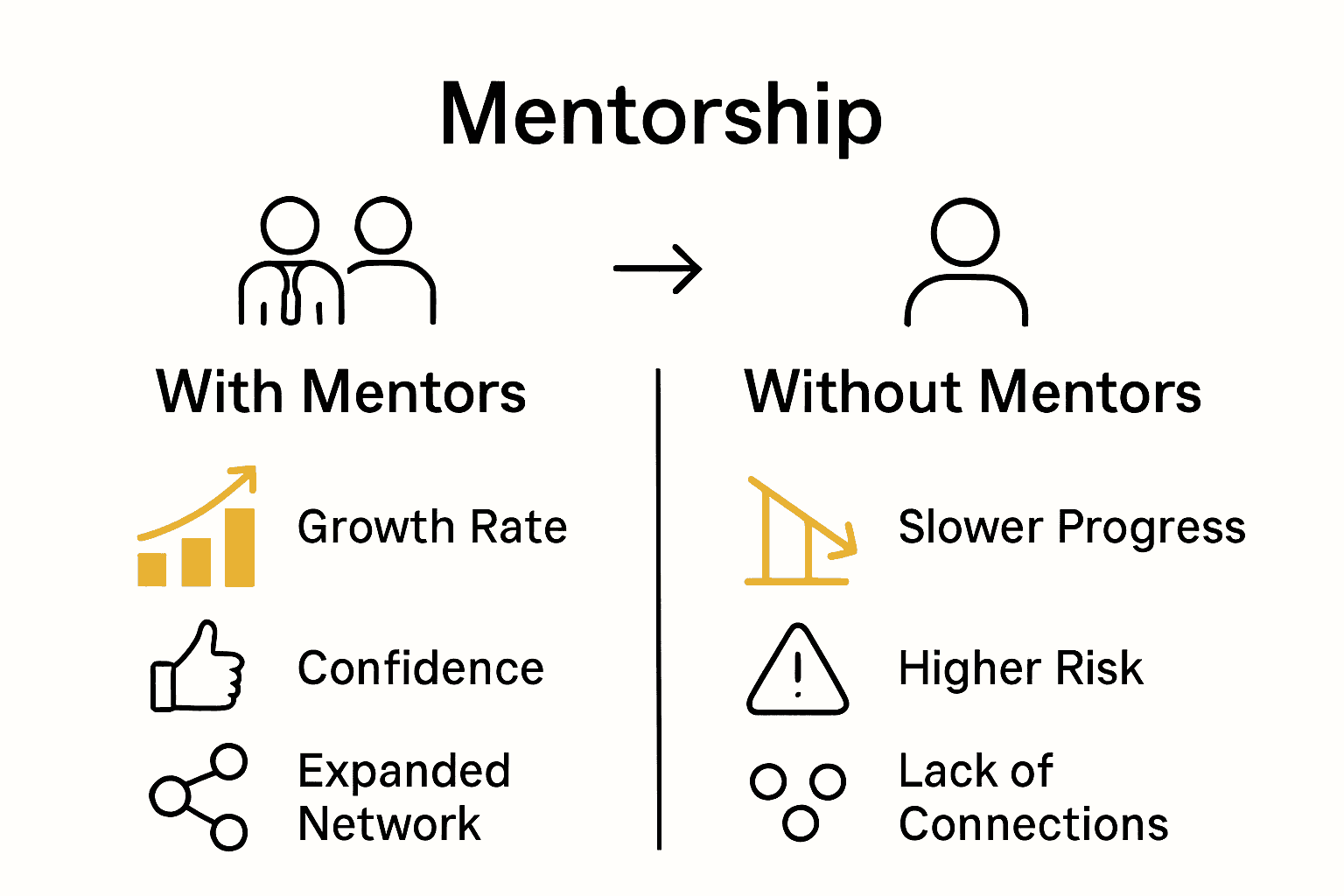
- Faster business model validation
- More efficient resource allocation
- Higher probability of sustainable growth
For entrepreneurs looking to understand how a growth mindset can further amplify these benefits, explore our guide to entrepreneurial mindset and unlock your full potential.
Key Qualities of Effective Mentors and Mentees
Successful mentorship is a delicate dance of compatibility, mutual respect, and strategic alignment. It requires both the mentor and mentee to bring specific qualities that transform their relationship from a simple advisory connection into a powerful catalyst for entrepreneurial growth and personal development.
Research from arXiv highlights critical personal qualities essential for effective mentors, emphasizing approachability, patience, and the ability to provide constructive feedback. These attributes are not just desirable but fundamental in creating an environment of trust, learning, and genuine professional transformation.
Key Qualities for Mentors:
- Emotional Intelligence: Ability to understand and navigate complex interpersonal dynamics
- Strategic Vision: Capacity to see beyond immediate challenges and provide forward-thinking guidance
- Active Listening: Genuine commitment to understanding the mentee’s unique context and aspirations
- Vulnerability: Willingness to share personal experiences, including failures and lessons learned
Mentee Qualities and Expectations
According to arXiv, effective mentorship requires precise alignment of expectations and understanding the specific needs across different entrepreneurial journey phases. Exceptional mentees demonstrate:
- Openness to Feedback: Receptivity to critical insights without becoming defensive
- Proactive Learning: Taking initiative in seeking guidance and implementing recommendations
- Clear Communication: Articulating challenges, goals, and progress transparently
- Reciprocal Value: Understanding mentorship as a two-way relationship of mutual growth
For entrepreneurs seeking to develop a powerful entrepreneurial mindset that complements these mentorship qualities, explore our guide to entrepreneurial mindset and unlock your transformative potential.
Common Pitfalls and How to Avoid Them
Entrepreneurial mentorship, while transformative, is fraught with potential challenges that can derail even the most well-intentioned relationships. Recognizing and proactively addressing these pitfalls is crucial for creating meaningful, productive mentorship experiences that drive genuine business growth.
Research from IERJ highlights critical challenges in mentorship programs, particularly around mentor availability and mismatched expectations. These fundamental issues can significantly undermine the potential positive impact of mentoring relationships if not carefully managed and addressed.
Common Mentorship Pitfalls to Watch For:
- Undefined Expectations: Lack of clear goals and communication boundaries
- Inconsistent Engagement: Sporadic or superficial interactions
- Power Dynamics: Unbalanced relationships that limit honest dialogue
- Dependency Syndrome: Mentees becoming overly reliant on mentor guidance
Strategic Mitigation Approaches
According to arXiv, many mentorship challenges stem from generic mentoring services that fail to address specific entrepreneurial needs. Effective mitigation requires:
- Precise Expectation Setting: Clearly defining relationship parameters
- Regular Communication Protocols: Establishing structured check-ins
- Specific Goal Alignment: Tailoring mentorship to unique entrepreneurial phases
- Mutual Accountability: Creating mechanisms for balanced feedback
For entrepreneurs seeking structured guidance to navigate these challenges, our personal business growth guide offers comprehensive strategies for building successful mentorship relationships.
Integrating Mentorship Into Business Growth
Successful business growth is rarely a solitary journey. Effective entrepreneurs understand that strategic mentorship can be the critical differentiator between stagnation and exponential development, transforming individual potential into sustainable organizational success.
Research from Abacademies highlights how structured mentorship programs can provide entrepreneurs with practical insights, industry connections, and targeted guidance that bridges the gap between theoretical knowledge and real-world business challenges.
Key Strategic Integration Approaches:
- Goal-Aligned Mentorship: Matching mentor expertise with specific business growth objectives
- Phased Development: Implementing mentorship support across different business evolution stages
- Continuous Learning: Creating feedback loops that enable ongoing skill enhancement
- Network Expansion: Leveraging mentor connections for strategic opportunities
Practical Implementation Framework
According to arXiv, integrating mentorship effectively requires a tailored mentor-protégé matchmaking approach that aligns with different entrepreneurial career phases. Successful integration involves:
- Comprehensive Needs Assessment: Identifying precise business growth requirements
- Mentor Selection Criteria: Matching mentor expertise with specific developmental needs
- Structured Engagement Protocols: Establishing clear expectations and interaction frameworks
- Measurable Growth Metrics: Tracking mentorship impact through quantifiable business outcomes
Entrepreneurs seeking comprehensive strategies for business development can explore our entrepreneurial leadership guide for accelerated growth to unlock transformative mentorship potential.
Accelerate Your Entrepreneurial Journey with Expert Mentorship and Community
Navigating the challenges of entrepreneurship requires more than just good ideas. You need focused mentorship that helps you build critical skills, expand your network, and develop the emotional resilience needed to overcome obstacles and grow your business. This complete guide reveals how mentorship transforms entrepreneurial intentions into measurable success through strategic guidance and real-world support.
At Nomad Excel, we understand these hurdles deeply. Our immersive Entrepreneurship Archives showcase proven frameworks and stories that connect theory to practice. Join one of our hands-on bootcamps or retreats where experienced mentors deliver tailored advice, daily accountability, and a supportive community that keeps pushing you forward. Find clarity, sharpen your execution skills, and unlock new opportunities by visiting Nomad Excel or exploring our Program Archives. Take the next step now and transform your potential into real-world business growth.
Frequently Asked Questions
What is the role of mentorship in entrepreneurship?
Mentorship in entrepreneurship involves a transformative relationship where experienced professionals guide emerging entrepreneurs, providing strategic advice, emotional support, and facilitating skill development to navigate business challenges.
What are the benefits of having a mentor in my entrepreneurial journey?
Having a mentor offers benefits like skill enhancement, strategic thinking development, emotional resilience, and expanded networking opportunities, which can substantially contribute to business growth and sustainability.
What types of mentorship are available for entrepreneurs?
Types of mentorship for entrepreneurs include traditional one-on-one mentorship, peer mentorship, industry-specific mentorship, technical skill mentorship, and strategic growth mentorship, each designed to support entrepreneurs at different stages of their journey.
How can I find the right mentor for my entrepreneurial needs?
To find the right mentor, focus on identifying someone who understands your unique vision, challenges your assumptions, and is genuinely invested in your growth. Look for mentors with relevant industry experience and who align with your specific goals.
Recommended
- Role of Networking in Entrepreneurship: Essential Guide – Nomad Excel – Your Entrepreneurial Adventure Starts Here
- The Essential Guide to Benefits of Entrepreneurial Mindset – Nomad Excel – Your Entrepreneurial Adventure Starts Here
- Entrepreneurship Skills Guide for Launching Your Own Venture – Nomad Excel – Your Entrepreneurial Adventure Starts Here
- Top Mentorship Networks for Entrepreneurs – Expert Comparison 2025 – Nomad Excel – Your Entrepreneurial Adventure Starts Here
Comments are closed.