
Strategic Execution: Driving Real Business Growth
Building a business often means facing the frustration of strategies that never move past the planning phase. For entrepreneurs, understanding strategic execution as a dynamic discipline is key to achieving real results. Success requires more than clear communication or a detailed plan—it calls for agility, cross-functional coordination, and sustained leadership engagement. Unpacking common myths helps set the stage for proven methods that turn vision into measurable progress while empowering growth and accountability in your venture.
Table of Contents
- Strategic Execution Defined And Common Myths
- Key Frameworks And Models For Execution
- Essential Steps For Translating Plans To Action
- Core Benefits And Advantages For Entrepreneurs
- Major Challenges And Risks To Watch For
- Common Pitfalls And How To Prevent Failure
Key Takeaways
| Point | Details |
|---|---|
| Understanding Strategic Execution | Effective strategic execution goes beyond business plans and requires flexibility, coordination, and deep engagement from leadership. |
| Importance of Frameworks | Utilizing robust frameworks like the Four Priorities Framework can help organizations align goals, enhance agility, and improve capabilities. |
| Anticipating Challenges | Entrepreneurs should proactively address potential risks related to organizational structure, culture, and performance management to ensure successful execution. |
| Preventing Pitfalls | Establish clear accountability, maintain strategic alignment, and foster a culture of continuous feedback to avoid common execution failures. |
Strategic execution defined and common myths
Strategic execution represents far more than simply implementing a business plan. It’s a dynamic, complex discipline that requires nuanced understanding and deliberate organizational approach. Strategy execution is a comprehensive process involving systematic coordination across multiple business dimensions.
Many entrepreneurs mistakenly view strategic execution as a linear, predictable process. However, research reveals several persistent myths that undermine effective implementation:
Myth #1: Execution Equals Alignment
- Believing that organizational agreement automatically translates to successful implementation
- Reality: Coordination and adaptability matter more than surface-level consensus
Myth #2: Rigid Plan Adherence
- Assuming that strict plan following guarantees results
- Reality: Flexibility and responsive adjustments are critical for success
Myth #3: Communication Ensures Understanding
- Thinking that simply communicating a strategy means it will be understood and executed
- Reality: Effective execution requires deep comprehension and active leadership engagement
Why strategy execution often fails stems from these misconceptions. Successful strategic execution demands more than top-down directives. It requires a holistic approach that empowers middle management, encourages cross-functional collaboration, and maintains organizational agility.
Key elements of effective strategic execution include clear vision, robust performance management, resource alignment, and a culture of accountability. Leaders must create systems that translate strategic objectives into measurable, actionable steps while remaining adaptable to changing market conditions.
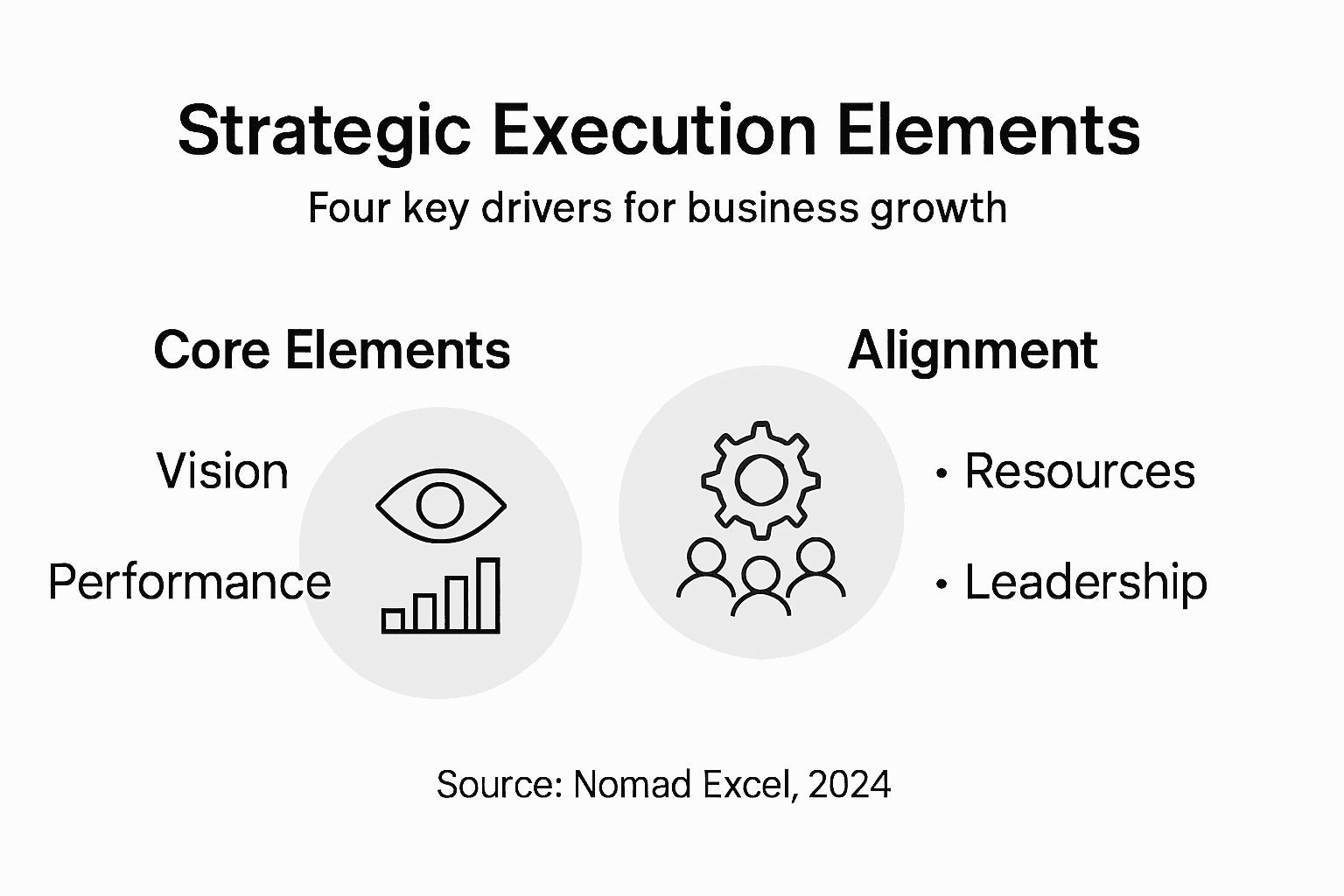
Here’s a summary of essential factors for effective strategic execution:
| Factor | Description | Business Impact |
|---|---|---|
| Vision Clarity | Defines measurable objectives | Drives unified strategy and focus |
| Resource Alignment | Matches skills and assets | Enables efficient project delivery |
| Performance Management | Sets clear KPIs | Boosts accountability and results |
| Cultural Adaptability | Fosters openness to change | Supports agility and growth |
| Leadership Engagement | Ensures active guidance | Encourages team motivation and trust |
Pro tip: Develop a quarterly review process that allows for strategic pivot points and encourages team-wide feedback on execution challenges.
Key frameworks and models for execution
Strategic execution requires robust frameworks that transform abstract objectives into tangible business results. Strategic execution frameworks provide critical blueprints for organizations to translate vision into actionable initiatives.
Several key frameworks emerge as powerful models for driving organizational performance:
Four Priorities Framework
- Alignment: Ensuring organizational goals are synchronized
- Agility: Creating adaptable systems and processes
- Ability: Developing necessary organizational capabilities
- Architecture: Designing supportive organizational structures
Strategic Execution Framework Components
- Identifying strategic initiatives
- Resourcing critical programs
- Managing project portfolios
- Connecting vision to executable actions
- Enabling transformational change
The Four Priorities Framework represents a comprehensive approach to strategic execution. Strategic execution research suggests that organizations must diagnose execution challenges systematically, moving beyond traditional linear planning models.
Successful frameworks share common characteristics: they prioritize flexibility, emphasize cross-functional collaboration, and create mechanisms for continuous adaptation. Leaders must design execution models that are both structured and responsive, allowing teams to pivot quickly while maintaining strategic coherence.
Compare major execution frameworks used by organizations:
| Framework Name | Core Components | Ideal Use Case |
|---|---|---|
| Four Priorities Framework | Alignment, Agility, Ability, Architecture | Scaling fast in dynamic markets |
| Strategic Execution Framework | Initiative selection, resource deployment, portfolio management | Managing complex transformations |
Pro tip: Develop a quarterly strategic review process that allows for real-time assessment and adjustment of your execution framework.
Essential steps for translating plans to action
Transforming strategic plans into meaningful action requires a deliberate and systematic approach. Strategy execution demands clear communication and precise organizational alignment to bridge the gap between theoretical planning and practical implementation.
Key steps for effectively translating strategic plans into action include:
Vision Clarification
- Define specific, measurable objectives
- Articulate clear expected outcomes
- Ensure leadership consensus on strategic direction
Resource Alignment
- Match organizational capabilities to strategic goals
- Allocate human and financial resources strategically
- Create cross-functional support mechanisms
Performance Management
- Establish robust tracking systems
- Define key performance indicators (KPIs)
- Create accountability frameworks
Successful strategy execution requires integrating people, operational systems, and strategic objectives into a cohesive implementation plan. This means moving beyond traditional top-down approaches and creating adaptive, responsive organizational structures.

Effective translation of plans into action demands continuous management and a willingness to iterate. Leaders must create environments that unleash human creativity, encourage strategic thinking at all levels, and remain flexible enough to adjust tactics as market conditions evolve.
Pro tip: Implement monthly strategic review meetings that allow real-time adjustment of execution strategies and rapid response to emerging challenges.
Core benefits and advantages for entrepreneurs
Strategic execution offers entrepreneurs transformative advantages that go far beyond traditional business planning. Entrepreneurs benefit from strategic adaptability by creating organizational frameworks that enable rapid response and sustainable growth.
Key strategic execution advantages include:
Organizational Coordination
- Enhanced cross-functional alignment
- Improved communication channels
- Streamlined decision-making processes
Performance Optimization
- Clear performance metrics
- Targeted resource allocation
- Reduced operational inefficiencies
Market Responsiveness
- Faster adaptation to market changes
- Proactive strategic pivoting
- Competitive advantage through agility
Strategic execution in entrepreneurial contexts drives meaningful organizational transformation by creating robust implementation mechanisms that translate vision into tangible outcomes. This approach enables entrepreneurs to build resilient businesses that can navigate complex market dynamics.
Successful entrepreneurs understand that strategic execution is not a one-time event but a continuous process of learning, adapting, and refining organizational capabilities. By developing systematic approaches to implementation, founders can create scalable businesses that consistently deliver value to customers and stakeholders.
Pro tip: Create a quarterly strategic review system that allows you to assess execution progress, identify potential bottlenecks, and make data-driven adjustments to your business strategy.
Major challenges and risks to watch for
Entrepreneurs must be vigilant about potential obstacles that can derail strategic execution. Strategy implementation barriers create significant risks that can undermine business performance and growth potential.
Key challenges entrepreneurs must anticipate include:
Organizational Structural Risks
- Rigid hierarchical structures
- Ineffective communication channels
- Siloed departmental operations
Cultural and Leadership Barriers
- Resistance to change
- Lack of strategic alignment
- Insufficient leadership commitment
Performance Management Pitfalls
- Outdated measurement practices
- Misaligned incentive structures
- Inadequate performance tracking systems
Successful entrepreneurs recognize that these challenges are not insurmountable but require proactive management and continuous organizational adaptation. The most effective leaders develop flexible frameworks that can quickly identify and address potential execution barriers before they become critical problems.
Technological limitations and cultural inertia often represent the most significant threats to strategic execution. Organizations must invest in creating adaptive cultures that embrace continuous learning, encourage cross-functional collaboration, and maintain a growth-oriented mindset.
Pro tip: Conduct monthly cross-functional meetings to identify potential execution barriers and develop collaborative solutions before they escalate into critical challenges.
Common pitfalls and how to prevent failure
Strategic execution is fraught with potential landmines that can derail even the most promising business initiatives. Strategy execution requires systematic prevention of common organizational pitfalls that undermine performance and momentum.
Key pitfalls entrepreneurs must proactively address include:
Strategic Misalignment
- Unclear organizational priorities
- Mismatched incentive structures
- Inconsistent communication channels
Accountability Failures
- Undefined performance expectations
- Lack of clear ownership
- Insufficient tracking mechanisms
Execution Complexity Traps
- Overcomplicating strategic processes
- Creating unnecessary bureaucratic layers
- Neglecting agile adaptation strategies
Simple rules for strategy execution emphasize the importance of maintaining focus, establishing clear accountability, and creating systematic communication pathways. Successful prevention requires a disciplined approach that prioritizes transparency and continuous organizational learning.
Entrepreneurs must cultivate an execution mindset that embraces flexibility, encourages honest communication, and creates robust feedback mechanisms. This involves developing organizational cultures that view strategic execution as a dynamic, collaborative process rather than a rigid, top-down mandate.
Pro tip: Implement quarterly strategic alignment workshops that bring together cross-functional teams to review, assess, and recalibrate execution strategies.
Unlock True Business Growth Through Strategic Execution
Navigating the complex challenges of strategic execution described in this article can feel overwhelming. Many entrepreneurs struggle with aligning vision clarity, resource allocation, and performance management while battling cultural resistance and execution pitfalls. These hurdles often lead to stalled growth and missed opportunities. If you are facing difficulties turning your strategic plans into real-world results or seeking to build accountability and adaptability within your team you are not alone.
At Nomad Excel we specialize in empowering entrepreneurs and teams to overcome these exact challenges. Our immersive Entrepreneurship Bootcamps offer hands-on frameworks, mentorship, and a supportive community designed to sharpen your execution skills and accelerate business growth. For existing companies aiming to enhance alignment and strategic agility consider our tailored Company Retreats where leadership and teams deepen trust and sharpen their focus on actionable outcomes. Take control of your strategic execution today and build the momentum your business deserves. Visit Nomad Excel now to join a transformative experience that turns plans into progress.
Frequently Asked Questions
What is strategic execution?
Strategic execution is the process of translating a business strategy into actionable initiatives, involving systematic coordination across multiple business dimensions to drive performance and growth.
How can organizations improve their strategic execution?
Organizations can enhance their strategic execution by establishing clear vision, aligning resources, implementing robust performance management systems, fostering a culture of adaptability, and actively engaging leadership in the process.
What are the common myths associated with strategic execution?
Common myths include the belief that execution equals alignment, that rigid adherence to plans guarantees success, and that merely communicating a strategy ensures understanding and execution. Effective execution requires more than these assumptions.
What are some key frameworks for strategic execution?
Key frameworks include the Four Priorities Framework, which focuses on alignment, agility, ability, and architecture, and the Strategic Execution Framework, which emphasizes initiative selection, resource allocation, and managing project portfolios.
Comments are closed.