
Find and thrive at entrepreneur meetups near me
Starting a business can feel isolating, but it doesn’t have to be. Across cities and towns, local entrepreneur meetups bring together aspiring founders who share your challenges, ambitions, and drive to build something meaningful. These gatherings offer more than casual conversation. They provide mentorship, collaboration opportunities, and the community support that turns ideas into thriving businesses. Whether you’re validating your first concept or scaling an early venture, connecting with fellow entrepreneurs nearby accelerates your growth in ways solo effort simply cannot match.
Table of Contents
- Key takeaways
- What are entrepreneur meetups and why they matter
- Finding entrepreneur meetups near you: strategies and tools
- Types of entrepreneur meetups and what to expect
- Maximizing benefits from entrepreneur meetups: participation and follow-up
- Discover entrepreneur bootcamps and deeper learning with Nomad Excel
- Frequently asked questions
Key Takeaways
| Point | Details |
|---|---|
| Mentorship and support | Entrepreneur meetups provide mentorship, collaboration opportunities, and community support that help turn ideas into thriving businesses. |
| Diverse meetup formats | Meetups range from casual coffee chats to structured workshops and pitch sessions. |
| Finding the right meetup | Identify your goals, search across platforms, and evaluate the value of events before committing. |
| Active participation pays off | Attending regularly, actively engaging with others, and following up leads to collaboration, accountability, and faster progress. |
What are entrepreneur meetups and why they matter
Entrepreneur meetups are local gatherings where founders, aspiring business owners, and startup enthusiasts come together to share experiences, solve problems, and build relationships. These events range from informal coffee chats to structured networking sessions, pitch competitions, and skill-building workshops. The common thread is community. You meet people navigating similar challenges, celebrate wins together, and tap into collective wisdom that books and courses cannot replicate.
The role of these meetups extends far beyond exchanging business cards. Community support is key to entrepreneur growth because it provides accountability, diverse perspectives, and emotional resilience during tough phases. When you share your struggles with peers who understand the entrepreneurial rollercoaster, you gain practical advice and motivation to keep pushing forward. Mentorship often emerges organically as more experienced founders offer guidance on everything from product validation to fundraising strategies.
Networking at meetups opens doors you didn’t know existed. A casual conversation might lead to your next co-founder, a strategic partnership, or an introduction to investors actively seeking businesses like yours. Local resource sharing is another underrated benefit. Members recommend reliable vendors, share coworking spaces, and alert each other to grants or accelerator programs. This collaborative environment replaces competition with mutual support, creating a rising tide that lifts all boats.
Peer accountability transforms intentions into action. When you commit to goals publicly at a meetup, you’re more likely to follow through. Regular attendance builds relationships where members check in on your progress, offer feedback, and celebrate milestones. This structure keeps you focused and moving forward, even when motivation dips.
Pro Tip: Attend diverse types of meetups beyond your industry niche. Cross-pollinating ideas from different sectors sparks creative solutions and expands your network into unexpected territories that often yield the most valuable connections.
Finding entrepreneur meetups near you: strategies and tools
Locating quality entrepreneur meetups requires strategic searching across multiple channels. Start with dedicated platforms designed for community events. Meetup.com remains the go-to resource, allowing you to filter by location, topic, and event type. Search terms like “entrepreneur,” “startup,” “small business,” and “founder” surface relevant groups. Eventbrite offers similar functionality with a broader event catalog that includes workshops and conferences alongside regular meetups.
LinkedIn groups provide another rich vein of opportunities. Join local entrepreneurship groups and monitor their event announcements. Many organizers post exclusively to LinkedIn, reaching professional audiences who might miss other platforms. The platform’s messaging feature makes it easy to connect with organizers directly and ask questions before committing to attend.
Local coworking spaces and business incubators serve as natural hubs for entrepreneurial activity. Visit spaces like WeWork, Industrious, or independent coworking facilities in your area and ask about community events. Many host regular meetups, speaker series, and networking sessions exclusively for members and guests. These venues attract serious founders actively building businesses, making them ideal for forming substantive connections.

Community centers, libraries, and local chambers of commerce frequently sponsor entrepreneur events but promote them through traditional channels. Check bulletin boards, community calendars, and chamber websites for listings. Small Business Development Centers (SBDCs) and SCORE chapters offer free mentoring and often organize networking events that connect you with both peers and advisors.
Follow this vetting process to select meetups aligned with your goals:
- Read event descriptions carefully to understand the format, target audience, and objectives
- Review organizer profiles and past attendee feedback to gauge quality and consistency
- Check attendance numbers to ensure events are neither too small nor overwhelmingly large
- Clarify whether events are free or paid, and what the fee includes
- Confirm the meeting frequency and time commitment to ensure it fits your schedule
Pro Tip: Leverage social media keyword searches and local hashtags like #YourCityStartups or #YourCityEntrepreneurs to discover grassroots meetups that fly under the radar of major platforms. Instagram and Twitter often reveal intimate gatherings with highly engaged communities.
Networking for entrepreneurs is essential because it builds the social capital that fuels every stage of business growth, from initial validation through scaling and exit.
Types of entrepreneur meetups and what to expect
Entrepreneur meetups come in various formats, each serving distinct purposes and attracting different participant profiles. Understanding these types helps you choose events that match your current needs and stage of business development.
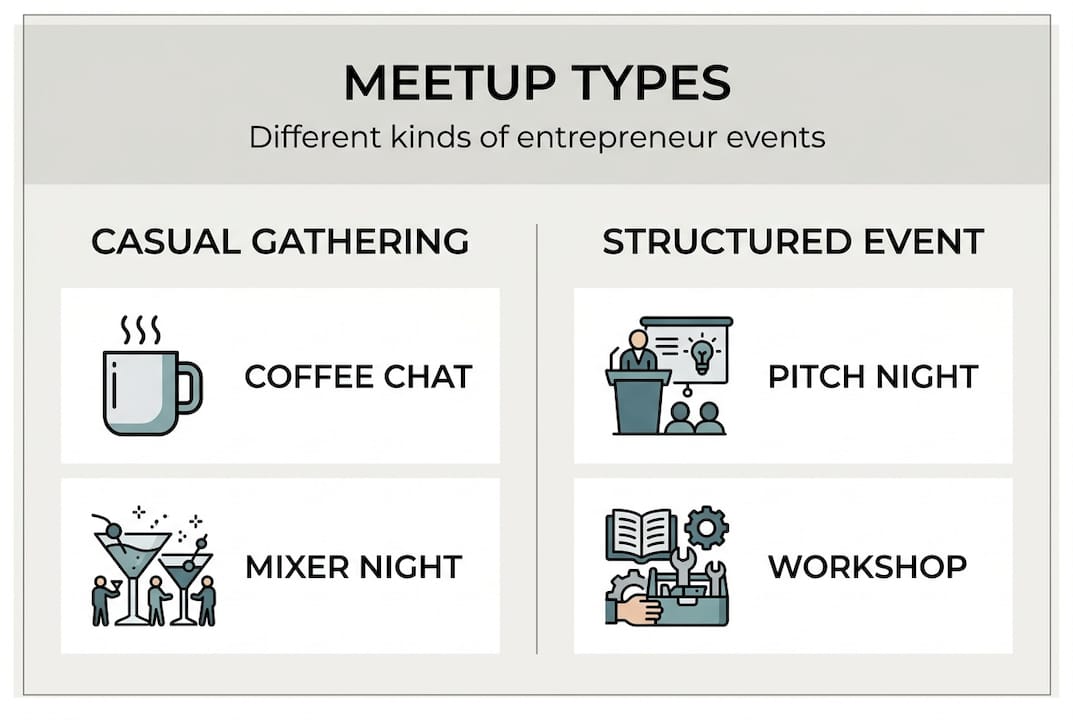
Casual networking events create low-pressure environments for meeting fellow founders over coffee or drinks. These gatherings emphasize relationship building rather than formal presentations. Expect open conversations, organic introductions, and the freedom to discuss whatever topics emerge naturally. They work well for newcomers testing the waters or established entrepreneurs seeking to expand their local network without a specific agenda.
Pitch nights and demo days offer structured opportunities to present your business idea to an audience of peers, mentors, and sometimes investors. Participants typically get three to five minutes to pitch, followed by feedback and questions. These events sharpen your communication skills, validate your value proposition, and generate visibility. Even if you’re not pitching, attending builds your evaluation skills and exposes you to diverse business models.
Workshops and skill-building sessions focus on teaching specific competencies like digital marketing, financial modeling, or product development. Led by experts or experienced entrepreneurs, these interactive events combine instruction with hands-on practice. You leave with actionable frameworks and tools to implement immediately. They suit founders seeking to fill knowledge gaps or level up in particular areas.
Mastermind groups bring together small cohorts of entrepreneurs who meet regularly to share challenges, brainstorm solutions, and hold each other accountable. These intimate settings foster deep trust and long-term relationships. Members commit to consistent attendance and active participation, creating a powerful support system that extends between meetings.
| Meetup type | Primary benefit | Ideal for | Typical format |
|---|---|---|---|
| Casual networking | Building relationships | All stages, newcomers | Open conversation, mingling |
| Pitch nights | Visibility and feedback | Founders with MVPs | Timed presentations, Q&A |
| Workshops | Skill development | Learning-focused entrepreneurs | Instruction plus practice |
| Mastermind groups | Accountability and deep support | Committed, growth-oriented founders | Regular small group discussions |
| Panel discussions | Industry insights | Information seekers | Expert speakers, audience Q&A |
Mixing event types can maximize growth by exposing you to different perspectives, teaching methods, and relationship depths that collectively accelerate your journey.
Prepare differently based on the meetup format. For networking events, bring business cards and a concise elevator pitch. For pitch nights, rehearse your presentation and anticipate tough questions. Workshops require an open mind and willingness to participate actively. Mastermind groups demand vulnerability and commitment to showing up consistently.
Networking etiquette ensures you make positive impressions:
- Listen more than you talk, showing genuine interest in others’ stories and challenges
- Ask thoughtful questions that demonstrate you’ve paid attention and want to understand deeply
- Offer value before requesting favors, whether through introductions, advice, or resources
- Follow up within 48 hours to reinforce connections made during the event
- Respect people’s time by keeping initial conversations brief and suggesting deeper dives offline
Maximizing benefits from entrepreneur meetups: participation and follow-up
Showing up is only the first step. Active participation transforms meetups from passive events into catalysts for real business progress. Start by setting clear intentions before each event. Ask yourself what you want to learn, who you hope to meet, and what specific challenge you need help solving. This focus guides your conversations and ensures you extract maximum value from limited time.
Engage fully during events rather than hovering on the sidelines. Volunteer for roles like greeting newcomers, facilitating breakout discussions, or helping with logistics. These positions naturally expand your network and demonstrate leadership. When discussions open up, ask questions that spark meaningful dialogue. Share your own progress, struggles, and lessons learned authentically. Vulnerability builds trust faster than polished success stories.
Best practices for active participation include:
- Arriving early to meet organizers and other proactive attendees before crowds form
- Sitting at different tables or joining various conversation circles to maximize exposure
- Taking brief notes on key insights and people you connect with for later reference
- Contributing your expertise generously when topics align with your strengths
- Staying until the end when deeper conversations often emerge as crowds thin
Post-meetup follow-up separates casual acquaintances from valuable business relationships. Active engagement with community accelerates success because sustained connection compounds over time into partnerships, mentorships, and collaborative opportunities.
Follow this systematic approach after each event:
- Within 24 hours, connect with new contacts on LinkedIn with personalized messages referencing your conversation
- Send follow-up emails to anyone who offered specific help or requested information from you
- Schedule coffee chats or video calls with the two or three most promising connections
- Add contacts to your CRM or contact management system with notes about their businesses and interests
- Share relevant articles, introductions, or resources that add value to new relationships
- Mark your calendar for the next meetup and commit to attending regularly
Leveraging mentorship opportunities requires preparation and respect for experienced entrepreneurs’ time. Before approaching potential mentors, clarify your specific questions and goals. Research their background so you can ask informed questions. When they offer advice, implement it quickly and report back on results. This responsiveness demonstrates you value their input and encourages ongoing support.
Pro Tip: Keep a meetup journal documenting contacts made, ideas discussed, and action items committed to at each event. Review it weekly to track follow-through and identify patterns in valuable connections or recurring themes that deserve deeper exploration.
Common pitfalls undermine the potential benefits of meetups. Passive attendance, where you listen but never contribute, prevents others from knowing your value and needs. Failing to nurture relationships after initial meetings wastes the effort of showing up. Treating meetups as transactional networking rather than community building creates shallow connections that dissolve quickly. Attending sporadically prevents you from becoming a recognized, trusted member of the group.
Consistency matters more than intensity. Regular attendance at one or two quality meetups builds deeper relationships than sporadically hitting every event in town. Choose communities where you genuinely enjoy the people and culture, then invest consistently. Over months, you’ll transition from newcomer to valued member, unlocking opportunities that only emerge through sustained engagement.
Discover entrepreneur bootcamps and deeper learning with Nomad Excel
While local meetups provide essential community and networking, structured learning accelerates your growth exponentially. Nomad Excel’s online entrepreneurship bootcamp combines the community benefits you love about meetups with intensive, results-driven curriculum designed to launch or scale your business rapidly. You’ll work alongside a curated group of driven founders, receiving daily accountability, expert mentorship, and step-by-step frameworks that transform ideas into revenue.
Our programs go beyond theory, focusing on execution and real-world results. Participants leave with sharper strategy, new skills, and an active community that supports long-term growth. If you’re wondering why join entrepreneurship bootcamps, consider how combining meetup connections with formal education creates momentum that compounds over time. Explore our mentorship program guide to see how personalized guidance complements community support, helping you avoid costly mistakes and achieve milestones faster.
Frequently asked questions
How do I find quality entrepreneur meetups near me?
Use platforms like Meetup.com and Eventbrite to search by location and topic, filtering for events with consistent attendance and positive reviews. Check organizer profiles and past event feedback to gauge quality and reliability. Seek recommendations in local entrepreneurship groups on LinkedIn and Facebook, where members share firsthand experiences. Visit coworking spaces and ask staff about community events they host or recommend. Quality meetups maintain regular schedules, attract engaged participants, and foster genuine relationship building over superficial networking. Networking for entrepreneurs becomes more effective when you invest time vetting communities that align with your goals and values.
What should I bring and prepare for my first entrepreneur meetup?
Bring business cards with your contact information and a brief description of what you do. Prepare a concise elevator pitch that explains your business or idea in 30 seconds, focusing on the problem you solve rather than technical details. Arrive with an open mindset and specific questions or goals you want to discuss, whether seeking feedback on a challenge or hoping to meet potential collaborators. Dress appropriately for the venue and audience, typically business casual unless specified otherwise. Most importantly, bring genuine curiosity about others’ stories and a willingness to contribute your own experiences and expertise to the community.
How can I turn meetup connections into lasting business relationships?
Follow up promptly within 24 to 48 hours using email or LinkedIn, referencing specific details from your conversation to jog their memory and demonstrate genuine interest. Arrange one-on-one meetings like coffee chats or video calls to deepen the relationship beyond surface-level introductions. Share value consistently by sending relevant articles, making introductions to your network, or offering your expertise without expecting immediate returns. Maintain regular contact through periodic check-ins, celebrating their wins and offering support during challenges. Lasting relationships form when both parties invest consistently, so be patient and focus on building trust over time rather than rushing toward transactional outcomes.
Comments are closed.