
Why Choose Mentorship Programs for Business Growth
Over 70 percent of new American businesses cite mentorship as a key driver of success. The journey from startup to sustainable growth can be unpredictable, leaving many founders searching for strategic insights they can trust. By exploring how mentorship programs equip entrepreneurs with practical skills and critical networks, you will discover what truly sets these programs apart for American innovators aiming to thrive.
Table of Contents
- What Mentorship Programs Offer Entrepreneurs
- Types of Mentorship: Structured vs. Peer Models
- How Mentorship Accelerates Business and Skills
- Roles, Expectations, and Key Outcomes for Participants
- Common Pitfalls and How to Avoid Them
Key Takeaways
| Point | Details |
|---|---|
| Comprehensive Support | Mentorship programs offer personalized guidance, skill enhancement, and networking opportunities that foster entrepreneurial growth. |
| Choosing Models | Entrepreneurs should consider both structured and peer mentorship models to maximize their learning and development experience. |
| Active Engagement | Success in mentorship requires proactive participation, clear goal setting, and open communication between mentors and mentees. |
| Avoiding Pitfalls | Common challenges such as unclear expectations and irregular communication can be mitigated through a well-structured mentorship agreement. |
What Mentorship Programs Offer Entrepreneurs
Entrepreneurs seeking strategic growth often find transformative support through professional mentorship programs. These programs go far beyond simple advice, offering comprehensive frameworks for business development that combine expert guidance, skill enhancement, and strategic networking opportunities.
Mentorship initiatives provide entrepreneurs with personalized skill development tailored to individual business contexts. Research demonstrates that mentorship programs significantly enhance entrepreneurial skills and confidence, creating structured pathways for professional advancement. Typical offerings include:
- Direct guidance from experienced business leaders
- Customized strategy sessions
- Skill assessment and targeted improvement plans
- Accountability frameworks
- Networking connections with industry professionals
Moreover, these programs address both technical business skills and critical emotional competencies. Inclusive mentorship approaches help entrepreneurs overcome cognitive and emotional barriers, providing psychological support alongside practical training. Entrepreneurs receive nuanced insights into challenges like imposter syndrome, strategic decision making, and maintaining resilience during complex business transitions.

The most effective mentorship programs create holistic development ecosystems that extend well beyond traditional consulting. They integrate hands-on learning, personalized feedback, and community support to accelerate entrepreneurial growth. Participants gain not just knowledge, but confidence, strategic thinking capabilities, and robust professional networks.
Pro Entrepreneur Tip: Select mentorship programs with demonstrable track records of success and those offering personalized, long-term engagement rather than generic, short-term workshops.
Types of Mentorship: Structured vs. Peer Models
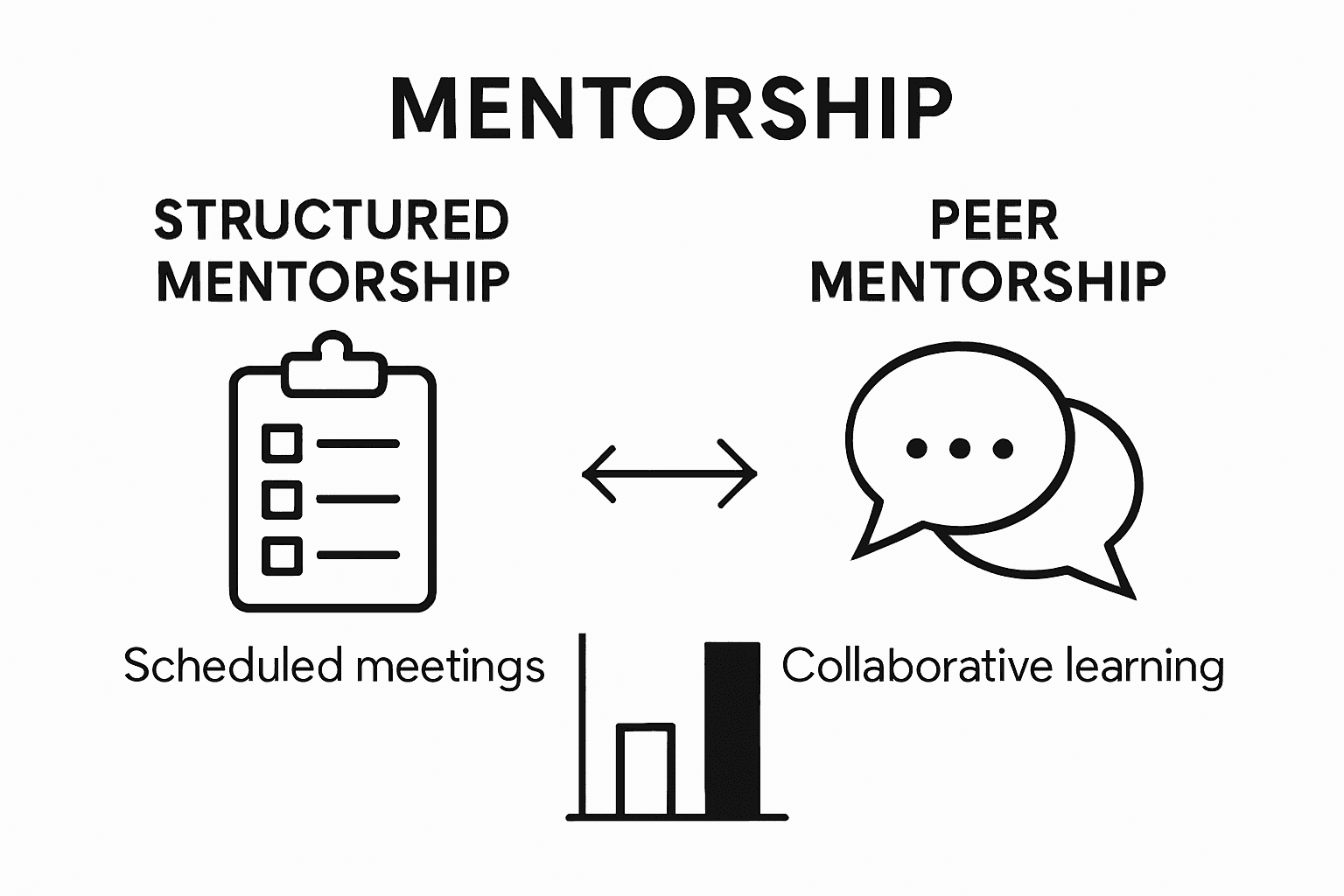
Mentorship programs come in diverse formats, with structured and peer mentorship representing two primary approaches that offer unique advantages for entrepreneurs seeking professional development. Understanding the distinctions between these models helps founders select the most appropriate guidance strategy for their specific business needs.
Structured Mentorship represents a formal, professionally designed approach where experienced industry leaders provide targeted guidance. Structured Peer Learning (SPL) programs focus on comprehensive skill development including technical, communication, and social competencies, creating systematic pathways for entrepreneurial growth. Key characteristics include:
- Predefined learning objectives
- Scheduled meetings with senior professionals
- Formal assessment and progress tracking
- Detailed curriculum design
- Expertise-driven knowledge transfer
Peer Mentorship, by contrast, operates through mutual learning and collaborative support. This model involves individuals with shared experiences providing reciprocal guidance and development opportunities, creating a more organic and collaborative learning environment. Distinctive features include:
- Horizontal knowledge exchange
- Shared contextual understanding
- Lower hierarchical barriers
- Mutual skill development
- More flexible interaction structures
While structured and peer mentorship differ in approach, both models offer significant value. Structured mentorship provides expert-level insights and systematic skill development, whereas peer mentorship creates supportive networks with relatable perspectives. Progressive entrepreneurs often benefit from integrating elements of both models to maximize learning and growth potential.
The following table compares the main attributes and outcomes of structured and peer mentorship models for entrepreneurs:
| Attribute | Structured Mentorship | Peer Mentorship |
|---|---|---|
| Guidance Style | Expert-led, directive | Collaborative, shared learning |
| Typical Participant Role | Mentee and senior mentor | Peer-to-peer partners |
| Assessment Approach | Formal evaluations | Informal and flexible |
| Networking Opportunities | Access to established leaders | Broader peer connections |
| Main Outcome Focus | Targeted professional skills | Relatable support and empathy |
Pro Entrepreneur Tip: Consider hybrid mentorship models that combine structured expert guidance with peer learning opportunities to create a comprehensive, multifaceted professional development experience.
How Mentorship Accelerates Business and Skills
Entrepreneurs navigating complex business landscapes find transformative acceleration through strategic mentorship programs that systematically enhance both professional capabilities and personal growth potential. The journey of business development becomes significantly more streamlined when guided by experienced professionals who provide nuanced insights and practical wisdom.
Mentorship bridges critical gaps between theoretical knowledge and industry practice, offering entrepreneurs comprehensive development across multiple critical domains. These programs create robust learning environments that extend far beyond traditional educational frameworks, delivering targeted skill enhancement through:
- Practical industry insights
- Direct professional networking opportunities
- Real-world problem-solving strategies
- Personalized feedback mechanisms
- Strategic career development support
Psychological and Strategic Benefits play a crucial role in mentorship acceleration. Mentorship provides profound psychological advantages, including increased confidence and enhanced decision-making capabilities, transforming entrepreneurs’ approach to business challenges. By sharing experienced perspectives, mentors help mentees develop resilience, strategic thinking, and emotional intelligence necessary for sustainable business growth.
The most effective mentorship experiences create multilayered learning ecosystems that simultaneously address technical skills, strategic thinking, and personal development. Entrepreneurs gain not just knowledge, but a comprehensive toolkit for navigating complex business environments, making informed decisions, and building sustainable professional networks that extend far beyond traditional coaching relationships.
Pro Entrepreneur Tip: Actively seek mentors who challenge your perspectives and provide constructive criticism, as growth emerges from uncomfortable conversations and honest professional feedback.
Roles, Expectations, and Key Outcomes for Participants
Successful mentorship programs thrive on clear role definitions and well-established expectations that create meaningful pathways for professional development. Understanding the dynamic interactions between mentors and mentees becomes crucial for maximizing the transformative potential of these collaborative relationships.
Effective mentorship requires strategic task-focused approaches and alignment of personal qualities with desired outcomes, establishing a structured framework for mutual growth. The key roles and responsibilities typically encompass:
Mentee Responsibilities:
- Proactively seek guidance
- Set clear personal development goals
- Demonstrate openness to feedback
- Implement recommended strategies
- Maintain consistent communication
Mentor Responsibilities:
- Provide constructive insights
- Share industry-specific knowledge
- Challenge mentee’s perspectives
- Offer strategic recommendations
- Create accountability mechanisms
Entrepreneurial mentorship also involves sophisticated matchmaking frameworks that carefully align mentor support with specific career development phases, ensuring targeted and relevant guidance. This approach recognizes that entrepreneurs require different types of support at various stages of their business journey.
Key outcomes of successful mentorship programs extend beyond traditional skill acquisition, focusing on holistic professional transformation. Participants can expect comprehensive development including enhanced strategic thinking, expanded professional networks, improved confidence, and practical problem-solving capabilities that directly translate into tangible business growth and personal advancement.
Pro Entrepreneur Tip: Establish clear, measurable objectives at the beginning of your mentorship journey and regularly review progress to ensure alignment and maximize the value of your professional relationship.
Common Pitfalls and How to Avoid Them
Entrepreneurs embarking on mentorship journeys must navigate potential challenges strategically to maximize the transformative potential of these professional relationships. Understanding and anticipating common obstacles can significantly enhance the effectiveness of mentorship experiences and prevent potential disappointments.
Common mentorship challenges include lack of clear goals and misaligned expectations between mentors and mentees, which can derail potentially productive partnerships. Key pitfalls entrepreneurs should be aware of include:
Communication Breakdowns
- Unclear communication expectations
- Inconsistent meeting schedules
- Undefined relationship boundaries
- Mismatched communication styles
Structural Challenges
- Undefined mentorship objectives
- Unrealistic performance expectations
- Lack of structured feedback mechanisms
- Insufficient commitment from either party
Technological innovations now offer solutions for expanding mentorship accessibility and addressing traditional resource limitations, providing entrepreneurs with more flexible and diverse mentorship opportunities. Digital platforms and virtual mentorship programs have emerged as powerful alternatives to traditional in-person mentoring, breaking down geographical and logistical barriers.
Here is a summary of common mentorship pitfalls and practical solutions to overcome them:
| Pitfall | Potential Impact | Effective Solution |
|---|---|---|
| Vague Expectations | Confusion and frustration | Clear goal setting |
| Irregular Communication | Weak relationship, lost momentum | Schedule regular check-ins |
| Mismatched Skills/Needs | Ineffective guidance | Careful mentor-mentee matching |
| Lack of Feedback Mechanisms | Stagnant personal growth | Implement structured reviews |
Successful mentorship requires proactive engagement, mutual respect, and a commitment to continuous learning. Entrepreneurs must approach these relationships with clear expectations, openness to feedback, and a genuine desire for personal and professional growth. By understanding potential pitfalls and implementing strategic mitigation strategies, participants can transform potential challenges into opportunities for meaningful development.
Pro Entrepreneur Tip: Develop a comprehensive mentorship agreement that clearly outlines expectations, communication protocols, meeting frequencies, and specific developmental goals to establish a solid foundation for your professional relationship.
Accelerate Your Business Growth with Expert Mentorship and Actionable Programs
If you are ready to overcome the challenges of vague goals and inconsistent guidance highlighted in the article, Nomad Excel offers immersive entrepreneurship bootcamps designed to provide the structured mentorship and community support essential for real progress. Our programs focus on transforming uncertainty into clarity through personalized mentorship, daily accountability, and actionable frameworks that build scalable businesses.
Experience hands-on learning alongside driven founders and seasoned entrepreneurs who will guide you in refining your strategy and executing revenue-driving skills. Explore our curated programs that blend expert-led mentorship with collaborative peer connections in a dynamic environment focused on growth and execution.
Discover how Nomad Excel’s approach to mentorship can help you build confidence, develop entrepreneurial resilience, and expand your professional network. Visit the Program Archives to find the right bootcamp for you. Start your journey today by learning more about entrepreneurship at Entrepreneurship Archives and take the next step toward accelerated business growth at Nomad Excel.
Frequently Asked Questions
What are the main benefits of joining a mentorship program for entrepreneurs?
Mentorship programs offer personalized skill development, expert guidance, accountability frameworks, and networking opportunities, significantly enhancing confidence and entrepreneurial skills.
How do structured mentorship and peer mentorship differ in terms of support for entrepreneurs?
Structured mentorship provides expert-led, formal guidance with predefined objectives, while peer mentorship fosters collaborative, mutual learning through shared experiences without rigid hierarchies.
Can mentorship programs help overcome emotional barriers in entrepreneurship?
Yes, mentorship programs address both technical and emotional competencies, providing entrepreneurs with insights and support to manage challenges such as imposter syndrome and decision-making.
What are some common pitfalls to avoid in mentorship relationships?
Common pitfalls include vague expectations, irregular communication, and mismatched skills. Establishing clear goals and regular check-ins can help overcome these challenges.
Comments are closed.